
What is the Best Landscape Fabric letting water in soil?
If you are working on a garden, flower bed, or drainage system, one important question is: What is the best landscape fabric letting water in soil? Not all landscape fabrics are same. Some block water, while others allow it to pass through easily.

Why Use Landscape Fabric for Drainage?
Landscape fabric helps manage weeds, improves soil stability, and protects your garden or driveway from erosion. But when it comes to drainage, the key job of the fabric is letting water move through it into the soil while keeping the soil and gravel in place.That is why landscape fabric permeability is such a big deal. If water cannot pass through easily, it might pool up, cause root rot, or create drainage problems.
Key Benefits of Using Permeable Landscape Fabric
- Excellent Drainage: This is the big one! The best landscape fabric letting water in soil ensures that rain or irrigation water does not just on the surface. It pass through, deep down, reaching plant roots. This means “yes, does landscape fabric drain effectively!”
- Weed Control: While letting water through, these fabrics still create a barrier that largely control weeds. This significantly cuts down on maintenance.
- Soil Separation: If you are building a gravel path or a new garden, landscape fabric geotextile means separating your topsoil from your sub-base. This prevents your gravel from sinking into the dirt and keeps your soil layers distinct.
- Durability: Quality geotextile landscape fabric is built to last. It resists tearing, punctures, and even breakdown from UV rays or chemicals. This means your hard work will not be undone in a season or two.
- Erosion Control: In sloped areas, a good landscape fabric permeability helps stabilize the soil, preventing erosion from heavy rains.
Landscape Fabric vs. Geotextile: What’s the Difference?
Landscape Fabric: This is the general term often used by gardeners. It can be woven or non-woven plastic (geo fabric material), designed primarily for weed control in flower beds, paths, and under gravel.
Does Landscape Fabric Allow Water to Drain?
Not all of them. Some cheap landscape fabrics or plastic sheets sold in stores do not allow water to drain. These are better for weed control but not for water management.
Look for fabrics labeled as “water permeable”, “high drainage rate”, or “non-woven geotextile”. These allow water to pass through efficiently while still blocking soil and debris.
Is Landscape Fabric Waterproof?
Most landscape fabrics are not waterproof, and that is a good thing. If you use a waterproof layer, you will block water completely, which can damage your plants and lead to water pooling.
In short: you want your landscape fabric to be water-permeable, not waterproof.
Geotextile: This is the technical term used in construction and engineering,like road, highway,rail,airport,landfill projects. What is geotextile fabric? It’s a permeable synthetic textile (usually polypropylene or polyester) specifically engineered for soil separation, filtration, reinforcement, and drainage.
Geotextile Fabric Material: What Is It Made Of?
Most geotextile fabrics are made from polypropylene or polyester. These materials do not rot, are UV-resistant, and are safe for gardens. They can be used both above and below ground.
When looking for geo fabric material, check if it is UV stabilized, puncture-resistant, and marked as “non-woven” if drainage is important.
Besides the flower bed, Non-woven geotextile is essential for:
French Drains: Wrapped around the drain pipe and gravel to prevent clogging.
Retaining Walls: Placed behind the wall blocks for drainage and soil separation.
Under Driveways & Patios: Separating soil from base gravel.
Erosion Control: On slopes under mulch or rock.

The Winner for Water Flow: Non-Woven Geotextile
When asking what is the best landscape fabric that lets water through, we feel that the answer is clear: non-woven geotextile fabric.These fabrics are made by needle punched or bonding fibers together, rather than weaving them. This creates a more random, porous structure, which is exactly what you need for water to pass through easily
- Superior Permeability: Non-woven geotextiles have a felt-like structure with random fibers. This creates millions of small pathways, making them highly water permeable. They can let water in soil without blocking easily.
- Filtration Power: As water flows through, these fabrics trap fine soil particles while still allowing water to pass. This prevents your gravel or drainage layer underneath from getting choked with mud, maintaining long-term landscape fabric drainage.
- Soil Separation: They create a stable barrier between different soil layers or between soil and rock/gravel, preventing mixing that can reduce drainage.
Woven Fabric: Better for Stability, Worse for Drainage
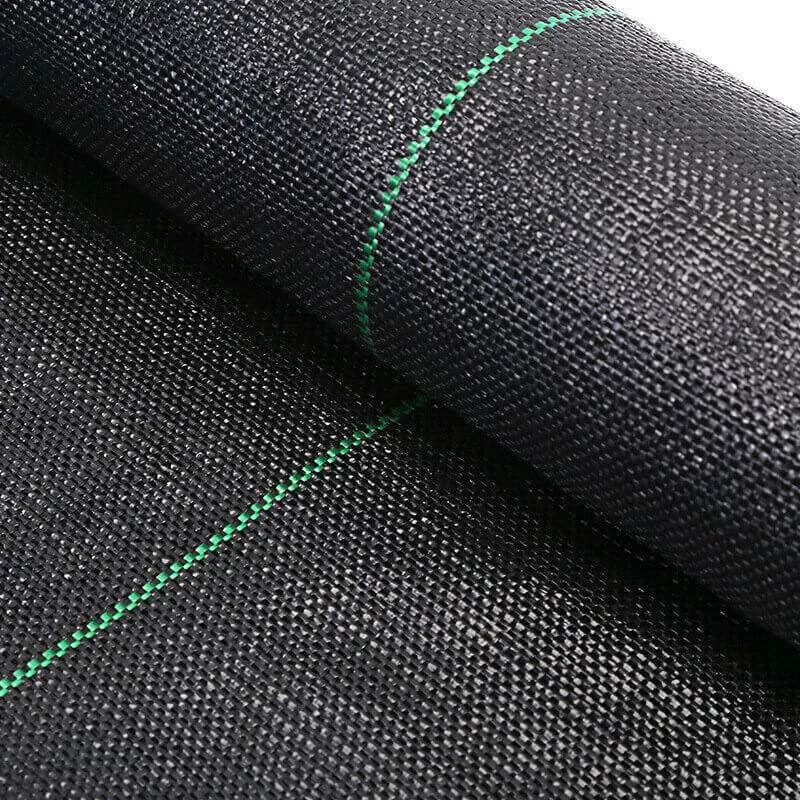
Woven landscape fabrics look like heavy-duty plastic material. They are strong and great for high-traffic areas like paths or under driveways where stabilization is key.
However, their tight weave significantly reduces landscape fabric permeability. While some water will get through, it is much slower than non-woven. They are not the best landscape fabric for drainage situations.


Non woven geotextile manufacturer supplier
Our company is a manufacturer and supplier for geotextile,with 10+years experience. We have the Polyester and Polypropylene material geotextile,and also staple geotextile and continous filament geotextile. The weight range is from 100g/sqm to 1000g/sqm, and max width is 7m.
The packing can be in plastic bas, and even OEM with your logo for supermarket DIY.


How Much Does Fabric Cost?
This is a common question: how much does fabric cost? The price of geotextile fabric price can vary quite a bit depending on the type, quality, and quantity you need. Generally, non-woven geotextiles designed for drainage are a reasonable investment, especially given their longevity and benefits. You can find rolls at home improvement stores, garden centers, or through specialized geotextile fabric suppliers and geotextiles manufacturer supplier companies. While it might seem like an added expense upfront, think of it as an investment in a healthier, lower-maintenance landscape.
Non-Woven Geotextile: Generally very affordable. Prices vary based on weight and roll size. Expect to pay roughly $0.10 to $0.30 per square foot for standard geotextile fabric for landscaping. It is a cost-effective solution for good drainage landscape fabric.
Woven Fabric: Often slightly more expensive than non-woven of similar strength.
Plastic Sheeting: Cheap upfront, but causes drainage nightmares and will not last. Avoid it!
| Fabric Type | Cost per Square Foot $ | Best Use |
|---|---|---|
| Nonwoven fabric | $0.1-$0.6 | Drainage,Garde,Beds |
| Woven fabric | $0.3-$1.2 | Railway,Driveway,Road |
How to Choose the Right Fabric?
When you are buying the best landscape fabric that lets water through, keep these points in mind:
- Type: Always go for non-woven. If you see “woven geotextile landscape fabric,” it might be better for stabilization or separation in heavy-duty applications, but it is generally less permeable for simple drainage needs.
- Material: Polyester or polypropylene are common and effective,but Polyester is a little cheaper.
- Weight/Thickness: For typical landscape drainage, lighter to medium weights ( 100g to 300g per square meter) are usually sufficient and offer good water flow.
- Permeability Rating: Some manufacturers will provide a permeability rating. Higher numbers generally mean better water flow. You want high landscape fabric permeability.
- UV Resistance: Look for fabrics treated to resist UV degradation if they are exposed to sunlight during installation or in shallow applications.
How to Install Drainage Fabric Properly
Even the best landscape fabric for gardens will not perform optimally if installed incorrectly. Here are a few quick tips:
- Prepare the Area: Clear out all weeds, rocks, and debris. Level the ground as much as possible.
- Overlap Properly: When laying multiple pieces, overlap them by at least 6-12 inches to prevent weeds from sneaking through the seams.
- Secure It: Use landscape fabric pins or staples to hold the fabric securely in place, especially on slopes or windy days.
- Cover It: For weed control, cover the fabric with mulch, gravel, or soil as soon as possible. This also protects it from UV damage.
So, what is the best landscape fabric letting water in soil? It is clearly non-woven geotextile fabric. It offers the best balance between water permeability, soil separation, and weed control. Whether you are building a rain garden, managing water runoff, or just planting vegetables, using the right fabric for drainage makes a big difference.
In summary, if you are aiming for a beautiful, healthy, and low-maintenance landscape, investing in the best landscape fabric letting water in soil is a smart move. Focus on non-woven geotextiles for their superior permeability and durability. They are the ideal fabric for landscaping when you want to manage water effectively, control weeds, and protect your hardscaping investments.
By choosing the right geo fabric material and fabric manufacturer supplier, you can get a successful project! Please contact our people for solutions, and follow our Linkedin Facebook for more informations!
Recent Post
Aquaculture Pond Lining in Indonesia | From Design to Installation
From Project Drawing to Water Filling: An Aquaculture Pond Lining Project in Indonesia This aquaculture pond project in Indonesia started with a project drawing.The customer firstly contacted us
When Is Geotextile Really Necessary?
When Is Geotextile Really Necessary in Civil Engineering Projects? Geotextiles are widely used in modern infrastructure and environmental engineering. However, a common question among engineers, designers, and contractors is: Is geotextile always necessary? In
Woven Polypropylene Geotextile Manufacturer | Engineering Grade & Landscape Fabric
Woven Polypropylene Geotextile Manufacturer | Engineering Grade & Landscape Fabric By Planetliner — Manufacturer of High-Performance Woven PP Fabrics for Global Projects Woven polypropylene geotextile has become a fundamental material in civil engineering, environmental protection,