
Best Underlay for pond liner -What to Put Down Before a Pond Liner
If you are asking “What should I put down before my pond liner?” “hat do you put underneath a pond liner?”— you are asking one of the most important questions in pond building. The material underneath your pond liner determines how long your pond lasts, how well it holds water, and how resistant it is to punctures or leaks.
Why to use the underlay for a pond liner?
A pond liner’s lifespan and performance depend almost as much on what is under it as on the liner itself. Even a small rock or root can puncture the liner over time, especially under water pressure. Using the right underlay (underlayment) provides protection, support, and long-term durability.
Without it, your liner will have some threats:
- Punctures from Below: Sharp rocks, stones, and glass fragments that you missed during excavation can slowly work their way up through the soil and puncture the liner, especially under the immense pressure of water.
- Root Penetration: Stubborn roots from nearby trees or shrubs can grow towards the water source and are powerful enough to pierce many liners.
- Shifting Soil: Ground settling and small earth movements can stretch and stress the liner, making it susceptible to tears.
- Burrowing Animals: Rodents or other animals can tunnel under the pond and damage the liner from beneath.
A proper underlayment for pond liner , or “underlay,” creates a stable, protective, and cushioning barrier between the rough earth and your liner, dramatically increasing its lifespan.
Puncture Protection: Sharp rocks, roots, and debris buried in the ground can easily penetrate pond liners without proper cushioning. Underlay acts as a protective barrier that prevents these sharp objects from compromising your liner’s integrity .
Ground Movement Accommodation: Soil shifts with temperature changes, moisture content, and settling. Underlay helps absorb these movements, reducing stress on the pond liner itself .
Enhanced Longevity: The addition of a quality underlay can extend your pond liner’s life up to 25 years by providing an extra layer of defense against potential damage sources .
Improved Insulation: Some underlay materials provide additional thermal regulation, helping to maintain more stable water temperatures throughout seasonal changes .
Some UnderlayMaterials to Put Under a Pond Liner
1. Geotextile Underlay (Recommended by Planetliner)
The best underlay for any pond liner — and the one used by professionals — is non-woven geotextile fabric.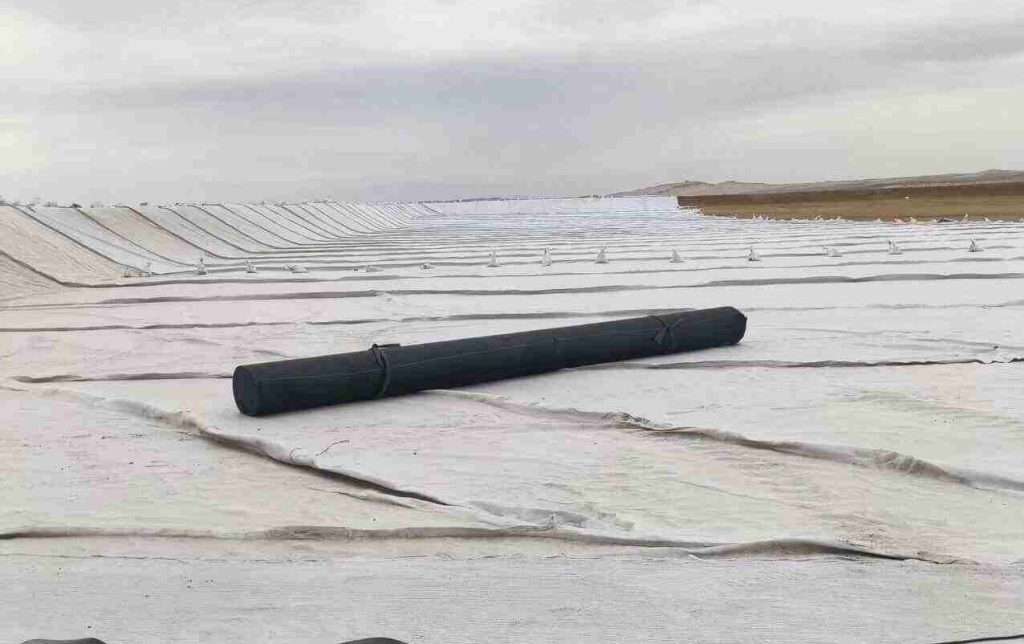
Geotextile is a soft, durable, needle-punched fabric made from polypropylene or polyester fibers. It acts as a cushion between the soil and the liner, preventing punctures and absorbing ground movement.
Why choose geotextile underlay:
Excellent puncture resistance and flexibility.
Adapts to uneven surfaces.
Long-lasting, rot-proof, and UV-stable.
Suitable for both small garden ponds and large industrial or farm ponds.
Planetliner Tip:
Use a non-woven geotextile underlay between 200–400 gsm for small or medium ponds. For heavy-duty applications, go thicker. When paired with a Planetliner HDPE geomembrane, this combination delivers outstanding durability and protection.
2. Sand Bedding
A layer of clean, compacted sand (2–5 cm) helps create a level surface and cushions the liner. Sand fills small holes and evens out minor ground imperfections.
However, sand alone is not enough for long-term protection. Always use a geotextile underlay on top of the sand for maximum puncture resistance.
When to use sand:
When your soil surface is rough or uneven.
When you need an easy leveling layer under the liner.
Avoid coarse or dirty sand with sharp particles.
3. Compacted Soil or Loam
Before adding any underlay, start with a properly compacted base. Remove all roots, rocks, and organic debris. Uneven or loose soil can cause the liner to stretch or sag over time.
A well-prepared subgrade provides stability and helps prevent future settlement.
4. Protective Mats or Boards (Optional)
In high-stress areas — such as under pumps, waterfalls, or where people might walk — add a layer of recycled rubber mat or a protective board above the liner. This gives extra durability and prevents localized wear.
5. Bentonite or Clay (Special Cases)
For natural ponds or eco-projects, some builders use bentonite clay beneath or around the pond as a natural sealing layer.
However, if you’re installing an HDPE liner, bentonite is not needed and may even cause abrasion if not properly compacted.
Underlay Materials for pond liner to Avoid
Some commonly suggested DIY underlay options can create more problems than they solve:
Old Carpet: Natural fiber carpets decompose over time, losing their protective qualities and potentially creating voids beneath the liner .
Cardboard: Breaks down quickly when exposed to moisture, offering only temporary protection at best .
Newspaper: Provides virtually no protection and decomposes rapidly, potentially creating uneven settling.
Why Geotextile Is The Best Underlay For Pond Liner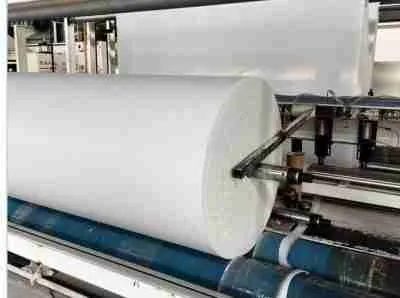
- Superior Puncture Resistance: It is incredibly tough and resistant to tearing. A sharp rock that would easily pierce a liner is stopped by the thick cushioning fibers of the geotextile.
- Inert and Rot-Proof: Unlike organic materials, geotextile is synthetic (typically polypropylene or polyester). It will not rot, mildew, or decompose underground.
- Soil Stabilization: It allows water and gasses to pass through (it’s permeable) but separates the soil from your liner, preventing shifting and settling from affecting the liner directly.
- Easy to Install: It’s lightweight, flexible, and easy to roll out, cut, and shape to your pond’s contours.
This is the only solution we recommend for serious pond installations, especially when using a durable, long-life liner like an HDPE (High-Density Polyethylene) geomembrane.
A Planetliner Integrated Underlay Solution
At Planetliner, we have engineered our geotextile underlays to work seamlessly with our HDPE geomembranes, creating a comprehensive pond protection system. Our technical specifications ensure optimal performance:
Material Consistency: Manufactured from 100% virgin polypropylene for consistent density and protection .
Weight Options: Available in multiple weights (100-800 gsm) to match specific project requirements .
Chemical Neutrality: Our geotextiles are chemically inert, ensuring no harmful interactions with aquatic life .
UV Resistance: Formulated to withstand solar degradation when temporarily exposed during installation.
How to Install Your Pond Liner Underlayment (Step-by-Step)
- Excavate and Clean: Dig your pond to its final shape and depth. Go over the entire surface—bottom and sides—with your hands. Remove every sharp object: rocks, roots, glass, twigs, and debris.
- Compact (Optional): If your soil is very loose, it’s a good idea to tamp it down.
- (Optional) Add Sand: If your soil is extremely rocky or full of clay, you can add a 1-inch “blinding” layer of soft sand first to fill in the major gaps.
- Roll Out the Geotextile: Starting at the bottom, roll out your Planetliner Geotextile. Overlap any seams by at least 6 inches (15 cm). Let the fabric drape over the sides and contours of the pond. You don’t need to glue the seams, as the weight of the water and liner will hold it.
- Trim the Underlay: Leave at least one foot (30 cm) of excess fabric around the pond’s edge.
- Install Your Liner: Carefully place your Planetliner HDPE Liner on top of the geotextile, unfolding it from the center out. Avoid dragging it.
- Final Trim: Once the pond is filled with water (which stretches the liner into place), you can trim the excess liner and geotextile fabric around the edge.
Frequently Asked Questions
1. What is the best underlay for a pond liner?
The best underlay is a non-woven geotextile fabric designed for geomembrane protection. It cushions the liner, prevents punctures, and extends the pond’s lifespan.
2. Do I need sand under a pond liner?
Sand can help create a smooth, even base, but it should always be used together with geotextile fabric for full protection.
3. Can I use old carpet or blankets under a pond liner?
Old carpet, felt, or blankets are not suitable. They trap moisture, rot over time, and can hide sharp debris. Always use professional geotextile underlay instead.
4. How thick should the underlay be?
For garden ponds, 200–300 gsm is usually enough. For larger or rocky areas, go up to 400–600 gsm for better durability.
5. What goes under an HDPE pond liner?
A clean, compacted soil base with optional sand, plus a non-woven geotextile underlay. Never place HDPE directly on sharp or uneven surfaces.
6: Do I need to put underlayment on the pond’s sides?
Absolutely. The sides are just as vulnerable as the bottom, if not more so, to rocks and root penetration. Your geotextile underlay must cover every square inch of earth that the liner will touch.
Conclusion
Knowing what to put down before your pond liner can save you from costly repairs later. Always prepare a clean, compacted base and use a non-woven geotextile underlay to protect your liner from punctures and wear.
For the best performance and longevity, pair a Planetliner HDPE geomembrane with a Planetliner geotextile underlay — the professional choice for ponds, farms, and water containment projects worldwide. Follow our Linkedin Facebook Youtube Pinterest For more informations!
Recent Post
Aquaculture Pond Lining in Indonesia | From Design to Installation
From Project Drawing to Water Filling: An Aquaculture Pond Lining Project in Indonesia This aquaculture pond project in Indonesia started with a project drawing.The customer firstly contacted us
When Is Geotextile Really Necessary?
When Is Geotextile Really Necessary in Civil Engineering Projects? Geotextiles are widely used in modern infrastructure and environmental engineering. However, a common question among engineers, designers, and contractors is: Is geotextile always necessary? In
Woven Polypropylene Geotextile Manufacturer | Engineering Grade & Landscape Fabric
Woven Polypropylene Geotextile Manufacturer | Engineering Grade & Landscape Fabric By Planetliner — Manufacturer of High-Performance Woven PP Fabrics for Global Projects Woven polypropylene geotextile has become a fundamental material in civil engineering, environmental protection,