
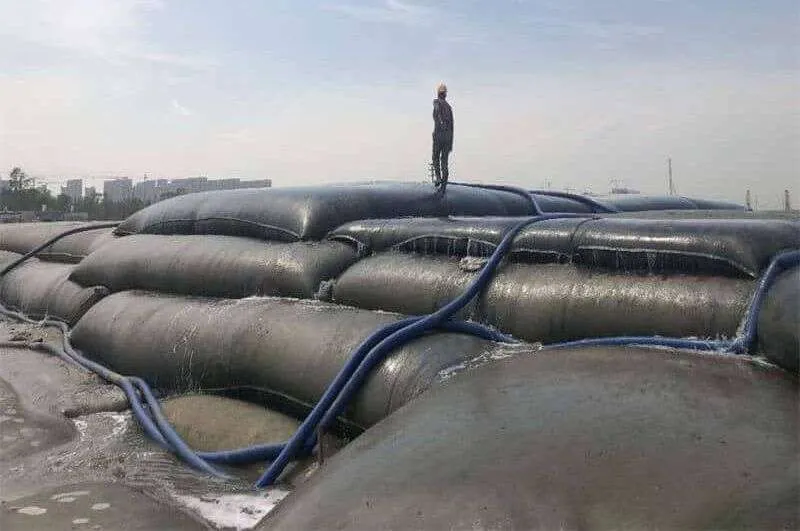
Geotextile Tube Dewatering for Sludge and Sediment
Geotube dewatering uses a high-strength permeable geotextile container to retain solids while allowing water to escape. It is used for sludge, dredged sediment and fine-grained slurry where conventional mechanical dewatering may be impractical, expensive or difficult to mobilize.
Planetliner supplies geotextile tubes and supporting geosynthetic materials for dewatering areas. A representative trial is the starting point for selecting a tube and planning throughput, rather than assuming every sludge will dewater in the same way.
Quick Answer
Slurry is pumped into the geotextile tube, often with polymer conditioning when required. Water passes through the engineered fabric while solids are retained and consolidate over repeated filling and dewatering cycles. Tube size and fabric should be selected according to slurry characteristics, pumping conditions, available footprint and the required final solids handling method.
What Project Problems Does This Application Solve?
- Large volumes of low-solids sludge
- Dredged sediment requiring on-site dewatering
- Mining or industrial slurry management
- Lagoon cleaning
- Need for contained solids during dewatering
- Limited access for heavy mechanical equipment
Recommended Geosynthetic System
| Project Condition | Recommended Product | Primary Function | Selection Focus |
| Wastewater sludge | Geotube | Dewatering | Solids concentration and filtration |
| Dredged sediment | Geotube | Containment + dewatering | Particle size and site footprint |
| Mining slurry | High-strength geotube | Dewatering | Chemical conditions and pumping |
| Fine particles | Geotube + polymer program | Filtration | Bench test/flocculation response |
How to Select the Right Materials

Provide feed volume, dry-solids content, particle-size characteristics, chemistry and variability. A representative dewatering trial helps assess solids retention, filtrate quality and drainage behavior. Where flocculation is needed, test the conditioning product and dose with the actual sludge and intended receiving or treatment process.
Sizing should consider the mass of dry solids, achievable final solids content, filling and resting cycles, available footprint and operating time. Do not use the nominal empty dimensions as a direct measure of usable sludge throughput. Filling shape, allowable height and fabric/seam limits also matter.
Any forecast of final moisture or daily production should be tied to representative test results and operating assumptions. Without that evidence, a fixed drying time is only a guess.
Filling and filtrate management
Prepare a stable, graded area and install the specified liner and collection system. Inspect tube seams, ports and supporting surfaces before pumping. Operate within the approved filling height and pressure limits, with monitoring during each cycle.
Stop or adjust filling if there is abnormal movement, leakage or localized strain. Do not stack tubes or alter the arrangement without an approved assessment. Keep stormwater from overwhelming the filtrate system.
Collect filtrate for testing and the required treatment, reuse or disposal route. Water that looks clear may still contain dissolved substances. Once dewatering is complete, plan safe opening, excavation and transport of the retained solids.
Typical Industries and Projects
This application is commonly relevant to: water projects, waste management, mining and aquaculture; Coastal & Dredging.
The exact material system should be matched to the engineering function, site conditions, design life and project specification.
Project / Case Reference
Example: a lagoon-cleaning project can pump conditioned sludge into geotubes placed on a prepared drainage pad. Filtrate is collected and managed while retained solids consolidate. The number and dimensions of tubes depend on sludge volume, solids concentration, pumping schedule and available area.
Frequently Ask Questions
How does a geotube dewater sludge?
The geotextile acts as a containment filter: water exits through the fabric while conditioned solids remain inside and consolidate.
Do all geotube projects need polymer?
No, but many fine or difficult slurries benefit from flocculation. Testing should determine whether polymer improves solids retention and dewatering rate.
How do I choose geotube size?
Sizing depends on slurry volume, solids content, filling height, available footprint, pumping cycles and project logistics. Project data is needed for a meaningful recommendation.
Can dewatering tubes also be used for coastal structures?
Do not assume so. Permanent sand-filled coastal structures have different exposure, loading, abrasion and seam requirements. A dewatering product needs separate verification before any such use
Related Products, Industries & Solutions
Related solutions: Separation & Filtration; Erosion Control. Related products: Geotube; Filtration Geotextile. Related industries: Water; Wastewater; Mining; Aquaculture; Dredging.
Discuss Your Project with Planetliner
Send your project drawing, application, dimensions, soil or slurry conditions, required engineering function, existing specification and destination. Planetliner can help identify suitable geosynthetic material options, specifications and quantities for further engineering and procurement evaluation.
CTA: Send Your Project Requirements → Get a Geosynthetic Material Recommendation