
What is the Best Ditch Liner Concrete or HDPE?
Water management is very important in agriculture, landscaping, and infrastructure projects. One important solution for controlling water flow and preventing erosion is the ditch liner. Whether used for irrigation channels, stormwater drainage, or erosion control, a ditch liner can help the water to be transported efficiently while protecting the soil and surrounding environment.
Ditch liners are popular engineered materials, used to line irrigation channels, drainage ditches, and other water conveyance systems. They play a critical role in preventing water seepage, controlling erosion, improving hydraulic efficiency, and maintaining water quality. This comprehensive guide explores the different types of ditch liners, with a special focus on concrete ditch liner and plastic ditch liner variations like HDPE ditch liner, to help you determine what is the best liner for a ditch in your specific project.
What Is a Ditch Liner?
A ditch liner is an impermeable or semi-permeable layer of material,it is installed in a ditch or canal. Its first function is to prevent water loss through seepage into the surrounding soil. For irrigation systems, this translates to significant water savings and more efficient delivery to crops. In drainage applications, liners prevent erosion, maintain the structural stable of the ditch, and ensure a smooth flow of water. Unlined ditches, by contrast, will have a lot of problems, including waterlogging of adjacent land, a loss of conveyance capacity due to vegetation growth and siltation, and the potential for contaminants to leach into the groundwater.
The benefits of installing a ditch liner are manifold and include:
- Water Conservation: By minimizing seepage, more water reaches its intended destination.
- Erosion Control: Liners protect the ditch from the erosive forces of flowing water, preserving its shape and function.
- Improved Hydraulic Efficiency: A smooth liner surface reduces friction, allowing water to flow more quickly and efficiently.
- Reduced Maintenance: Lined ditches are less susceptible to weed growth and sediment accumulation, reducing the need for costly and time-consuming upkeep.
- Enhanced Water Quality: By preventing the infiltration of contaminated surface runoff into the ground, liners can help protect groundwater resources.
Ditch liners are commonly used in:
Irrigation systems for farms and agricultural fields
Stormwater management in urban and rural areas
Mining and construction projects for runoff control
Landscaping to direct water flow and protect slopes
Concrete Ditch Liner: The Traditional Solution
Concrete has been the traditional choice for lining ditches and canals for decades, and for good reason. Its durability and strength are unmatched.
Advantages of Concrete Ditch Liners:
- Exceptional Durability: Poured-in-place concrete or precast concrete sections offer a long service life, often lasting for 50 years or more with proper installation and maintenance.
- High Compressive Strength: Concrete can withstand significant loads, making it suitable for areas with heavy equipment traffic or where livestock may be present.
- Resistance to Punctures and Pests: The hard surface of concrete is highly resistant to damage from sharp objects, burrowing animals, and root intrusion.
- Excellent Hydraulic Performance: A smooth concrete surface provides excellent flow characteristics, maximizing the ditch’s conveyance capacity.
Disadvantages of Concrete Ditch Liners:
- High Initial Cost: The material and labor costs associated with concrete liners are typically higher than for plastic alternatives.
- Prone to Cracking: Concrete is rigid and can crack over time due to ground movement, freeze-thaw cycles, or improper curing. Cracks can compromise the liner’s impermeability and require regular sealing and maintenance.
- Labor-Intensive Installation: Installing a concrete liner is a time-consuming process that requires specialized equipment and skilled labor for excavation, forming, pouring, and finishing.
- Environmental Concerns: The production of cement, a key component of concrete, is energy-intensive and releases significant amounts of carbon dioxide.
Innovative Concrete Solutions
New technologies have emerged to address traditional concrete limitations. Concrete Canvas (CC), for instance, is a flexible, cement-based composite fabric that hardens when hydrated to form a thin, durable, waterproof, and fire-resistant concrete layer. It installs rapidly without needing traditional concreting equipment, reducing lane possession time and improving safety for roadside ditch projects
Plastic Ditch Liner: The Modern Solution
In recent years, plastic liners, particularly those made from High-Density Polyethylene (HDPE), have gained significant popularity due to their flexibility, cost-effectiveness, and ease of installation.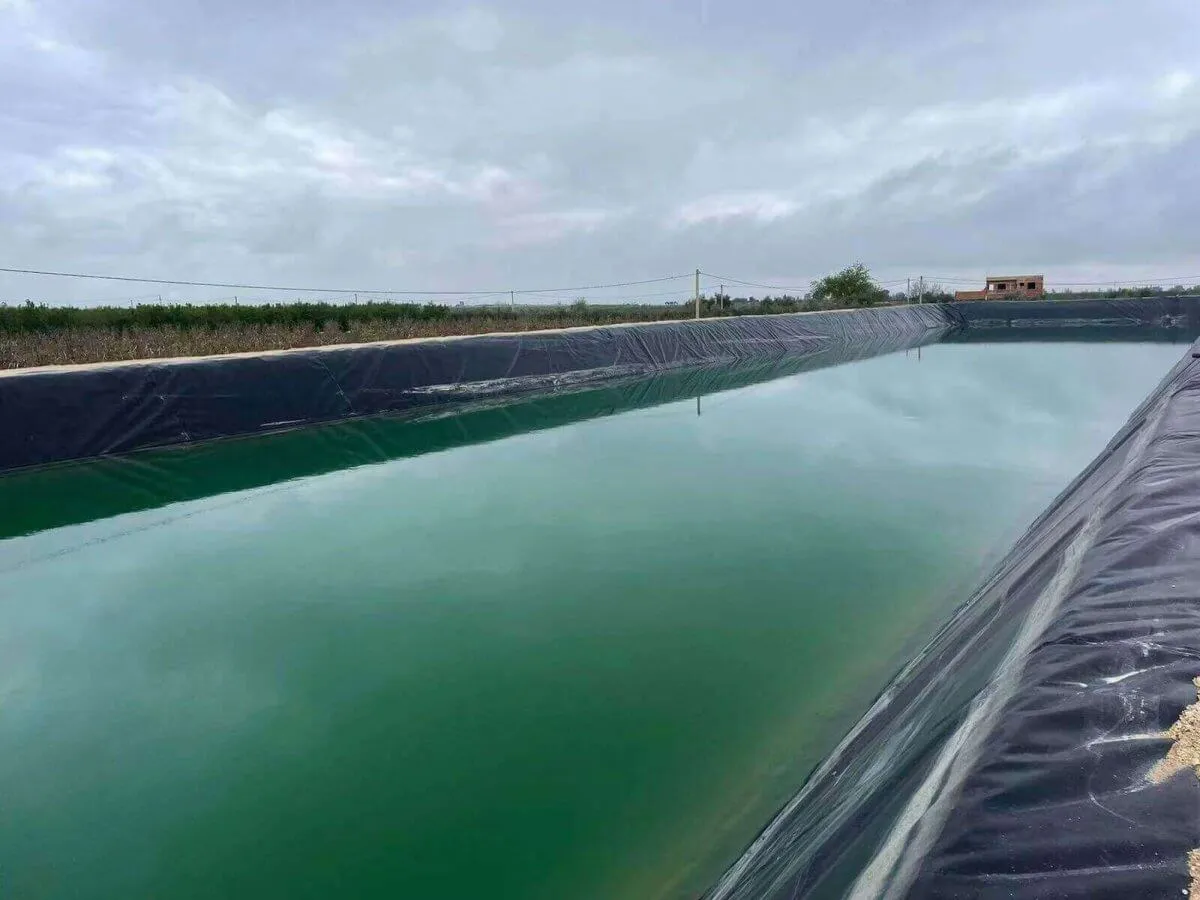
Advantages of Plastic (HDPE) Ditch Liners:
- Cost-Effective: HDPE liners generally have a lower material and installation cost compared to concrete.
- Flexibility and Adaptability: Plastic liners are flexible and can conform to uneven surfaces and the natural contours of the ditch, reducing the need for extensive earthwork. This flexibility also makes them more resistant to cracking from ground movement.
- Excellent Chemical Resistance: HDPE is highly resistant to a wide range of chemicals, making it a suitable choice for industrial and agricultural applications where the water may contain fertilizers, pesticides, or other contaminants.
- Lightweight and Easy to Install: Plastic liners are lightweight and can be deployed quickly, often without the need for heavy machinery, significantly reducing installation time and labor costs.
- Waterproof: When properly seamed, HDPE liners provide a virtually leak-proof barrier, offering superior water conservation.
Disadvantages of Plastic (HDPE) Ditch Liners:
- Susceptibility to Puncture: While durable, plastic liners can be punctured by sharp rocks, debris, or equipment. Careful site preparation and, in some cases, the use of a protective geotextile underlayment are necessary.
- UV Degradation: Although many modern HDPE liners contain UV inhibitors, prolonged exposure to direct sunlight can cause the material to degrade over time. A soil or aggregate cover is often recommended to extend the liner’s lifespan.
- Specialized Seaming: Achieving watertight seams between sections of plastic liner requires specialized welding equipment and trained technicians.
Concrete vs. Plastic Ditch Liners: Which Is Better?
When deciding between concrete ditch liners and plastic ditch liners, the right choice depends on project requirements, budget, and long-term goals.
| Factor | Concrete Ditch Liner | HDPE / Plastic Ditch Liner |
|---|---|---|
| Durability | 20–30 years with minimal maintenance | 10–20 years depending on exposure |
| Cost | High upfront construction cost | Lower material and installation cost |
| Installation | Requires heavy equipment and skilled labor | Can be installed by smaller crews, easier to transport |
| Flexibility | Rigid, not adaptable to soil movement | Flexible, conforms to ground shifts |
| Waterproofing | Excellent if cracks are prevented | Excellent, but must be protected from punctures |
| Maintenance | Low, but repairs are expensive | Easy to patch and repair if damaged |
| Best Use | Permanent, large-scale channels with high water flow | Agricultural irrigation, smaller ditches, projects requiring quick installation |
In summary:
Choose concrete ditch liners for long-term, large-scale, high-capacity water channels where strength is critical.
Choose HDPE or plastic ditch liners for agriculture, landscaping, and projects requiring flexibility, cost efficiency, and ease of installation.
What is the Best Liner for a Ditch? The Deciding Factors
The optimal choice between a concrete and a plastic ditch liner is not a one-size-fits-all answer. It hinges on a careful evaluation of several factors:
- Project Budget: For projects with tight budgets, the lower initial cost of plastic liners is often a deciding factor.
- Longevity and Durability Requirements: In applications where a very long service life and high resistance to physical damage are paramount, concrete may be the preferred choice.
- Soil Conditions: In areas with unstable or expansive soils, the flexibility of plastic liners makes them a more suitable option than rigid concrete.
- Water Chemistry: For ditches carrying water with potentially corrosive chemicals, the inert nature of HDPE offers a distinct advantage.
- Installation Time and Labor: When rapid installation is critical, the ease and speed of deploying plastic liners can be a significant benefit.
- Environmental Considerations: The lower carbon footprint associated with the production and transportation of plastic liners may be a factor for environmentally conscious projects.
Conclusion
A ditch liner is a important solution for managing water efficiently and preventing erosion. Whether you choose a concrete ditch liner for long-term durability or a plastic ditch liner such as HDPE for cost-effective flexibility, the decision depends on your project size, budget, and expected service life.
Concrete ditch liners: Best for permanent, high-flow ditches with long-term use.
HDPE ditch liners: Best for agricultural irrigation, landscaping, and projects requiring flexibility.
In conclusion, both concrete and plastic ditch liners offer effective solutions for water management. The enduring strength of concrete makes it a reliable choice for long-term, heavy-duty applications, while the flexibility, cost-effectiveness, and ease of installation of plastic liners, particularly HDPE, have made them an increasingly popular and versatile alternative. By carefully weighing the pros and cons of each material in the context of specific project needs, engineers, farmers, and land managers can select the ideal ditch liner to ensure the efficient and sustainable conveyance of our most precious resource: water. If you have any question,feel free to contact us,and follow our Linkedin Facebook Youtube Instagram for more information.
Recent Post
Aquaculture Pond Lining in Indonesia | From Design to Installation
From Project Drawing to Water Filling: An Aquaculture Pond Lining Project in Indonesia This aquaculture pond project in Indonesia started with a project drawing.The customer firstly contacted us
When Is Geotextile Really Necessary?
When Is Geotextile Really Necessary in Civil Engineering Projects? Geotextiles are widely used in modern infrastructure and environmental engineering. However, a common question among engineers, designers, and contractors is: Is geotextile always necessary? In
Woven Polypropylene Geotextile Manufacturer | Engineering Grade & Landscape Fabric
Woven Polypropylene Geotextile Manufacturer | Engineering Grade & Landscape Fabric By Planetliner — Manufacturer of High-Performance Woven PP Fabrics for Global Projects Woven polypropylene geotextile has become a fundamental material in civil engineering, environmental protection,