
Geosynthetic Drainage Systems for Water and Leachate Collection
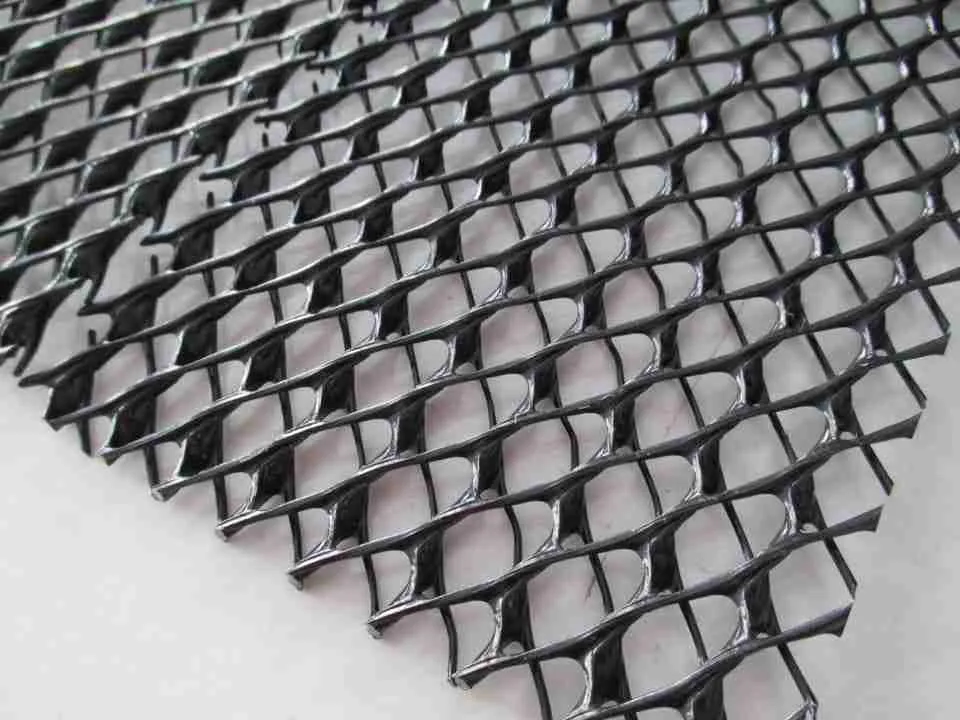
Geosynthetic drainage systems collect and transmit liquids or gases within a thin engineered layer. They can supplement or replace conventional granular drainage in suitable designs, reducing excavation, aggregate handling and system thickness.
Planetliner supplies HDPE geonets, drainage geocomposites and nonwoven geotextiles. Selecting them requires the expected flow, loading and surrounding materials, because a high catalogue flow rate may not represent long-term buried performance.
Quick Answer
An HDPE geonet provides an in-plane flow path, while a drainage geocomposite combines the drainage core with one or two geotextile filter layers. Selection should be based on long-term transmissivity under expected compressive stress, hydraulic gradient and boundary conditions—not only an initial laboratory flow value.
What Project Problems Does This Application Solve?
- Leachate collection in landfills
- Gas drainage beneath caps or barriers
- Drainage behind retaining structures
- Leak detection in double-liner systems
- Water pressure behind geomembranes
- Need to reduce thick granular drainage layers
Recommended Geosynthetic System
| Project Condition | Recommended Product | Primary Function | Selection Focus |
| Liquid/gas transmission | HDPE geonet | In-plane drainage | Transmissivity under load |
| Drainage + filtration | Drainage geocomposite | Drainage + filtration | Core capacity and filter compatibility |
| Leachate collection | Geonet/geocomposite | Drainage | Chemical exposure and normal stress |
| Barrier underdrain | Geocomposite + geomembrane | Drainage + containment | Interface and long-term flow |
How to Select the Right Materials
Check required flow, hydraulic gradient, drainage length, normal stress, long-term creep, geotextile intrusion, chemical environment, biological clogging potential and installation damage. The design value should reflect field loading and long-term reduction factors where applicable. Filter compatibility is also essential when soil contacts the drainage composite.
HDPE geonet forms the flow path. When soil or fine material could enter that path, filtration must be addressed separately.
A drainage geocomposite may have geotextile on one or both sides, depending on the surrounding layers. Choose the configuration for the actual interfaces. Adding fabric to every side is not a substitute for examining which side receives soil, liquid or contact with another geosynthetic.
Nonwoven geotextile can act as a filter, but it should not be assumed to provide the same in-plane flow capacity as an engineered drainage core. For soil-retention questions, review separation and filtration.
Use drainage performance under relevant conditions
Transmissivity describes the ability of a material to transmit fluid in its plane under defined test conditions. A useful comparison specifies normal stress, hydraulic gradient, contact surfaces and test duration. Two reported values may not be comparable if those conditions differ.
Long-term assessment should consider core deformation, geotextile intrusion, chemical or biological clogging and other relevant reductions. The resulting allowable flow must meet the design demand with the margins required by the project method. The GRI reference catalogue includes GC8 guidance on allowable flow for drainage geocomposites.
Also check interface stability on slopes. Drainage capacity and shear resistance are separate performance requirements, and both can govern material selection.
Detail connections and outlets before covering
Drainage panels must form a continuous flow path. Core joints, fabric overlaps, terminations and pipe connections should follow the approved detail. Protect the core from soil entry during installation and inspect for crushing or displacement before placing cover.
An outlet needs sufficient capacity and a reliable discharge route. Where access is possible, provide for inspection and maintenance. A continuous drainage layer can still fail to control water if its outlet becomes blocked or submerged beyond the design assumptions.
In containment facilities, distinguish drainage above a barrier from an engineered collection layer between two barriers. The latter can support leak detection when the complete liner and monitoring arrangement is specified. See containment systems for the related functions.
Typical Industries and Projects
This application is commonly relevant to: Waste; Mining; Transportation; Water; Energy. The exact material system should be matched to the engineering function, site conditions, design life and project specification.
Project / Case Reference
Example: in a landfill or process-pond system, a drainage geocomposite may be installed adjacent to a geomembrane to transmit leakage or gas toward collection points. Under high normal load, the design should verify that the drainage core retains adequate transmissivity over the intended service life.
Frequently asked questions
What is the difference between geonet and drainage geocomposite?
A geonet is primarily a drainage core. A drainage geocomposite normally combines that core with geotextile filter layers to add filtration and protect the flow path.
Can geocomposite replace gravel drainage?
In some engineered systems it can reduce or replace granular drainage, but equivalence must be demonstrated using long-term flow capacity, loading, filtration and project requirements.
Why is long-term transmissivity important?
Drainage cores can deform under sustained compression, and adjacent geotextiles can intrude into the core. Initial flow alone may overstate long-term capacity.
Can a geocomposite replace drainage gravel?
Sometimes, subject to hydraulic capacity, loading, durability and interface checks. Aggregate may still be needed for other functions or specific details. Compare the full design rather than replacing thickness for thickness.
Does a thicker core always drain more effectively?
No. Core geometry, deformation under load, intrusion and boundary conditions affect performance. Compare tested capacity under conditions relevant to the project.
What controls the installed cost?
Material grade, roll layout, filter configuration, joints, outlets, installation and access all matter. A lower roll price can be offset by more complicated connections or greater installation waste.
Related Products, Industries & Solutions
Related solutions: Sealing & Containment; Separation & Filtration.
Related products: Geonet; Drainage Geocomposite; Nonwoven Geotextile; Geomembrane.
Discuss Your Project with Planetliner
Send your project drawing, application, dimensions, soil or slurry conditions, required engineering function, existing specification and destination. Planetliner can help identify suitable geosynthetic material options, specifications and quantities for further engineering and procurement evaluation.
CTA: Send Your Project Requirements → Get a Geosynthetic Material Recommendation