
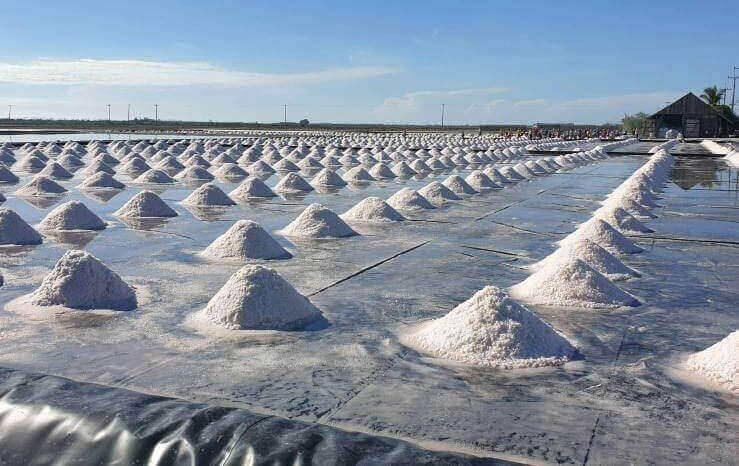
Evaporation Pond Liners for Brine, Salt and Process Water
An evaporation pond uses sun and air to remove water from a liquid. The liquid becomes more concentrated as water disappears. Some ponds recover useful salt. Others reduce the volume of industrial wastewater that needs further handling.
A geomembrane evaporation pond liner has a clear purpose: keep that liquid from escaping into the soil. Evaporation is the intended process. Seepage is an uncontrolled loss. In a salt-production project, seepage may lose both water and valuable dissolved material.
The difficult part is that the pond does not hold the same liquid all year. Concentration changes. Salt accumulates. The floor may become dry and then wet again. A useful lining proposal follows this operating cycle instead of treating the basin as a clean-water reservoir.
Start with the pond duty
A solar evaporation pond used for brine concentration transfers liquid between cells as salts become more concentrated. The lining must suit the liquid in its own cell. A later-stage pond can see a different chemical mixture from the first pond.
A crystallization pond is also a working surface. Salt forms on the floor and is harvested. The removal method matters as much as the incoming water analysis. A blade scraping close to the membrane creates a different risk from pumping concentrated brine out of a cell.
A wastewater evaporation basin may accumulate residues that need removal and controlled disposal. Calling the water saline does not identify its other chemicals. Send the actual analysis and describe how residues will be collected.
An emergency or seasonal evaporation basin may sit empty for long periods. Wind, animals and rising groundwater then become important. The membrane must remain secure when there is little liquid holding it down.
Check the liquid at its strongest stage
Collect chemistry information for the feed, the expected concentrated liquid and any cleaning chemicals. Include normal temperature and unusual hot discharges. A single pH reading is not enough to establish chemical suitability.
For many salt and mineral brines, an approved HDPE geomembrane is a practical starting option. Confirm the exact formulation against the expected liquid and temperature. For continuous hot service, ordinary HDPE data should not be treated as evidence for a specialist high-temperature duty. Cooling or a verified alternative grade may be necessary.
Use smooth HDPE for an exposed pond floor where cleaning and inspection need a reasonably even surface. Texture is relevant on covered slopes if the design needs more grip between layers. It is not automatically beneficial over a flat salt-harvesting floor.
The chemical resistance page and HDPE product page carry the detailed material discussion. For this application, make the concentrated-liquid assessment and harvesting method the basis of the proposal.
Keep concentration cells and harvesting cells distinct
For a brine project that transfers liquid before crystals are removed, consider two separate supply zones. In the concentration cells, an exposed smooth HDPE barrier may suit the approved chemistry and controlled access. Provide protection at transfer inlets and a defined route for inspection. Do not add a soil cover that interferes with the intended process without the process designer’s approval.
In cells entered by harvesting machines, start with the working-surface design. Establish the permitted removal depth and the layer that keeps equipment off the barrier. Then specify the HDPE and cushioning below that layer. Price these cells separately, even if they have the same area. Their protection requirements and maintenance costs differ.
Decide how salt will be removed before choosing protection
Write down the harvesting sequence. Will the pond be drained fully? How much salt stays above the liner? Will loaders enter? How will the operator know the blade is safely above the membrane?
If equipment operates inside the cell, the designer must establish a protected working layer or another approved method that keeps wheels, tracks and tools off the membrane. The layer needs enough strength and separation for the actual equipment. A geotextile alone is not a haul road.
A protective cushion beneath the membrane addresses rough foundation contact. Protection above the membrane addresses salt removal and working loads. These are different locations with different jobs. Supplying one roll of fabric and calling it protection does not resolve both.
Consider a dedicated access ramp and controlled collection area. Mark the permitted removal depth and train the harvesting crew before the first season. Leave a clear method for detecting exposed membrane during work. Stop operations at a damaged area rather than covering it with the next salt layer.
Arrange cells so one can be maintained
A multi-cell pond system can allow one cell to be isolated for cleaning while others remain in service. This needs planned transfer pipes, isolation controls and enough operating capacity. It is a process decision, not something a liner supplier can determine from area alone.
Place transfer structures where operators can reach them without dragging equipment across the membrane. Detail each pipe connection with the correct membrane fitting and support. Pipe movement should not pull the lining away from its attachment.
Separate external stormwater from the brine circuit. An intense storm can dilute the process, raise pond levels and damage access roads. The operating plan needs a safe response to rainfall; adding membrane thickness does not create extra storage volume.
For proposals, identify each cell by duty and installation phase. This lets the supplier assign rolls and quantities to the right zone. It also prevents one cell’s approved specification from being assumed suitable for every cell.
Manage the risks during empty periods
An empty evaporation pond can expose a large sheet to wind. The contractor needs temporary restraint during installation and permanent anchorage under the design. Avoid isolated improvised weights that can concentrate force or puncture the material.
Groundwater may rise beneath a drained basin. Check seasonal levels against the pond floor. Where an underdrain is required, it needs a discharge route and a maintenance plan. It must not become an uncontrolled route for contaminated liquid.
Sun exposure and daily heating can create wrinkles. Plan panel placement and seams around the installation conditions. Do not force a hot membrane flat by overstretching it. Give the local installer the agreed procedures and material information early.
Inspect exposed seams, corners and anchor areas whenever a cell is empty. Distinguish salt crust from membrane damage. Keep compatible repair material available at the site. Detailed welding and testing belong on the welding page and testing page.
Strong Sun and Heat Exposure
Evaporation ponds are normally open by design.The membrane may experience strong sunlight and large temperature changes.This affects construction as well.
During deployment, large exposed panels can expand and move.The contractor should manage:
- deployment timing;
- temporary ballast;
- wind;
- welding sequence.
Choose the specification from operations
The engineer should set thickness and performance requirements from the foundation, liquid depth, exposure and harvesting loads. Ask which risk the proposed thickness addresses. More material can improve some damage resistance, but it does not fix scraping directly against the membrane.
For a supply inquiry, provide a pond plan, cell sections, chemistry by stage, temperatures and liquid levels. Include harvesting equipment, removal frequency, groundwater information and any protection layer. State the liner grade, surface and applicable acceptance requirements.
Ask Planetliner to quote the membrane, specified geotextile and drainage materials separately. Request roll identification, agreed batch testing and the resin declaration. For remote sites, also request roll weights, unloading needs, shipment sequence and a small agreed repair allowance. Price comparisons should use the same total supply scope.
A public brine project reference
At Western Australia’s Beyondie sulphate-of-potash project, Solmax reports a 100,000 m² pilot installation in 2017 and a pond network of approximately 4 km². The final site installation was completed in 2020. The case describes HDPE supply from overseas and installation by local contractors.
For an importer, the useful lesson is to test the operating approach and organize large deliveries around cell construction. The selected 1.0 mm product was specific to that project. It is not a default recommendation for another brine pond. This is an external case, not a Planetliner project.