What is The Best Farm Pond Liner?
Water is the lifeblood of any agricultural or aquaculture operation,so A reliable farm pond is necessary.In the world of modern agriculture and aquaculture, . Whether you’re managing a fish farm, irrigating crops, or creating a water storage solution, the success of a pond depends heavily on preventing seepage and maintaining water quality. That is where a farm pond liner becomes essential.Among the various options available,PVC RPE HDPE LLDPE EPDM, HDPE (High-Density Polyethylene) geomembranes liners have become the most popular choice for farmers and agricultural projects worldwide.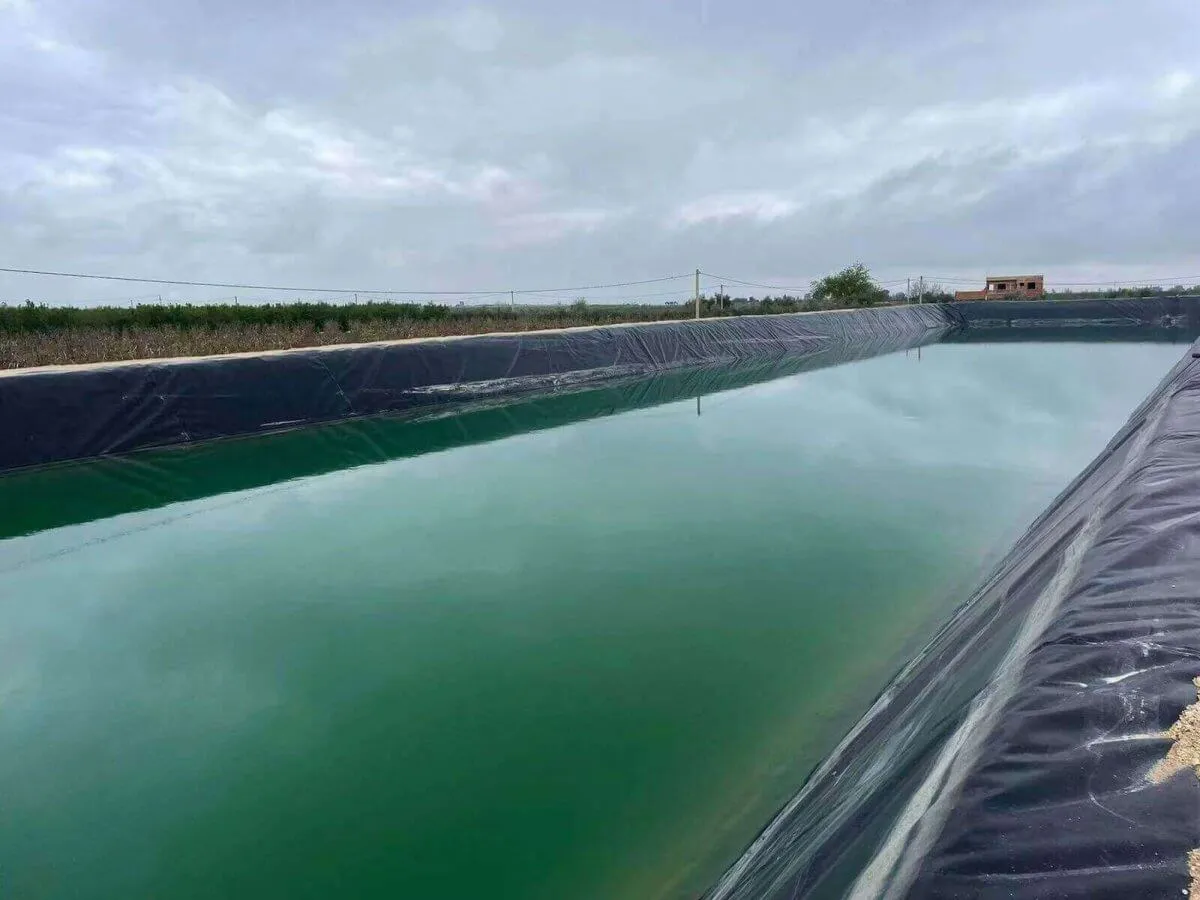
As a leading manufacturer with decades of experience in geosynthetics, we’ve seen firsthand how the right liner can transform a farm’s efficiency and sustainability. This guide is designed to share our expertise, helping you understand the different types of pond liners, why High-Density Polyethylene (HDPE) is the gold standard for liners for agriculture, and most importantly, how to ensure a successful pond liner installation.
Why Do You Need a Farm Pond Liner?
Some ponds often face problems such as:
Water loss through seepage – reducing available water for crops or animals,have a add water with money.
Poor water quality – due to soil erosion or mixing with underground contaminants, the crops, animals,even fish shrimp will have disease.
High maintenance costs – constant refilling and repairing,wasting labor and material.
By useing a high-quality water pond liner, you mainly can:
Water Conservation: It creates an impermeable barrier, virtually stop water loss through seepage. This ensures a consistent water level, even during dry season, to keep your supply for irrigation or livestock.
Water Quality Control: A liner prevents soil-borne contaminants, chemicals from adjacent fields, and underground pollutants from leaching into your pond. For aquaculture, this means a healthier, more stable environment for your fish, free from harmful bacteria and diseases that can live in the mud.
Types of Pond Liners for Farms
There are several materials used for pond liners:
Clay or Bentonite Liners – Natural but require professional compaction; not always effective.
PVC Liners – Flexible but less durable and not UV-resistant.
EPDM Liners – Strong and elastic, but relatively expensive.
HDPE Pond Liners – High-Density Polyethylene, widely used for agriculture and aquaculture due to durability and cost-effectiveness.
Comparison of Pond Liner Types
| Feature | HDPE | LLDPE | EPDM | PVC |
|---|---|---|---|---|
| Durability | Excellent | Good | Very Good | Fair |
| UV Resistance | Excellent | Good | Good | Fair |
| Puncture Resistance | Excellent | Good | Good | Fair |
| Chemical Resistance | Excellent | Good | Very Good | Good |
| Lifespan | 10-20 years | 8-15 years | 10-20 years | 3-10 years |
| Installation Ease | Professional | DIY-Friendly | Professional | DIY-Friendly |
| Cost | Medium-High | Medium | High | Low-Medium |
Why is HDPE the best liner for a farm pond?
HDPE geomembranes are manufactured from premium polyethylene virgin resin, composed of approximately 97.5% high-density polyethylene and 2.5% carbon black, anti-aging agents, antioxidants, UV absorbers, and stabilizers. This excellent formulation creates a material with exceptional properties that make it ideally suited for both agricultural and aquacultural uses.
Key Benefits of HDPE Pond Liners
Superior Water Conservation: HDPE liners have an extremely low permeability coefficient, preventing water seepage into the soil. This keep consistent water levels and significantly reduces water consumption, making your operation more sustainable and cost-effective.
Enhanced Water Quality Management: By creating a barrier between the water and soil, HDPE liners prevent toxic substances from being absorbed from the ground into your pond while simultaneously reducing the loss of oxygen through seepage. This leads to healthier aquatic environments with less management required.
Durability and Longevity: High-quality HDPE liners contain UV inhibitors and anti-aging components that provide resistance against sunlight degradation. With proper installation and maintenance, these liners can last over 20 years, making them a long-term solution for agricultural water management.
Improved Productivity and Efficiency: The smooth surface of HDPE liners inhibits algae growth and prevents weeds, mud, and other debris from accumulating in ponds. This not only improves water quality but also makes harvesting faster and more efficient, particularly for fish farming operations.
Structural Advantages: Compared to unlined ponds, HDPE-lined ponds can feature steeper slopes and greater depths, maximizing water storage capacity while minimizing the footprint of your water retention facilities.
Disease Prevention: In aquaculture applications, HDPE liners isolate the water from soil-borne pathogens, reducing disease transmission and decreasing the need for medications or chemicals.
Farm Pond Liner Cost
The cost of a farm pond liner depends on several factors:
Size of the pond (e.g., 50×50 pond, 100×100 pond, or 1-acre pond).
Thickness of the liner (commonly 0.5mm, 0.75mm, 1mm, 1.5mm or thicker).
Installation method (professional installation vs. DIY).
On average, HDPE pond liner cost per square foot ranges between $0.50 – $2.50, depending on thickness and supplier. For large farm projects, buying directly from pond liner manufacturers can significantly reduce the price.
The Ultimate Guide to HDPE Pond Liner Installation
The pond liner performance is only as good as its installation. Proper installation is needed to achieving the longevity and reliability of an HDPE system. This is where expertise and experience truly matter.
Step 1: Site Preparation
The foundation of a successful installation is a perfectly prepared subgrade.
- Clear the Area: Remove all rocks, roots, stumps, and any sharp objects from the pond area. The ground must be completely smooth.
- Excavate and Grade: Dig your pond to the desired dimensions. Ensure the side slopes are gradual and stable, typically a 3:1 ratio (three feet horizontal for every one foot of vertical drop) is recommended.
- Dig an Anchor Trench: At the top edge of the pond, at least 1.5 feet back from the slope, excavate a continuous trench approximately 1 foot wide and 1 foot deep. This will be used to securely anchor the liner.
- Compact the Soil: The entire surface should be compacted and smooth. Any voids or sharp angles can create stress points on the liner.
Step 2: Deploying the Geotextile Underlayment
Do not skip this step. A non-woven geotextile underlayment is a thick, felt-like fabric installed directly onto the soil before the HDPE liner. Its purpose is to act as a cushion, protecting the liner from punctures from any underlying sharp objects that may have been missed or that might surface over time.
Step 3: Liner Roll Deployment
HDPE liners are delivered in large, heavy rolls.
- Position the Rolls: Carefully position the rolls of liner at the top of the pond, ready to be unrolled down the slopes.
- Unroll with Care: Unroll the panels according to the planned layout. Avoid dragging the liner across the ground. Have sufficient manpower to lift and place it. It’s best to perform this on a calm, mild day, as wind can make large panels difficult to manage.

Step 4: Professional Thermal Seaming (The Key to Success)
This is the most critical phase and requires specialized equipment and certified technicians.
- Overlap: The panels are overlapped by several inches.
- Welding: Technicians use either a fusion welder or an extrusion welder to heat the two layers of HDPE to their melting point. Pressure is then applied to fuse them together, creating a permanent, homogenous seam.
- Quality Control: Every inch of the seam must be visually inspected and pressure tested to ensure a perfect, leak-free seal.
Step 5: Securing the Liner
Once all panels are welded, the edges of the liner are placed into the anchor trench. The trench is then backfilled with compacted soil, securely locking the entire liner system in place.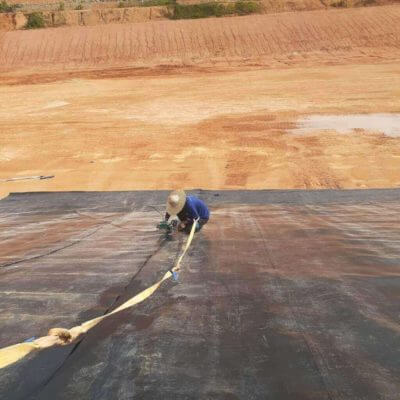
Installation Precautions: Do’s and Don’ts
- DO hire certified installation professionals. HDPE welding is not a DIY job.
- DON’T allow unnecessary foot traffic on the liner. If you must walk on it, wear soft-soled shoes.
- DO ensure the subgrade is perfectly smooth, compacted, and free of debris.
- DON’T attempt installation in extreme temperatures (too hot or too cold), as it can affect material handling and weld quality.
- DO perform rigorous quality control checks on all seams before filling.
Maintenance Tips for Farm Pond Liners
Maximize the lifespan and performance of your HDPE liner with proper maintenance:
Regular Inspections: Conduct periodic visual inspections for signs of damage, particularly after extreme weather events or heavy usage periods.
Cleaning Procedures: Remove debris and sediment accumulation regularly to prevent unnecessary stress on the liner material.
UV Protection: Although HDPE contains UV inhibitors, limiting direct sunlight exposure through water coverage or shading can extend its lifespan.
Prevent Physical Damage: Implement measures to prevent accidental damage from equipment, animals, or sharp objects.
Professional Repairs: Address any punctures or tears immediately using professional repair kits and techniques to prevent problem escalation.
Conclusion
A well-installed HDPE farm pond liner is one of the best investments for farmers, ranchers, and aquaculture businesses. It ensures water conservation, improves quality for irrigation and livestock, and reduces overall costs.
If you are planning a new pond or upgrading an existing one, consult reliable pond liner manufacturers and suppliers to get the right solution for your project. With proper pond liner installation and care, your farm pond will deliver consistent benefits for decades. Follow our Linkedin Youtube Facebook Pinterest for more details!
Frequently Asked Questions (FAQ) About HDPE Farm Pond Liners
Q: How can I get an accurate cost estimate for my farm pond liner?
A: The total farm pond liner cost depends on three main factors: 1) the material cost, which is based on the liner’s thickness and total square footage; 2) the cost of the geotextile underlayment; and 3) the cost of professional installation. The best way to get an accurate estimate is to contact us directly. Our experts will ask for your pond’s dimensions (length, width, depth), review your site conditions, and provide a detailed, all-inclusive quote for your project.
Q: What is the expected lifespan of an HDPE pond liner, and what can affect it?
A: A high-quality HDPE liner, installed correctly, has an expected service life of over 30 years, with many installations lasting much longer. The two most critical factors for longevity are proper site preparation with a protective underlayment and professional installation featuring high-quality thermal welds. Our HDPE is manufactured with carbon black for maximum UV resistance, ensuring it withstands decades of sun exposure without degrading.
Q: Why is professional installation so critical for HDPE liners? Can I do it myself?
A: Unlike smaller, flexible liners that might use tapes or adhesives, HDPE liners achieve their superior, leak-proof seal through a process called thermal fusion welding. This requires expensive, specialized equipment and certified technicians who are trained to create and test these permanent seams. A DIY installation cannot replicate this process, and improper seaming is the number one cause of liner failure. Investing in professional pond liner installation guarantees the integrity and long-term performance of your entire system.
Q: Is HDPE liner safe for fish (aquaculture) and for livestock drinking water?
A: Absolutely. This is one of HDPE’s most significant advantages. It is a highly stable, inert polymer that is non-toxic and does not leach any chemicals or plasticizers into the water. It is certified as safe for potable water containment, making it the ideal choice for raising healthy fish in an aquaculture environment and providing clean, safe drinking water for your livestock.
Q: How do I choose the right thickness for my HDPE liner?
A: The right thickness depends on your specific application. Here are some general guidelines:
- 30-40 mil (0.75mm – 1.0mm): Suitable for small to medium-sized ponds with smooth, stable subgrades and no heavy traffic.
- 60 mil (1.5mm): This is the most common and recommended thickness for most liners for agriculture, including irrigation ponds, canals, and large farm ponds. It offers an excellent balance of durability and cost-effectiveness.
- 80 mil (2.0mm) or thicker: Used for very large reservoirs, applications on challenging terrain, or where there is a risk of damage from equipment or heavy livestock. Our experts can help you select the perfect thickness based on your project’s specific needs.
Q: Can an HDPE liner be repaired if it gets a puncture?
A: Yes. HDPE is highly repairable. A trained technician can easily repair a puncture or tear using an extrusion welder to apply a patch of the same HDPE material. The patch is permanently welded to the liner, creating a seal that is just as strong and durable as the original liner, ensuring the long-term integrity of your pond.
Recent Post
Aquaculture Pond Lining in Indonesia | From Design to Installation
From Project Drawing to Water Filling: An Aquaculture Pond Lining Project in Indonesia This aquaculture pond project in Indonesia started with a project drawing.The customer firstly contacted us
When Is Geotextile Really Necessary?
When Is Geotextile Really Necessary in Civil Engineering Projects? Geotextiles are widely used in modern infrastructure and environmental engineering. However, a common question among engineers, designers, and contractors is: Is geotextile always necessary? In
Woven Polypropylene Geotextile Manufacturer | Engineering Grade & Landscape Fabric
Woven Polypropylene Geotextile Manufacturer | Engineering Grade & Landscape Fabric By Planetliner — Manufacturer of High-Performance Woven PP Fabrics for Global Projects Woven polypropylene geotextile has become a fundamental material in civil engineering, environmental protection,