
Geogrid Retaining Wall Design: An Engineer’s Guide to Cost Optimization and Risk Avoidance
-2025 Malaysia High Strength Polyester Geogrid Retaining Wall Case
When designing a geogrid retaining wall, the material selection is often viewed as a simple cost decision. However, the true cost lies in the risk of failure due to poor design or incorrect material specification.This in-depth guide, created by our manufacturing engineers, moves beyond basic product specs to provide a data-driven framework. We will specifically address:The critical difference between Short-Term Strength (STS) and Long-Term Design Strength (LTDS) in geogrid selection.Three common retaining wall failure modes and how to prevent them.Practical strategies to reduce your material costs by up to 20% through structural optimization and precise material matching.
If you are working in construction or engineering in Malaysia, you probably know how important it is to build strong retaining walls. Whether for highways, railways, or residential projects, geogrid retaining walls provide excellent reinforcement and stability. Geogrid is a high-strength synthetic material used to reinforce soil structures, making retaining walls stronger and more durable.
In Malaysia, the demand for geogrid retaining walls is increasing, especially for projects requiring long-term stability and cost-effectiveness. Our one Malaysia client imported geogrid specifications (60/30kN, 80/30kN, 100/30kN) for the retaining wall projects,and some projects and products photos as following.
Project Country:Malaysia geogrid retaining wall
Products: Polyester Geogrid
Specification: 60/30kN,80/30kN,100/30kN


What is a Geogrid Retaining Wall?
A geogrid retaining wall is a structure that uses geogrid reinforcement to improve soil strength. Unlike traditional walls, which rely only on concrete or stone, geogrid walls integrate synthetic grids into the soil. These grids distribute the load evenly, preventing soil movement and increasing wall stability.
Geogrids are commonly used in:
Highway and railway embankments
Slope protection
Retaining walls in residential and commercial areas
Bridge abutments
Malaysia’s tropical climate, with heavy rainfall and shifting soils, makes geogrids an essential material for retaining wall projects.


Benefits of Using Geogrid Retaining Walls
Choosing geogrid reinforcement for your retaining wall has many advantages:
Stronger Stability – Geogrids increase soil strength and prevent landslides or collapses.
Cost-Effective – Reduces the need for excessive concrete, lowering construction costs.
Easy Installation – Lightweight and flexible, making installation faster and easier.
Long Lifespan – Resistant to environmental factors like moisture and chemicals.
Eco-Friendly – Reduces the use of concrete, promoting sustainable construction practices.
Many Malaysian engineers prefer geogrid retaining walls because of their efficiency in stabilizing slopes and embankments.
Our geogrid retaining wall clients want to use the Tencate Geogrid,GX60/30 GX80/30 GX100/30,but the price is very high, so the client ask me about the TDS, and ask for the samples.
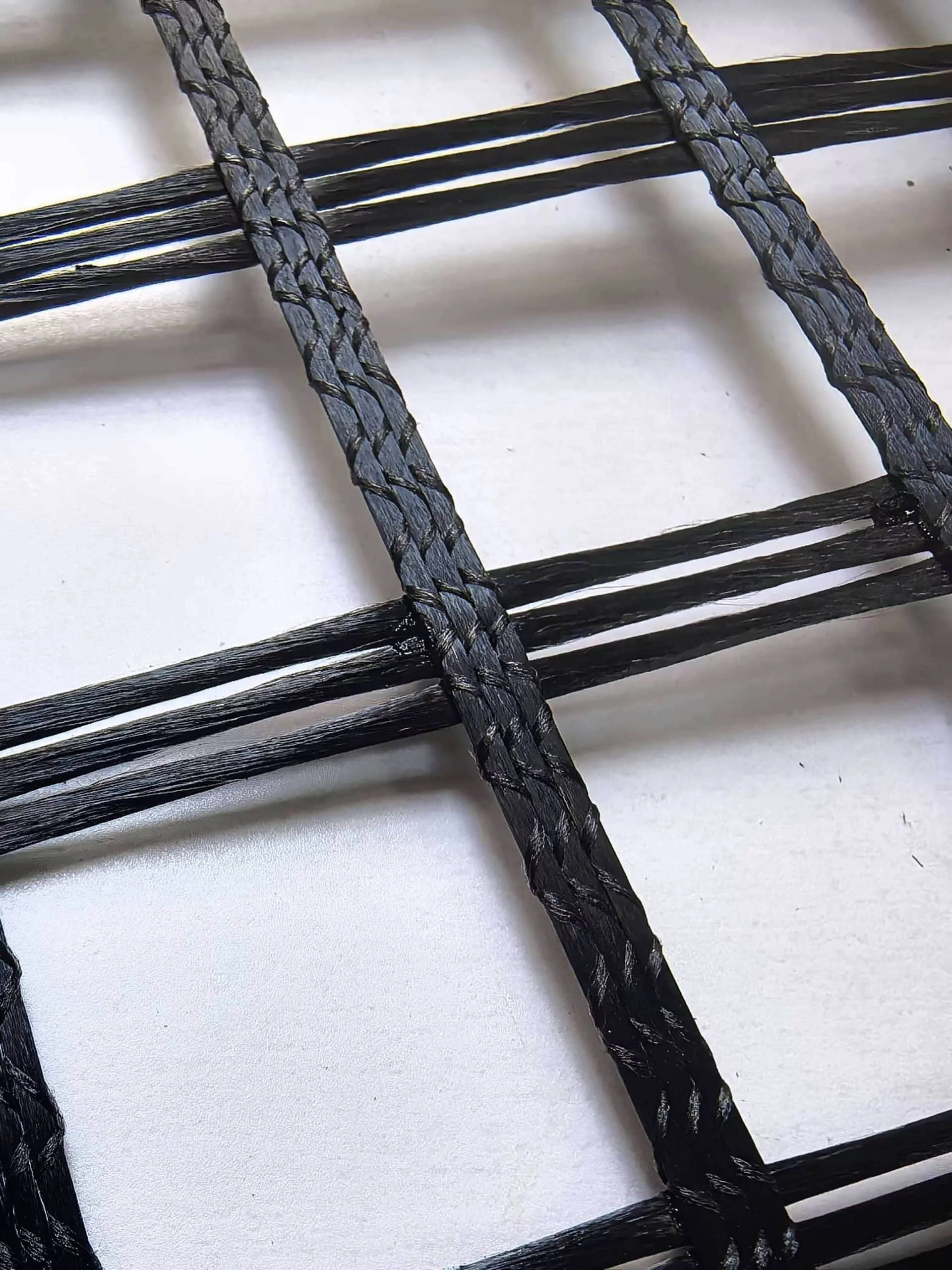
Our engineers check the TDS, and find the data is excellet, especially the strength at 5%strain,meanwhile, the client say the geogrid structure should be same as the tencate,like the Chain structure, otherwise the fiber will be open and easily broken.
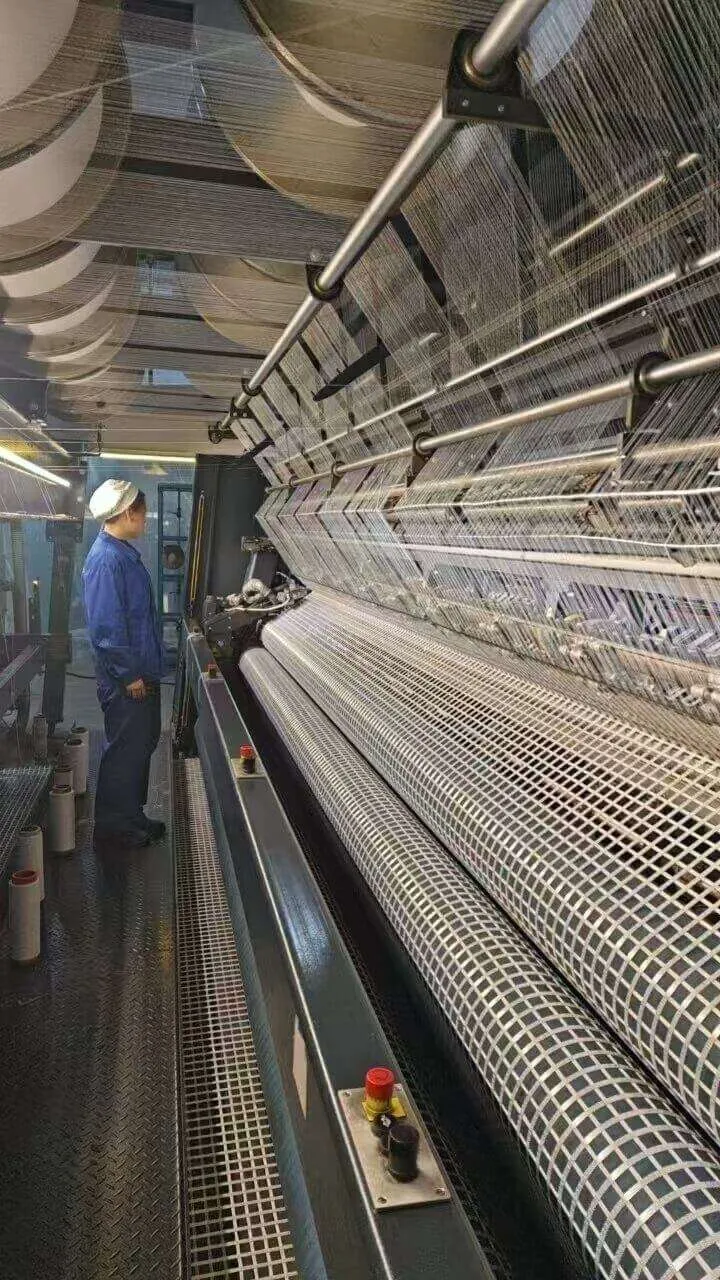
After listening to client requirement and the TDS, our engineers make the samples accordingly, and send samples to client. The samples are confirmed by client, the rest result as following and make the order soon.
The Three Hidden Risks of Geogrid Retaining Wall Failures
For any geogrid retaining wall project expected to last 50 years or more, recognizing these failure mechanisms is paramount:
1. Creep and Stress Relaxation (The LTDS Trap)
This is the most dangerous failure mode. Low-quality geogrids may pass immediate strength tests (STS), but over decades, constant pressure from the retained soil causes the grid to slowly deform and stretch—a process called creep. This dramatically reduces the actual load-bearing capacity (LTDS).
Engineer’s Insight: Always demand third-party LTDS certification for your specific project lifespan. Comparing LTDS over 75 years is more critical than comparing short-term ultimate strength.
2. Differential Settlement at the Base
Inconsistent soil compaction or unexpected voids at the base of the wall can cause the structure to settle unevenly, leading to tilting or cracking. High-quality geogrids act as a foundation stabilizer, providing uniform tensile reinforcement to mitigate this risk.
3. Chemical and UV Degradation
Projects near landfills, marine environments, or in regions with high UV radiation (common in the Middle East and Southeast Asia) require specific materials. A standard geogrid retaining wall material may rapidly degrade if not explicitly formulated for chemical resistance and UV stability.

| Items | 60/30 | 80/30 | 100/30 |
|---|---|---|---|
| Break Strength1 | 70.2 | 93.5 | 124 |
| Break Strength2 | 34.8 | 35.6 | 36.9 |
| Elongation1 | 9.6 | 10 | 11 |
| Elongation1 | 11.7 | 11.2 | 12.7 |
| Strength at5% | 41.6 | 50.9 | 63.1 |
| Strength at8% | 63.9 | 81.3 | 104 |
How to Choose the Right Geogrid for Your Retaining wall?
Woven vs. Welded: A Data-Driven Material Comparison
| Feature | PET (Polyester) Geogrid | HDPE (Polyethylene) Geogrid | Conclusion for Retaining Walls |
|---|---|---|---|
| LTDS & Creep Resistance | Very High. Excellent for high-load, extreme-height walls. | High. Suitable for most standard retaining wall applications. | Decision: PET for ultra-high walls; HDPE for cost-effective standard walls. |
| Chemical Resistance | Good. Performs well in neutral pH environments. | Superior. Excellent in high pH (alkaline) or chemically aggressive soils (landfills). | Decision: Choose HDPE for chemically active sites to reduce long-term risk. |
| Junction Integrity | Woven structure provides high junction strength. | HDPE is often welded, ensuring a structurally uniform junction. | Decision: Both are effective; focus on manufacturer’s quality control for junction integrity. |
Here’s a simple guide to help you decide:
Assess the Load:
Light loads (e.g., garden walls): Choose 60/30kN.
Medium loads (e.g., highways): Go for 80/30kN.
Heavy loads (e.g., ports): Use 100/30kN.
Check the Soil Type:
Soft soil (common in Malaysia): Opt for higher-strength geogrids like 80/30kN or 100/30kN.
Consider the Slope:
Steeper slopes need stronger geogrids to prevent sliding.
Budget:
If cost is a concern, start with 60/30kN and upgrade only if necessary.
The numbers in geogrid names (like 60/30kN) refer to their strength. The first number is the longitudinal strength (how much force it can handle along its length), and the second is the transverse strength (force across its width). Here’s why these three specs are ideal for Malaysian projects:
1. 60/30kN Geogrid
Best for: Small to medium projects like garden walls, light road embankments, or residential retaining walls.
Why it works: It’s cost-effective and provides enough strength for most everyday applications.
Example: Use 60/30kN geogrids for a terraced garden in Kuala Lumpur.
2. 80/30kN Geogrid
Best for: Medium to heavy-duty projects like highway slopes, commercial building foundations, or industrial sites.
Why it works: It offers higher strength for areas with heavier loads or steeper slopes.
Example: Use 80/30kN geogrids to stabilize a slope along the North-South Expressway.
3. 100/30kN Geogrid
Best for: Large-scale infrastructure projects like bridges, ports, or high-rise building foundations.
Why it works: It’s designed for extreme conditions, such as areas with heavy rainfall or unstable soil.
Example: Use 100/30kN geogrids for a retaining wall at a port in Penang.

How to Install a Geogrid Retaining Wall
Installing a geogrid retaining wall involves a few simple steps:
Site Preparation – Clear and level the ground before placing any materials.
Excavation – Dig the required trench depth for wall stability.
Laying the Geogrid – Unroll the 60/30kN, 80/30kN, or 100/30kN geogrid, ensuring proper alignment.
Backfilling with Soil – Add compacted soil in layers to strengthen the wall.
Layering and Stacking – Continue adding geogrid layers until the desired height is reached.
Final Compaction – Use machinery to compact the soil for maximum durability.
Proper installation ensures your geogrid retaining wall lasts for decades with minimal maintenance.
Cost Optimization: Slashing Geogrid Material Use by 20% Through Smart Design
Reducing material cost for a geogrid retaining wall is achieved through precise engineering, not cheap sourcing. Here’s how you can optimize your design:
1. Utilizing Uniaxial Geogrid for Targeted Reinforcement
Most retaining wall applications require strength primarily in one direction (perpendicular to the wall face).
The Error: Using bi-axial geogrids (strong in two directions) where only one direction is needed is often a material waste.
The Solution: By switching to uniaxial geogrid, you provide the necessary tensile strength exactly where required, often resulting in significant material cost savings without sacrificing safety factors.
2. Accurate Calculation of Pullout Resistance
The length of the geogrid layers is determined by the required pullout resistance. Our engineering team uses Finite Element Analysis (FEA) to calculate the minimum required length and spacing based on your soil type and wall height, preventing over-specification and excess material usage that can inflate project costs by 15-20%.
A successful geogrid retaining wall is defined by its longevity and cost-efficiency. Your selection process should be guided by data, not guesswork.
To ensure your project is both compliant and cost-optimized, follow this final checklist:
Verify LTDS: Do not accept STS data; demand the Long-Term Design Strength report.
Match Material to Environment: Choose HDPE for aggressive environments (alkaline, chemical), and PET for ultra-high strength demands.
Optimize Structure: Ask your supplier about uniaxial options and design optimization services.
Ready to start your risk-managed project?
Please follow our Linkedin, Facebook for more details. Click here to instantly receive our Geogrid Retaining Wall Material Technical Datasheet.
Recent Post
Aquaculture Pond Lining in Indonesia | From Design to Installation
From Project Drawing to Water Filling: An Aquaculture Pond Lining Project in Indonesia This aquaculture pond project in Indonesia started with a project drawing.The customer firstly contacted us
When Is Geotextile Really Necessary?
When Is Geotextile Really Necessary in Civil Engineering Projects? Geotextiles are widely used in modern infrastructure and environmental engineering. However, a common question among engineers, designers, and contractors is: Is geotextile always necessary? In
Woven Polypropylene Geotextile Manufacturer | Engineering Grade & Landscape Fabric
Woven Polypropylene Geotextile Manufacturer | Engineering Grade & Landscape Fabric By Planetliner — Manufacturer of High-Performance Woven PP Fabrics for Global Projects Woven polypropylene geotextile has become a fundamental material in civil engineering, environmental protection,