

Polypropylene Geogrid for Aggregate Bases and Ground Stabilization
Polypropylene geogrid is also called PP geogrid, it is an open grid made from polypropylene. Biaxial PP products are commonly considered for granular road bases, access routes and yards, where the grid helps restrain movement within the stone layer. The useful purchasing question is how the offered product fits the aggregate, ground conditions and approved design method.
Planetliner supplies polypropylene geogrid for importers, distributors and contractors. Send the required grade and the project specification for a supply review. If the product has not been selected, provide the ground information, aggregate description and intended traffic so the enquiry starts with the application rather than a catalogue number alone.
Buy the grid for the stone layer it will work with
Picture the first loaded truck crossing a newly placed road base. The stone carries the wheel load, but particles can move sideways and the weak soil beneath can deform. A correctly selected grid is one part of the response. It does not replace the need for suitable aggregate, drainage and an appropriate layer thickness.
PP biaxial geogrid is often evaluated where the project needs restraint in two principal directions. That includes broad granular areas where traffic does not follow one narrow line. Product selection still depends on the specific grid and the design evidence. The phrase biaxial is a description of direction, not a road performance certificate.
For the full site sequence, including investigation and trial areas, use our geogrid road stabilization page. This page concentrates on selecting and buying the polypropylene product used within that solution.
Understand the structure you are ordering
An extruded polypropylene geogrid is commonly formed from a sheet, punched to create openings and stretched to develop the grid structure. The narrow members are called ribs. Their intersections are called junctions. The openings are called apertures. These terms matter because they describe different parts of the material being inspected.
A buyer can examine a sample for consistent openings, damaged ribs and distorted junction areas. However, bending the sample by hand does not establish its approved stiffness or its behaviour in the proposed aggregate. Ask for measured properties and their methods where the specification requires them.
Products described as integral biaxial grids, extruded grids or polypropylene mesh need an exact grade reference. A picture of a square pattern is not enough to identify the construction. Keep the approved sample labelled so the receiving team has a useful visual reference alongside the written acceptance documents.
Do not let one tensile number decide the order
A description such as 30/30 kN/m may identify a specified tensile strength in each of two directions. Confirm the supplier’s direction convention and the basis of the figures. A typical test result, a guaranteed minimum and a statistical declaration are not interchangeable purchasing promises.
Road performance cannot be read directly from ultimate tensile strength. The selected aggregate, the openings and the behaviour of the ribs and junctions affect the interaction. Where a design relies on product-specific performance evidence, a grid with a similar breaking strength may still require a new approval review.
| Product detail | What to check in the offer | Why it matters to the buyer |
| Polymer and construction | PP and the exact grid structure | Avoids quoting a different product family |
| Directional tensile properties | Units, method and declaration basis | Makes the offered grade comparable |
| Openings and geometry | Dimensions and specified tolerances | Helps assess compatibility with the fill |
| Junction information | Relevant measured properties or evidence | Addresses a different feature from rib strength |
| Product evaluation | Scope and conditions of supporting work | Shows whether a claimed benefit applies |
ASTM D6637 is a tensile test method for geogrids. A reference to it should be attached to the reported property, not used as a blanket statement that the grid is approved for every highway or heavy vehicle.
Send the aggregate description with the enquiry
Aggregate is more than its largest stone size. The mixture of sizes, particle shape and amount of fine material affect how the layer behaves. A photograph can help explain the proposed material, but a grading report gives the designer information that a photograph cannot.
If the aggregate source is still being selected, say so. Ask whether the proposed alternatives require separate review. A grid selected using one quarry material should not automatically be accepted with another material that has a different grading or particle shape.
The same discipline applies when a contractor proposes recycled aggregate. Its availability may make it attractive, but grading, variability, contamination and suitability for the works still need checking. A supplier should not promise that the grid will make any locally available fill perform like specified crushed stone.
Decide whether a separate geotextile is needed
An open grid normally does not provide fine-soil filtration. On a wet site, mud may move into the granular layer while stones press down into the soil. The design may therefore require a geotextile as well as a grid.
The fabric and grid should have separate functions in the specification. The geotextile overview explains separation and filtration choices. Confirm the layer arrangement on the drawing so the installation crew knows which material goes where and how the junctions are treated.
If a combined product is proposed, ask for its exact construction and evidence rather than assuming that attaching fabric to grid preserves every property of the separate products. Procurement should describe the actual item to be delivered, including any composite arrangement, instead of using a general phrase such as reinforcement fabric.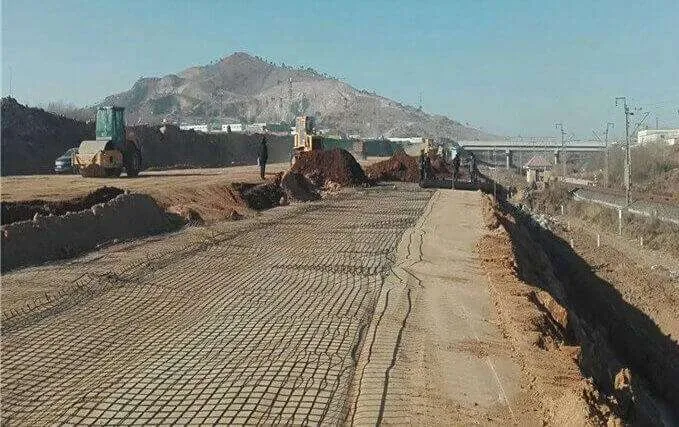
Review the exposure and handling conditions
The polypropylene name does not specify an unlimited service life. The proposed grade, exposure and design requirements need to be considered together. Where ultraviolet exposure requirements apply, ask for the relevant evidence and the permitted handling and storage instructions for the product.
Keep rolls protected from avoidable damage during unloading and storage. Agree whether the site has suitable lifting equipment and enough space to unroll the product without dragging it across sharp debris. Damaged packaging should trigger inspection of the grid underneath, not an assumption that either the whole roll is sound or the whole roll is unusable.
The construction method also matters. A grid can be damaged before the finished pavement carries its first vehicle. The project method should define first-cover placement, equipment access and inspection. Product documentation needs to support that method rather than leave the site crew to guess from the roll label.
Order the area that can actually be installed
Road plan area is only the beginning of a material estimate. Include the approved side overlaps, end overlaps, widening, turnouts and details around obstructions. Show these items separately so the purchaser can see why the order exceeds the simple length multiplied by width.
A wider roll may reduce the number of side joints, but the site must be able to unload and place it. A longer roll may reduce end joints, but it can be awkward where crews work in short sections between existing traffic. Compare a practical layout, not just total square metres per roll.
| Information for roll planning | Question to resolve | Procurement consequence |
| Road or yard width | Can one roll cover the working strip | Number of side joints |
| Approved overlap detail | What area is consumed at each joint | Gross quantity to order |
| Access and equipment | Can crews unload and move the rolls | Acceptable mass and dimensions |
| Staged construction | Which sections open first | Shipment and bundle sequence |
| Irregular areas | Where are cuts or changes of direction needed | Remnants and additional panels |
Do not use a standard waste percentage to hide an unknown layout. For an early budget, identify the allowance as provisional. Replace it with the approved roll arrangement when the project quantity is finalized.
Compare bulk supply offers on equal terms
For PP geogrid wholesale enquiries, define the grade, roll dimensions, area and destination before comparing prices. Ask which documents, inspections and packing details are included. A quote that excludes a required acceptance test is not directly comparable with one that includes it.
Distributors should also decide how the product will be described to their customers. Keep the grade name, dimensions and stated properties consistent across labels, stock lists and technical sheets. Avoid selling a road stabilization product as permanent wall reinforcement without the evidence and approval that application requires.
Planetliner can discuss supply against a written requirement and identify any proposed deviations. Production timing, minimum quantity and shipment arrangements should be confirmed for the actual order. A general product page cannot replace the commercial terms of a specific quotation.
Use a simple receiving and release process
On arrival, check the roll count and labels against the packing list. Record visible damage and separate questionable material until it has been reviewed. Keep grade identity intact if rolls are moved to another storage area or split between subcontractors.
Before releasing material for installation, confirm that the accepted technical sheet matches the delivered grade. If independent sampling is required, arrange it before crews consume the shipment. Keep a copy of the accepted documents accessible to the supervisor who approves the first area of work.
For repeat orders, do not assume that a familiar appearance means every detail is unchanged. Confirm the current product reference and specification revision. This is especially useful for importers buying for several contractors whose projects may use different acceptance rules.
Questions about polypropylene geogrid
Is PP geogrid the same as biaxial geogrid
No. PP identifies the polymer, while biaxial describes properties in two principal directions. Many PP road products are biaxial, but those terms answer different questions. Ask for the complete product description and the required directional values on the quotation.
Can I use PP geogrid in a permanent retaining wall
Only use a product supported and accepted for that wall system. A PP road grid is not a substitute simply because its tensile number looks suitable. Where PET is being evaluated for structural reinforcement, use our polyester geogrid page to prepare the product enquiry.
Will geogrid let me reduce the stone thickness
A reduction needs an accepted design method and evidence relevant to the proposed system. Do not remove stone using a supplier’s general percentage. Compare the approved alternatives on total construction cost, including the grid, fabric if required, aggregate and installation.
What if the specification names another supplier
Send the complete specification and the substitution requirements. A comparison should identify matching properties and any gaps in evidence. Approval rests with the project authority. A matching aperture photograph or nominal strength is not enough to establish equivalence.
Send your PP geogrid specification
For a useful quotation, provide the required product properties, quantity, roll preferences, destination and arrival deadline. Include the aggregate information and project application where these affect acceptance. If the order is for stock, identify the specifications your customers normally request.