
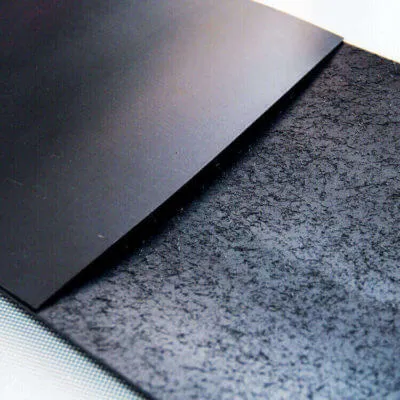
Geomembrane Liners for Water, Waste, Mining & Containment Projects
Geomembrane is an impermeable polymer sheet used to control the movement of liquids and gases in engineering and environmental projects. In a reservoir, it keeps water from disappearing into the soil. In a landfill, it helps isolate leachate from the environment. In a mining pond, it becomes part of a containment system that must resist chemicals, pressure and harsh site conditions
Planetliner manufactures and supplies HDPE geomembrane,LLDPE geomembrane and Textured geomembranes for importers,contractors, distributors and engineering projects worldwide. With more than 10 years of geosynthetics export experience from China, our focus is straightforward:
Reliable engineering performance, Consistent virgin resin, Practical project support and Competitive factory-level supply!
For our standard engineering geomembrane, we use 100% virgin polyethylene resin rather than recycled resin. You only to choose smooth or textured surfaces, agreed roll dimensions and performance requirements matched to your specification. We help coordinate material supply, relevant test documents, packing and export shipment, so you can compare more than a price per square metre.
If you already have a drawing or specification, send it to us. We can help review the appropriate material, thickness, surface and estimated quantity before quotation:
Material → Thickness → Surface → Roll size → Quantity → Packing → Shipping
1.What Is Geomembrane ?
Geomembrane is a manufactured polymer sheet with very low permeability. It is installed as a barrier in civil, environmental and hydraulic engineering systems to reduce the migration of water, wastewater, chemicals, leachate or gases.Most engineering geomembranes are made from polyethylene.HDPE and LLDPE are both polyethylene materials, often described as PE geomembranes,Common forms include:
- HDPE geomembrane
- LLDPE geomembrane
- Smooth geomembrane
- Textured geomembrane
- Composite geomembrane
Geomembrane sheets are delivered in rolls, laid over prepared ground and joined to create a continuous lining. Common uses include reservoirs, aquaculture ponds, landfills and mining facilities.Although buyers often call it an impermeable liner or waterproof membrane, a finished containment system still depends on right design and installation.
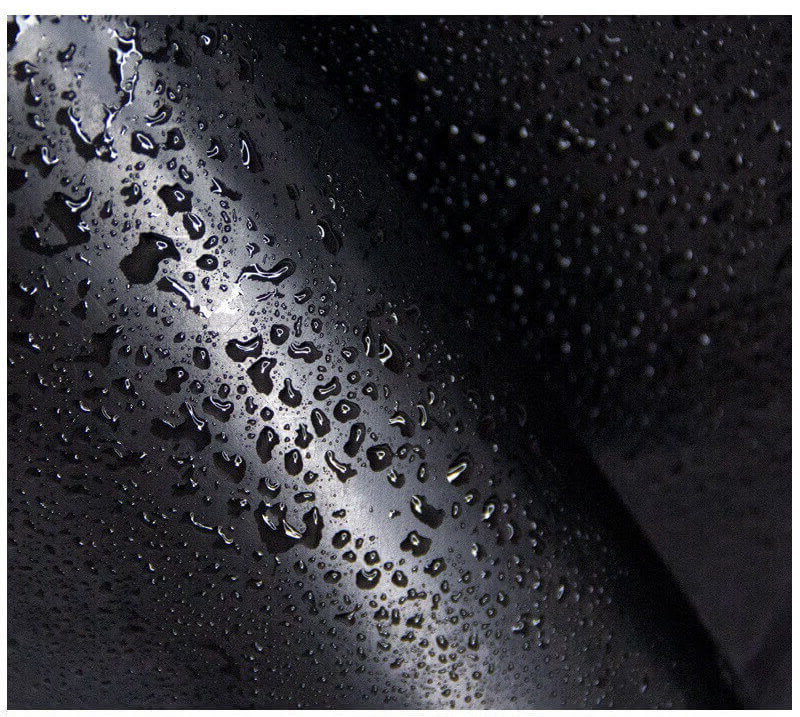

2.Why Are Geomembranes Used?
Traditional clay, concrete or compacted-soil barriers can perform well in suitable designs, but engineering projects often require a barrier with predictable thickness, low permeability and controlled factory production.
A geomembrane lining system can provide:
- Very low liquid permeability
- Reliable water and wastewater containment
- Resistance to many chemicals
- UV resistance for exposed applications
- Consistent manufactured properties
- Large-area installation with welded seams
- Adaptability to ponds, slopes and complex structures
- Compatibility with geotextile, GCL and drainage geocomposites
That is why geomembranes are widely used as primary barriers in environmental containment structures.But the membrane should not be viewed in isolation.
A typical engineered system may look like:Prepared subgrade → GCL or protection geotextile → geomembrane → drainage layer → protective cover
The exact configuration depends on the project.
3.Geomembrane Specifications
Use the following information to prepare a quotation request. Final production dimensions and performance values must be confirmed for the selected product.
| Item | Supply or selection information |
| Main materials | HDPE and LLDPE, composite configurations subject to confirmation |
| Resin commitment | 100% Virgin polyethylene resin, no recycled resin |
| Surface | Smooth or textured, matched to the project specification |
| Thickness | Range of 0.3–3.0 mm, depending on product,confirm the required thickness and applicable standard |
| Common thicknesses | 0.5, 0.75,1.0,1.5 and 2.0 mm, other specifications by agreement |
| Roll dimensions | Max Width up to 8 m,depending on product,confirm roll length and handling requirements |
| Color | Black is standard,confirm other colours and their performance requirements |
| Acceptance basis | Agreed standard edition, test methods,minimum values,tolerances and sampling plan |


4.Geomembrane types and how to choose them
Material and surface are separate choices. HDPE or LLDPE describes the polymer material. Smooth or textured describes the surface types.
| Option | Main characteristic | What the buyer should check |
| HDPE geomembrane | Relatively stiff polyethylene liner with chemical resistance suited to many containment uses | Chemical exposure,stress-crack resistance,installation conditions and required tests |
| LLDPE geomembrane | More flexible polyethylene liner that can make deformation in suitable designs | Expected settlement,strain limits,chemical compatibility and protection requirements |
| Smooth geomembrane | Popular surface for many pond and containment layouts | Subgrade condition,slope design and interaction with adjacent layers |
| Textured geomembrane | Surface texture can improve friction with adjacent materials | Project-specific interface shear testing,texture alone does not prove slope stability |
| Composite geomembrane | A membrane combined with a geotextile or another specified layer | Membrane thickness, textile properties, bonding and the proposed joint detail |


4.1 HDPE Geomembrane vs LLDPE Geomembrane
Material selection should be based on project design requirements, chemical exposure, subgrade conditions, installation method and required mechanical performance.Other geomembrane materials include PVC and EPDM,and Planetliner focuses on polyethylene liners,compare materials against the actual project requirements.
| HDPE Geomembrane | LLDPE Geomembrane | |
|---|---|---|
| Material | High-density polyethylene | Linear low-density polyethylene |
| Strength | Higher stiffness and mechanical strength | High flexibility and elongation |
| Flexibility | Moderate | High |
| Chemical Resistance | Excellent for many demanding containment applications | Good to excellent depending on formulation and chemical exposure |
| Settlement Adaptability | Good | Excellent |
| Surface Options | Smooth / Textured | Smooth / Textured |
| Typical Applications | Landfill liners,Landfill caps,Heap leach pads,Tailings and mining ponds,Industrial wastewater,Reservoirs,Secondary containment,Biogas projects,Aquaculture ponds | Water reservoirs,Aquaculture ponds,Irrigation ponds.Secondary containment,Covers,Projects where flexibility is a major design consideration |
| Project requires | High chemical resistance,High tensile strength,Good UV resistance,Dimensional stability,Long-term exposed or buried service,Large welded liner systems | Uneven surfaces,Complicated geometry,Expected settlement,Local deformation,Irregular pond shapes |
4.2 Smooth vs Textured Geomembrane
Smooth geomembrane provides a relatively low-friction surface and is commonly used for flat or low-slope containment areas, including ponds, reservoirs, wastewater systems and other applications where high interface friction is not the primary design requirement.
Textured geomembrane provides higher interface friction than smooth geomembrane and is commonly considered for slopes and applications where improved soil-to-liner or liner-to-geotextile interaction is required.
Learn More Texture Geomembrane.


5.Geomembrane applications by industry
Geomembranes serve multiple industries. Below are the major geomembrane applications:
5.1 Water reservoirs and irrigation
Geomembrane pond liners reduce seepage from reservoirs, farm ponds, canals and water storage basins. For an exposed reservoir, consider sunlight, temperature changes, wind and anchoring as well as the sheet itself. Protect the liner around inlets, outlets and areas used for maintenance.
Explore water management projects.
5.2 Aquaculture and fish ponds
Fish and shrimp ponds need a liner that fits the pond layout and cleaning routine.Engineered lining systems can help to improve water quality, control seepage, and protect long-term farm profitability. Virgin resin alone does not establish such approval.
Explore aquaculture lining solutions.
5.3 Landfills and waste containment
A landfill liner system has one central purpose:keep leachate and waste-related liquids from migrating into the surrounding soil and groundwater.The geomembrane provides a barrier, while other layers protect it or collect liquid. The design may include a geosynthetic clay liner, protection geotextile, drainage and leak detection. Landfill caps have their own design requirements.
Explore waste containment projects.
5.4 Mining and process ponds
Heap leach pads, process-water ponds and tailings-related facilities can expose liners to chemicals, heavy loads and difficult ground conditions. Confirm the liquid composition, temperature, loading and drainage design before selecting a geomembrane material. HDPE is often considered, but the approved project specification should govern the purchase,and the geomembrane liner systems should meet the GISTM.
Explore mining containment solutions.
5.5 Wastewater and industrial containment
Treatment lagoons, evaporation ponds and tank containment areas need compatibility with the actual liquid. Send chemical names, concentrations, operating temperatures and exposure duration. These details help establish whether the proposed polyethylene geomembrane is suitable.
5.6 Energy and biogas
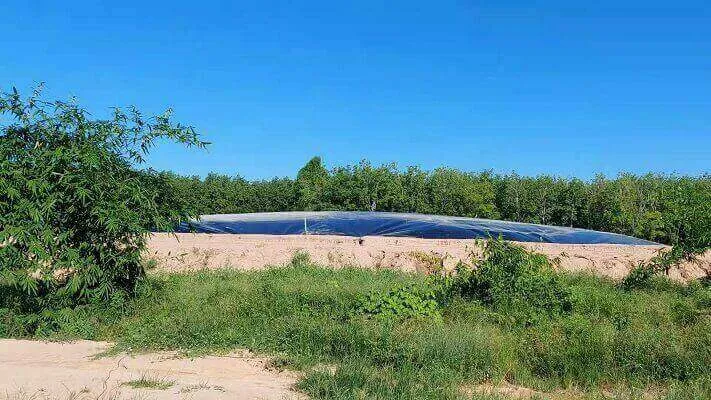
Geomembranes can form liners or covers in suitable biogas and digestate-storage systems. A floating cover needs a different design from a pond-bottom liner. Gas pressure, wind loads, anchoring and pipe connections all need review.
Explore energy infrastructure applications.
| Application | What the liner does | Information to provide before selection |
| Reservoirs and irrigation ponds | Reduces seepage into the ground | Dimensions, water depth, ground conditions and exposed or covered service |
| Fish and shrimp ponds | Provides a barrier between pond water and soil | Water conditions, cleaning methods and any required suitability testing |
| Landfills and waste facilities | Helps contain leachate or forms part of a cap | Approved liner design, loading, drainage and protection requirements |
| Mining and process ponds | Contains process liquids within the designed system | Chemical composition, temperature, loads and slope details |
| Wastewater and industrial containment | Helps control liquid leakage | Liquid composition, concentration, exposure duration and temperature |
| Biogas lagoons and covers | Contains liquids or gas within a dedicated design | Pressure, wind, anchoring, connections and operating conditions |
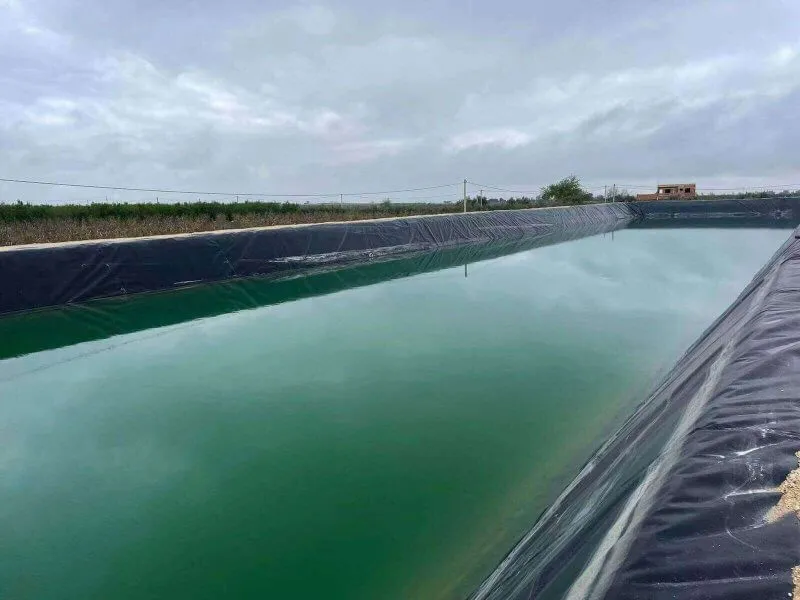
water management projects

waste containment projects
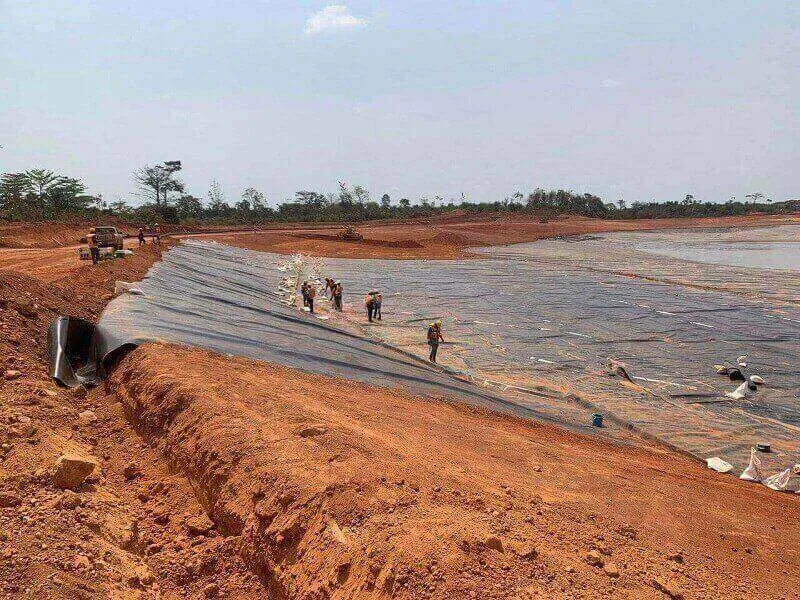
mining containment solutions

aquaculture lining solutions

Wastewater and industrial containment
energy infrastructure applications
6.What Should an Importer Check Before Buying?
For most buyers, the biggest risk is not finding the lowest price.It is receiving material that looks acceptable but does not match the required performance.
Before placing an order, confirm the following.
| Item | Information to Confirm |
| Material | HDPE / LLDPE / composite |
| Surface | Smooth / textured |
| Thickness | mm or mil |
| Roll width | According to project/logistics |
| Roll length | Standard or customized |
| Color | Normally black; project-specific options where available |
| Resin | Virgin resin requirement |
| Standard | Project specification / applicable ASTM methods |
| Quantity | m² / rolls / containers |
| Application | Landfill, mining, pond, reservoir, wastewater, etc. |
| Installation | Supply only or installation support |
| Destination | Port / country |
| Documents | TDS, test report, SGS documentation if required |
If you already have a technical specification, send it directly
7.Geomembrane price and what to compare in a quotation
A lower price is useful when the delivered product still meets the agreed requirements. Compare quotations on the same basis before choosing a geomembrane supplier.
Product basis: resin, surface, nominal thickness, tolerances, roll dimensions and required performance.
Quality basis: available reports, batch records, sampling requirements and responsibility for additional inspection.
Delivery basis: total area, net and gross weight, loading plan, destination port and agreed trade terms.
Commercial basis: minimum order quantity, production schedule, payment terms and the procedure for reporting discrepancies.
Geomembrane price depends on resin, thickness, texture,color, roll configuration, quantity and testing requirements. Freight also changes the landed cost. Compare price per square metre at the same specification, then assess the full delivered cost.
A wider roll may reduce the number of field seams, but it also changes handling and loading requirements. Match the roll plan to the installer’s equipment and the site layout.
Planetliner’s approach is to coordinate suitable production and export supply around your specification. The aim is a competitive material cost with the agreed resin and performance requirements kept clear.
7.How to check geomembrane quality before shipment
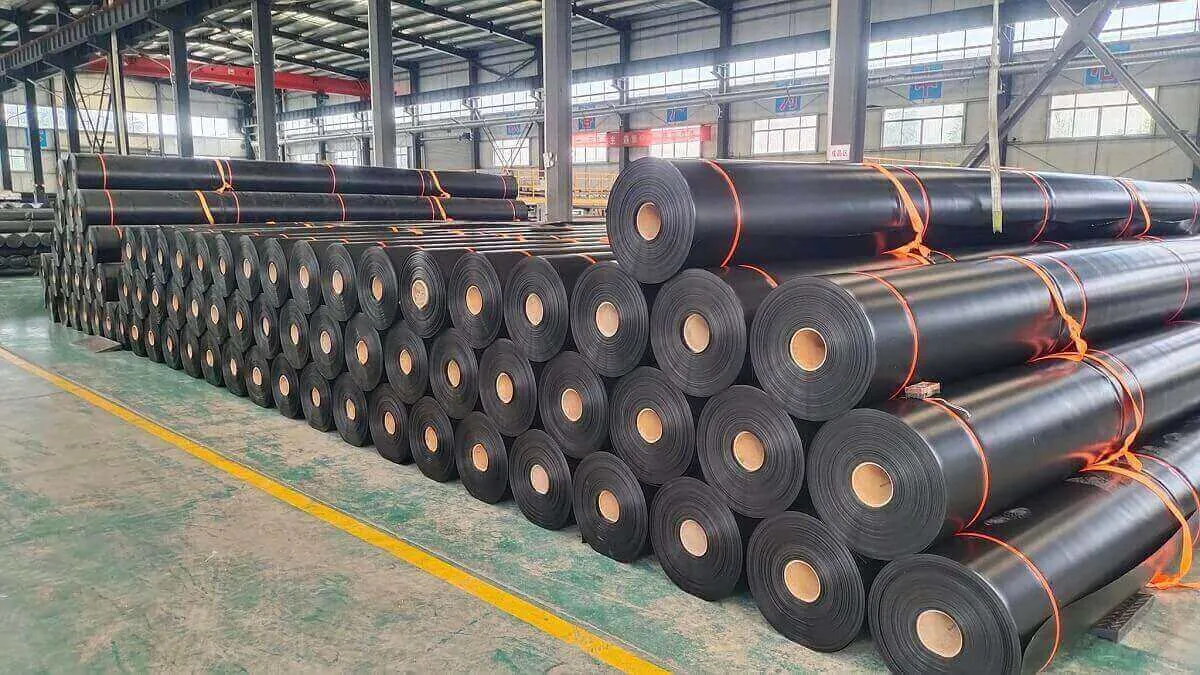
Two black geomembrane rolls can look same while differing in resin formulation, thickness and tested performance. Compare the specification and evidence behind the roll.
7.1 Confirm the resin requirement in writing
Planetliner’s supply commitment is 100% virgin polyethylene resin with no recycled resin. A finished black geomembrane also contains additives, including stabilisers and carbon black. Virgin resin does not mean a sheet made from polymer with no additives. Our market position is not to compete with premium multinational brands on brand value.It is to provide:
Reliable specification + virgin material + competitive Chinese manufacturing cost
for projects where buyers need engineering-grade performance without paying a large premium for an international brand name
7.2 Check thickness across the sheet
Do not inspect only the edges.It is better to test different positions across the roll width. Record the results against the roll or batch identification.
Smooth-sheet thickness and textured-core thickness require the appropriate measurement method. State the test method and acceptance limits in the order.
7.3 Check the delivered area and net weight
Confirm the roll width, length and net material weight. Keep the core weight and packaging weight separate.
For an smooth geomembrane sheet: Approximate net weight in kg = width in m × length in m × thickness in mm × density in g/cm³.
A 6 m × 100 m × 1.5 mm roll at an assumed density of 0.95 g/cm³ would weigh about 855 kg before the core and packaging. At the same dimensions and density, a 1.2 mm sheet would weigh about 684 kg.
This is a useful check, not proof of compliance. Use the product’s declared density, measured dimensions and agreed tolerances. Textured and composite products need a different assessment.
7.4 Match the test report to the product
Check the report’s sample description, material, thickness, test methods, date and results. Ask whether the tested sample represents the product being quoted. A report for one thickness or formulation does not automatically prove another product’s performance.We work with both Chinese GB requirements and ASTM-based project specifications.For engineering procurement, we recommend that the RFQ clearly states the test method and required value, rather than simply saying “ASTM standard.” Planetliner has geomembrane products teste report for each batch,Any additional testing should be agreed before production or shipment.

8.Geomembrane Installation Overview
A geomembrane sheet becomes a containment system only after it is laid, joined and inspected correctly.
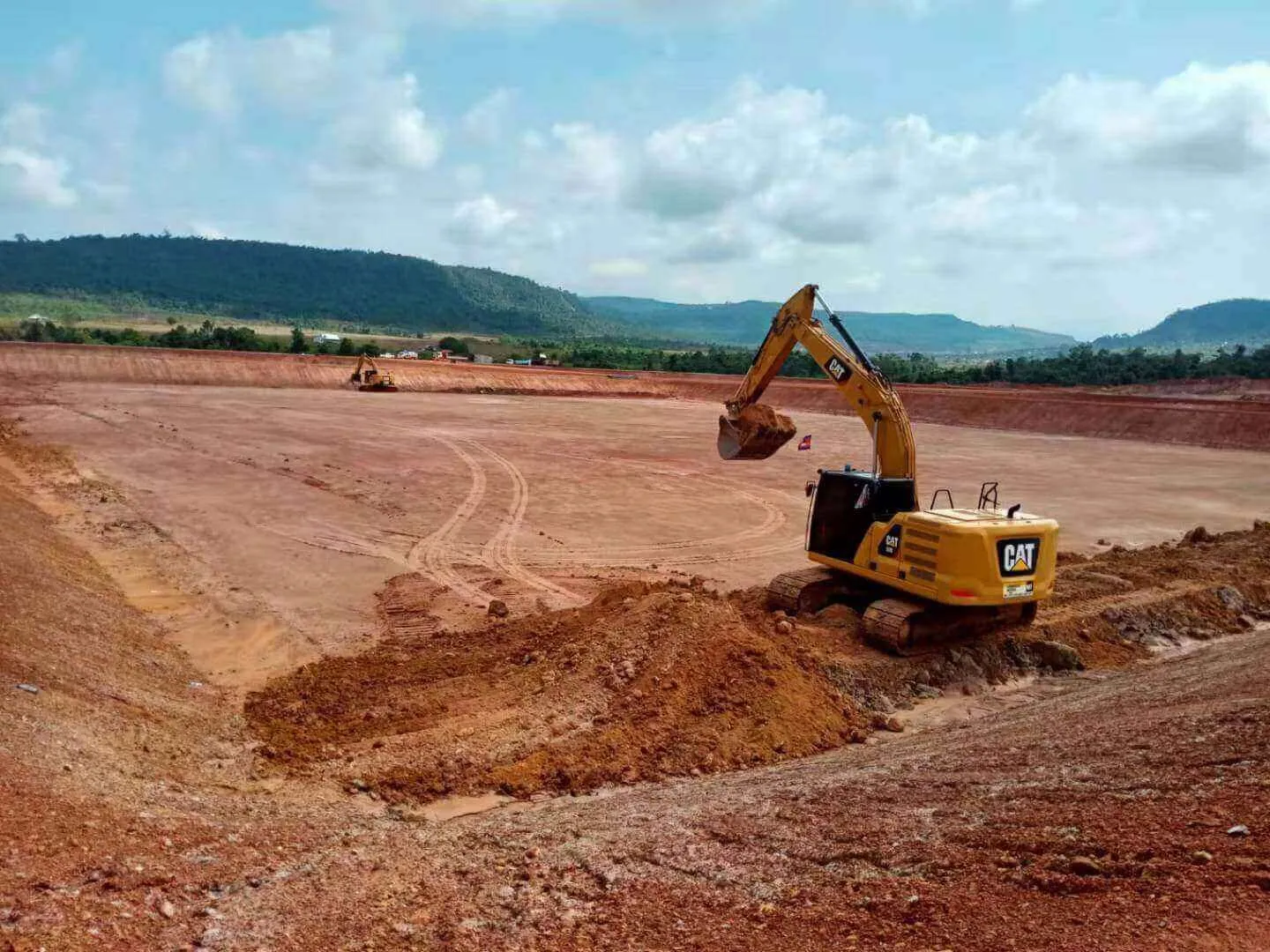
Prepare a firm, even surface and remove sharp debris. Install the specified protective layer. Unroll panels without dragging them over rough ground. Account for temperature-related expansion and contraction when planning installation.
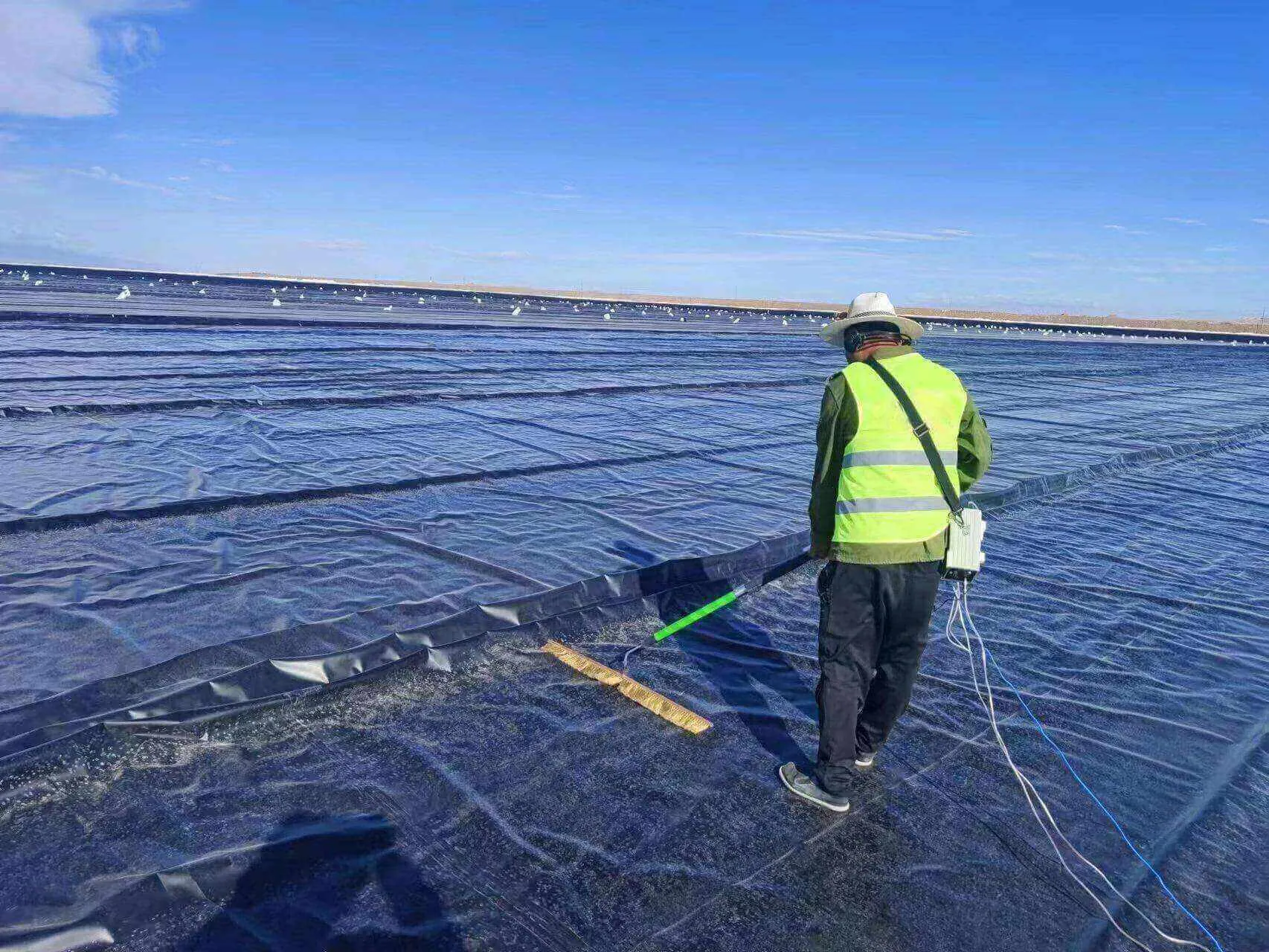
HDPE and LLDPE sheets are normally joined using suitable thermal welding methods. Trial welds and seam checks should follow the project quality plan. Do not assume a general-purpose adhesive will provide an acceptable polyethylene seam.
Record seam locations, test results and repairs before the liner is covered or the facility is filled. Anchors, penetrations and pipe connections need particular attention.
During operation, inspect accessible areas after unusual events and avoid scraping exposed liner with cleaning equipment. Arrange appropriate inspection and repair if damage is found.
9.Why source geomembrane from Planetliner
Virgin resin as an order requirement. We supply polyethylene liners with no recycled resin. The resin requirement belongs in the purchase agreement alongside the approved performance values.
Specifications that fit your purchase. Send your required material, thickness, dimensions and test schedule. We help to confirm feasible production and any custom performance requirements before the order is accepted.
Experience with export buying. Our team brings 10+ years of geosynthetic export experience. We understand why roll dimensions, packing, shipping documents and destination requirements matter when your material travels across borders.
Cost-conscious supply. We focus on matching production and shipment arrangements to your order. Compare our quotation on the same resin, thickness, performance and delivery basis as other offers.
Related materials from one supplier. Where your design includes protection or drainage, we can discuss geotextile, GCL and drainage materials alongside the geomembrane requirement.


Get Geomembrane Recommendation & Price Today
You do not need to know the exact geomembrane specification before contacting us.Just Send:
- Project application
- Drawing or dimensions
- Required standard, if available
- Site conditions
- Required thickness, total area and preferred roll dimensions.
- Destination country or port
Planetliner can help review the appropriate:Material → Thickness → Surface → Roll Size → Quantity
for further engineering and procurement evaluation.Send Your Project Drawing → Get a Geomembrane Recommendation