
Geomembrane Price Guide | HDPE & LLDPE Liner Cost per m²
Geomembranes are impermeable polymer liners widely used in aquaculture ponds,environmental containment, water management, mining operations, and civil infrastructure projects. These waterproof membranes serve as barriers that prevent fluid migration, protect soil and groundwater, and improve the long-term stability of engineering structures.
Among the various geomembrane materials available, Planetliner mostly supply the HDPE geomembrane and LLDPE geomembrane worldwide. They are commonly applied in projects such as landfills, mining tailings storage facilities, irrigation reservoirs, aquaculture ponds, and wastewater treatment systems.
One of the most common questions engineers and contractors ask is:
What is the price of geomembrane liners?
The cost of geomembranes varies depending on several factors including resin raw material/technical data, thickness, surface texture, roll size, manufacturing technology, and project quantity. This guide explains the typical geomembrane price ranges and the key factors that influence liner cost.

1.Average Geomembrane Price per m²
Geomembrane liners are typically sold by square meter (m²) or square foot (ft²) in international markets.
Typical geomembrane price ranges for reference:
| Thickness | HDPE Price (USD/m²) | LLDPE Price (USD/m²) |
|---|---|---|
| 0.5 mm | $0.60 – $1.20 | / |
| 0.75 mm | $1.00 – $1.60 | $0.8 – $1.40 |
| 1.0 mm | $1.30 – $2.00 | $1.10 – $1.8 |
| 1.5 mm | $1.80 – $2.80 | $1.60 – $2.60 |
| 2.0 mm | $2.50 – $3.80 | $2.30 – $3.60 |
These values represent typical factory price ranges for standard geomembranes used in engineering applications.Actual project prices may vary depending on transportation distance, installation conditions, and total project quantity.
2.HDPE Geomembrane Price by Thickness
HDPE geomembranes (High Density Polyethylene geomembranes) are known for their high tensile strength, chemical resistance, and durability.
They are widely used in heavy-duty containment projects such as landfills, mining facilities, and wastewater storage systems.
Typical HDPE geomembrane applications include:
- landfill liner systems
- mining tailings storage facilities
- heap leach pads
- industrial wastewater ponds
- hazardous waste containment
Because of their strong mechanical performance and long service life, HDPE geomembranes are the preferred choice for environmental protection projects.

3.LLDPE Geomembrane Price by Thickness
LLDPE geomembranes (Linear Low Density Polyethylene geomembranes) provide greater flexibility and elongation compared with HDPE liners.
These properties make them suitable for projects with irregular terrain or complex installation conditions.
Common LLDPE geomembrane applications include:
- agricultural irrigation reservoirs
- aquaculture ponds
- decorative water features
- secondary containment systems
Although LLDPE geomembranes may have slightly higher material costs in some cases, their flexibility can reduce installation difficulty and improve performance on uneven ground surfaces.

4.HDPE vs LLDPE Geomembrane Cost Comparison
Choosing between HDPE and LLDPE geomembranes depends on project requirements.
HDPE Geomembrane Advantages:
- high tensile strength
- excellent chemical resistance
- long service life
- suitable for landfill and mining containment
LLDPE Geomembrane Advantages:
- higher flexibility
- better elongation properties
- easier installation on irregular surfaces
In large environmental containment systems, HDPE geomembranes are typically selected due to their durability. In applications where flexibility is important, LLDPE geomembranes may offer better installation performance.
5.Key Factors Affecting Geomembrane Price
5.1Thickness
Thickness is the most important factor affecting geomembrane cost.
Thicker geomembranes provide higher strength and longer service life but increase material price.
Typical thickness ranges used in projects:
- 0.5 mm geomembrane for small ponds,some fish shrimp ponds
- 0.75 mm geomembrane for irrigation systems,aquaculture ponds
- 1.0 mm geomembrane for reservoirs,landfill capping
- 1.5 mm geomembrane for landfills,waste water treatment
- 2.0 mm geomembrane for mining containment,biogas digester.

5.2Resin Quality
High-quality geomembranes are typically manufactured using 100% virgin polyethylene resin.
Lower-cost products may use recycled materials, which can reduce durability and long-term performance.
Many engineering projects require geomembranes that comply with international standards such as GRI-GM13,and our Planetliner use the 100%virgin resin to keep the excellent technical,and have the lab test.

5.3Surface Texture
Geomembranes are available in:
- smooth geomembranes
- textured geomembranes
Textured geomembranes provide higher friction on slopes and are commonly used in landfill side slopes or mining applications.
Because textured liners require additional manufacturing processes, they are usually more expensive than smooth geomembranes.

5.4 Color
The Main color of geomembrane is black, which is UV resistant. And other colors, blue, green, white colors can be done.But there is MOQ of different colors.

5.5Roll Size
Modern geomembrane production lines can manufacture rolls up to 8 meters wide.
Wider rolls reduce welding seams during installation and can significantly lower overall project costs.
If the roll width is special, for example, 3m 5m width, the price will become different. And considering the thickness and roll length, for example,0.3mm thickness 50m length is difficult to roll, so the cost changes.

5.6 Order Quantity
Large projects often purchase thousands of square meters of geomembrane liner.
Bulk orders generally receive lower unit prices due to economies of scale in manufacturing and transportation.
6.Geomembrane Price by Application
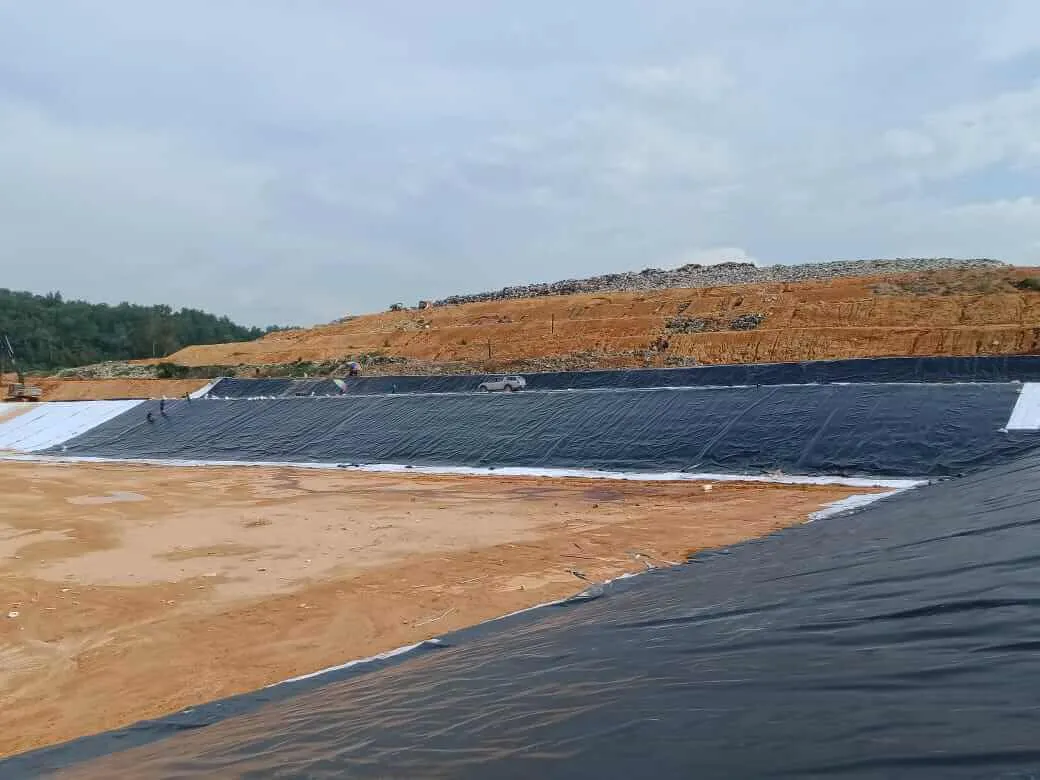
6.1Landfill and Waste Containment
Typical geomembrane thickness:
1.5 mm – 2.0 mm HDPE geomembrane
These systems require strong chemical resistance and long service life.
6.2Mining and Heap Leach Pads
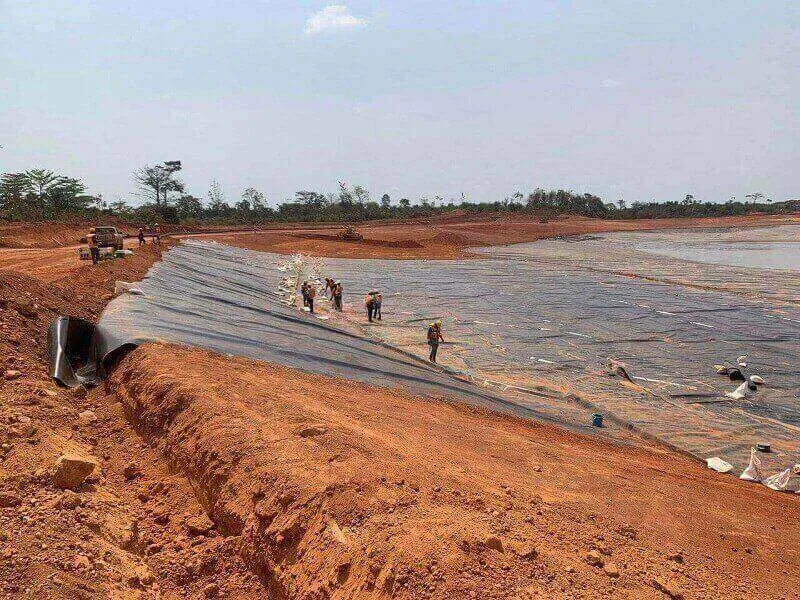
Mining containment systems usually require heavy-duty liners:
1.5 mm – 3.0 mm HDPE geomembrane.
These liners must withstand aggressive chemical exposure and high mechanical stress.
6.3Water Reservoir and Irrigation
Agricultural water storage systems commonly use:
0.75 mm – 1.0 mm LLDPE geomembrane.
These liners provide cost-effective waterproofing with sufficient flexibility

6.4Aquaculture Pond Lining
Fish farms and shrimp ponds typically use:
0.5 mm – 0.75 mm geomembrane liners.
These liners prevent water leakage and help maintain stable water quality.

7.How to Calculate Geomembrane Project Cost
To estimate total project cost, the following factors should be considered:
- geomembrane material price
- installation and welding cost
- subgrade preparation
- transportation and logistics
- protection layers such as geotextiles
A complete project cost analysis helps engineers select the most suitable liner system.
8.How to Get an Accurate Geomembrane Price Quote
Because geomembrane projects vary widely, suppliers usually provide customized quotations.
To receive an accurate quote, it is useful to provide:
- project location country
- application type
- required liner thickness
- estimated project area
- installation conditions
With these details, suppliers can recommend the most suitable geomembrane liner and provide a precise project estimate.
9.FAQ
9.1What is the price of HDPE geomembrane per square meter?
HDPE geomembrane typically ranges from $0.80 to $3.80 per square meter depending on thickness and project scale.
9.2Which geomembrane is cheaper, HDPE or LLDPE?
HDPE geomembranes are usually slightly cheaper than LLDPE for the same thickness, although installation conditions may influence total project cost.
9.3What thickness geomembrane should I use for a pond?
Most aquaculture ponds use geomembranes between 0.5 mm and 0.75 mm.
9.4How long does geomembrane last?
High-quality geomembranes can last 20–50 years depending on environmental conditions.