
HDPE Geomembrane Liners for Engineering Projects
An HDPE geomembrane is a high-density polyethylene liner used to control seepage in engineered ponds, reservoirs, mining,landfills and other containment systems. Supplied in rolls, the sheet is laid over a prepared surface and welded into a continuous barrier. Its performance depends on the material grade, the supporting ground, the connections and the quality of the installed seams.
Planetliner supplies HDPE geomembrane liners from China for importers, contractors and engineering projects. We offer virgin-resin material without recycled resin, smooth and textured surface options, and performance specifications can be customized to an agreed project requirement. Our team brings 10+ years of geosynthetic export experience to material selection and shipment planning.
Send us your specification or drawings. We can discuss the proposed solutions,TDS, quantity configuration, available test and delivery plan.
What is HDPE Geomembrane?
HDPE Geomembrane,full name high density polyethylene geomembrane, is a high-density polyethylene liner designed to provide reliable waterproofing and protection in a wide range of civil engineering, mining, and environmental projects. With superior chemical resistance, UV stability, and long service life, HDPE geomembranes are widely used for solid waste containment, water storage, and soil protection.Many distributoer and contractors import the HDPE liner from China,and hdpe geomembrane hs code HS code 392010.
As a leading geomembrane manufacturer with over 10 years of experience in China, we supply smooth and textured HDPE geomembranes that meet and exceed ASTM and GRI GM13 standards. Our production lines can produce widths up to 8 meters, reducing welding work and ensuring higher installation efficiency.
HDPE Geomembrane – Factory Direct Supply for Global Projects
• Export-ready stock with factory lead time 10–20 days
• Available in 0.5mm–3.0mm (smooth & textured)
• Certified ASTM & GRI-GM13
HDPE geomembrane Liner Features
- High Impermeability – The HDPE membrane offers an impermeability rating unmatched by conventional waterproofing materials. Its high tensile strength and excellent elasticity and deformation capacity make it ideal for expanding or contracting substrates, effectively overcoming uneven subsidence. Its water vapor permeability coefficient, K, is ≤ 1.0*10-13 gcm/cm²spa.
- Chemical Stability – The membrane exhibits excellent chemical stability and is widely used in sewage treatment, chemical reaction tanks, and landfills. Resistant to high and low temperatures, asphalt, oil, and tar, and resistant to much strong acid and alkali chemical media such as acids, alkalis, and salts.
- Aging Resistance – The membrane offers excellent resistance to aging, UV rays, and decomposition. It can be used exposed to the elements, with a longer service life, providing excellent material assurance for environmental waterproofing.
- Plant Root Resistance – HDPE membrane offers excellent puncture resistance and can withstand most plant roots.
- High Mechanical Strength – The membrane offers excellent mechanical strength, with a tensile strength of 28 MPa at break and an elongation of 700%.
- Low Cost and High Benefit – HDPE membrane is made of New technologies improve anti-seepage effectiveness, while the production process is more scientific and efficient, resulting in lower product costs than traditional waterproofing materials.
- geomembrane test tensile strengthFast Installation – Anti-seepage membranes offer high flexibility, available in a variety of specifications and installation methods to meet the anti-seepage requirements of various projects. They utilize hot-melt welding, resulting in high-strength welds and convenient, fast, and safe installation.
- Environmentally Friendly and Non-Toxic – The materials used in these membranes are non-toxic and environmentally friendly. The anti-seepage principle is based on normal physical changes, producing no harmful substances. This makes them an excellent choice for environmental protection, aquaculture, and drinking water pools.
Smooth and Textured HDPE
A smooth HDPE geomembrane has an even surface. A textured sheet has a roughened surface on one or both sides and may be specified where the design needs greater interface shear resistance. The designer should assess the actual materials and loading conditions.
For textured material, distinguish the sheet’s core thickness from the height of its surface features. Measuring across rough peaks does not provide the same information as measuring the barrier thickness. ASTM D5994/D5994M addresses geomembrane thickness measurement; use the procedure and edition called for by the contract.
See our textured geomembrane page for surface selection. Keep the approved surface description consistent across the drawings, quotation, data sheet and roll labels.
HDPE Geomembrane Specifications
Hdpe geomembrane thickness range:0.3-3mm(12mil-120mil), and 0.5mm/20mil, 0.75mm/30mil , 1mm/40mil, 1.5mm/60mil, 2mm/80mil thickness are popular.
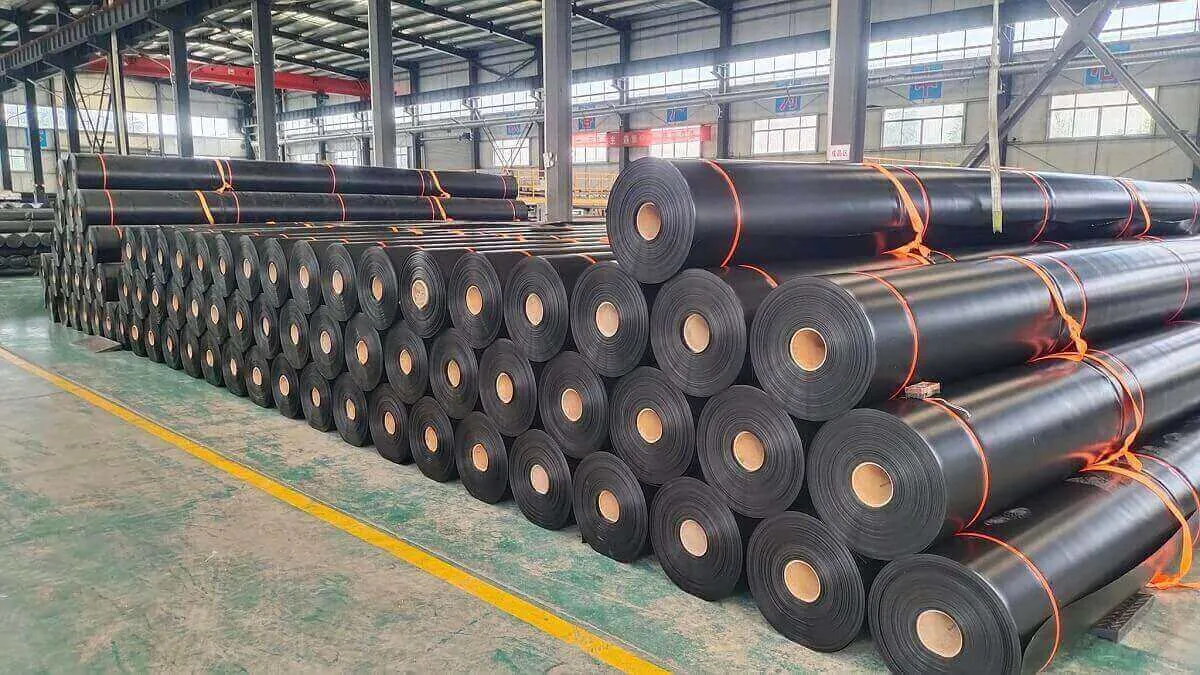
Roll width:1m-8m, normally 5.8m 6m 7m 8m,customized width
Geomembrane Surface: smooth surface, textured surface
Colors:Mainly black color, blue green white colors can be customzied.The Blck hdpe geomembrane is the most popular.
Item | HDPE supply options and ordering notes |
Smooth sheet thickness | Enquire about 0.5, 0.75, 1.0, 1.5, 2.0, 2.5 and 3.0 mm nominal thicknesses |
Surface | Smooth, single-sided textured or double-sided textured; confirm the available thickness range for the selected textured grade |
Roll width | Widths up to 8 m can be discussed; the final width must suit the order, transport arrangement and site handling |
Roll length | Agree it with the roll weight, panel layout and unloading method; do not assume one standard length for every thickness |
Colour | Black is the standard enquiry option; request separate confirmation for another colour and its performance requirements |
Performance basis | Identify the required project specification, test methods, acceptance values and applicable editions |
HDPE Geomembrane Manufacturing Process
Our HDPE geomembraneresin supplier are all world famous manufacturers,use blowing film or calendering process, the polyethylene resin is heated to the melting point in the extruder barrel and the resin molten stream go through a screen pack and up through a die.The hdpe liner is extruded from the circular die as a bubble , pulled vertically by a set of nip rollers. An liner Cooling unit maintains consistent liner diameter. The bubble passes through a collapsing frame and be directed back toward the ground, and continues cooling. Before being packed by the winder, the geomembrane bubble is split and cut to its customized width.
Verify Virgin Resin and Batch Quality
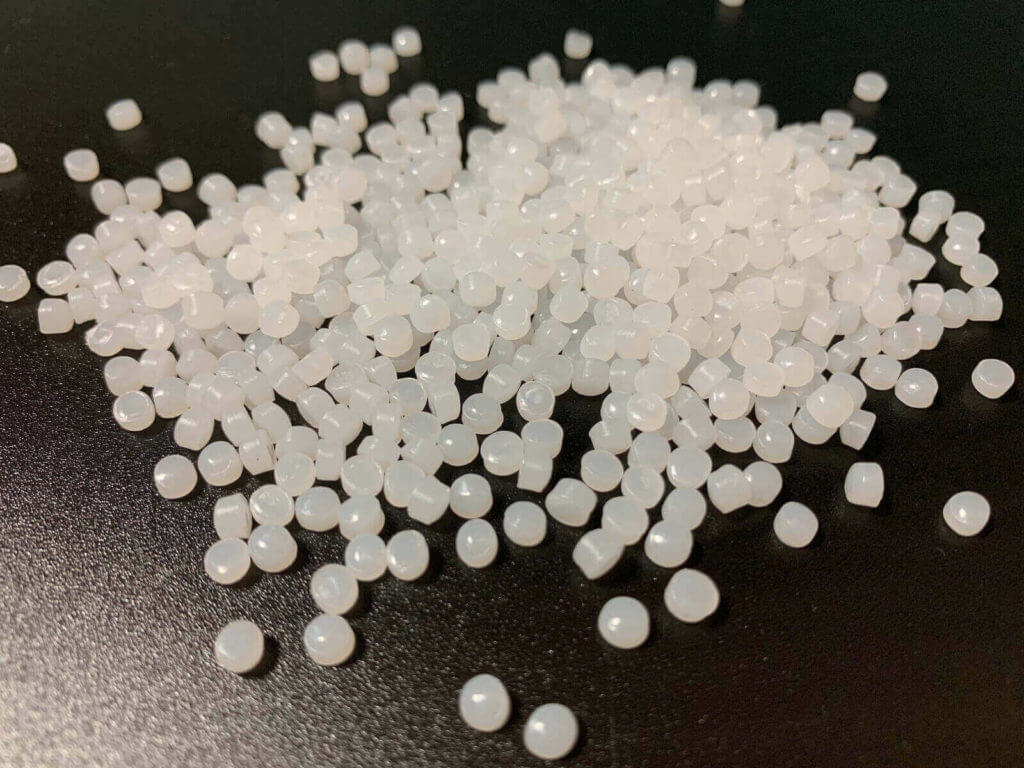
Planetliner supplies HDPE liners made with virgin polyethylene resin, without recycled resin. Black geomembranes also contain carbon black and stabilising additives, so virgin resin does not mean the finished sheet contains polyethylene alone.
Ask for the raw-material commitment in writing. Colour, surface shine and flexibility are not reliable proof of resin origin. A black HDPE liner sheet can look acceptable while still failing a required property test.
GRI-GM13’s formulation provisions and a buyer’s no-recycled-material purchasing policy are separate matters. Record the exact raw-material requirement in the order instead of assuming the standard’s name settles it.


HDPE Smooth Geomembrane Technical Data
A technical data sheet should describe the exact HDPE liner material being quoted. Start with the product name, thickness, surface and revision date. Then check the units, test methods and meaning of each stated value.
A typical value describes representative performance. A specified minimum or maximum is an acceptance limit when incorporated into the contract. A batch result is a measured result for the identified production sample. These three are not interchangeable.
| Properties | Test method | 0.75mm | 1.0mm | 1.5mm | 2.0mm | 2.5mm | 3mm |
|---|---|---|---|---|---|---|---|
| Formulated Density | D 1505/D 792 | 0.94 | 0.94 | 0.94 | 0.94 | 0.94 | 0.94 |
| Thickness(lowest individual of 10 values – %) | D5199 | nom. -10 | nom. -10 | nom. -10 | nom. -10 | nom. -10 | nom. -10 |
| Tensile strength yield strength – kN/m | D 6693 Type IV | 11 | 15 | 22 | 29 | 37 | 44 |
| break strength – kN/m | D 6693 Type IV | 20 | 27 | 40 | 53 | 67 | 80 |
| yield elongation – % | 12 | 12 | 12 | 12 | 12 | 12 | |
| break elongation – % | 700 | 700 | 700 | 700 | 700 | 700 | |
| Tear Resistance (min. ave.) – N | D 1004 | 93 | 125 | 187 | 249 | 311 | 374 |
| Puncture Resistance (min. ave.) – N | D 4833 | 240 | 320 | 480 | 640 | 800 | 960 |
| Stress Crack Resistance (2) – hr. | D 5397 | 500 | 500 | 500 | 500 | 500 | 500 |
| Carbon Black Content (range) – % | D 4218 | 2.0-3.0 | 2.0-3.0 | 2.0-3.0 | 2.0-3.0 | 2.0-3.0 | 2.0-3.0 |
| Oxidative Induction Time (OIT) (min. ave.) (a) Standard OIT – min. | D 8117 | 100 | 100 | 100 | 100 | 100 | 100 |
| (b) High Pressure OIT – min. | D 5885 | 400 | 400 | 400 | 400 | 400 | 400 |
| Oven Aging at 85°C (a) Standard OIT (min. ave.) – % retained after 90 days | D 8117 | 55 | 55 | 55 | 55 | 55 | 55 |
| (b) High Pressure OIT (min. ave.) – % retained after 90 days D | D 5885 | 80 | 80 | 80 | 80 | 80 | 80 |
| UV Resistance (a) Standard OIT (min. ave.) | D 8117 | Not recommended | Not recommended | Not recommended | Not recommended | Not recommended | Not recommended |
| (b) High Pressure OIT (min. ave.) – % retained after 1600 hrs | D 5885 | 50 | 50 | 50 | 50 | 50 | 50 |
These references identify tests, not Planetliner’s guaranteed values. Request the dated data sheet and acceptance schedule for the actual product offered.
Do not compare a strength reported in MPa directly with one reported in kN/m. Also, a high break elongation in a laboratory test is not an allowable field strain. ASTM describes D6693 as an index test used for quality control and specification conformance, rather than a precise source of design properties.
OIT helps evaluate oxidation-related behaviour under defined test conditions. It is not a direct promise of years in service. Standard and high-pressure OIT results should not be treated as interchangeable numbers.
GRI-GM13 sets out test properties and testing frequencies for smooth and textured HDPE geomembranes. ASTM methods explain how particular properties are measured. A product should not be described simply as ASTM certified, and a reference to GM13 is not proof that a specific shipment meets all its requirements. If you require a GM13 grade, give us the required edition and any additional project limits. If the project uses a Chinese national standard, identify its edition and category as well. We can review the requested performance against the proposed supply grade and identify the documents or additional tests needed before agreement.
HDPE Geomembrane Quality Control
Our manufacturing and quality-control capabilities are supported by production and testing equipment used to evaluate the physical properties and consistency of geosynthetic materials.
Depending on product type and project requirements, besides the basice thickness test, other testing may cover properties such as:
- Tensile strength
- Elongation
- Tear resistance
- Puncture resistance
- Carbon Black
- Other relevant physical properties
Planetliner has SGS-tested products. Ask for the available report relevant to the offered material and review what was tested. A report for one sample is not automatic evidence for every grade or future shipment. If independent testing of your order is required, include its sampling plan, cost and acceptance process before production starts.

tensile machine

Geomembrane CBR test machine
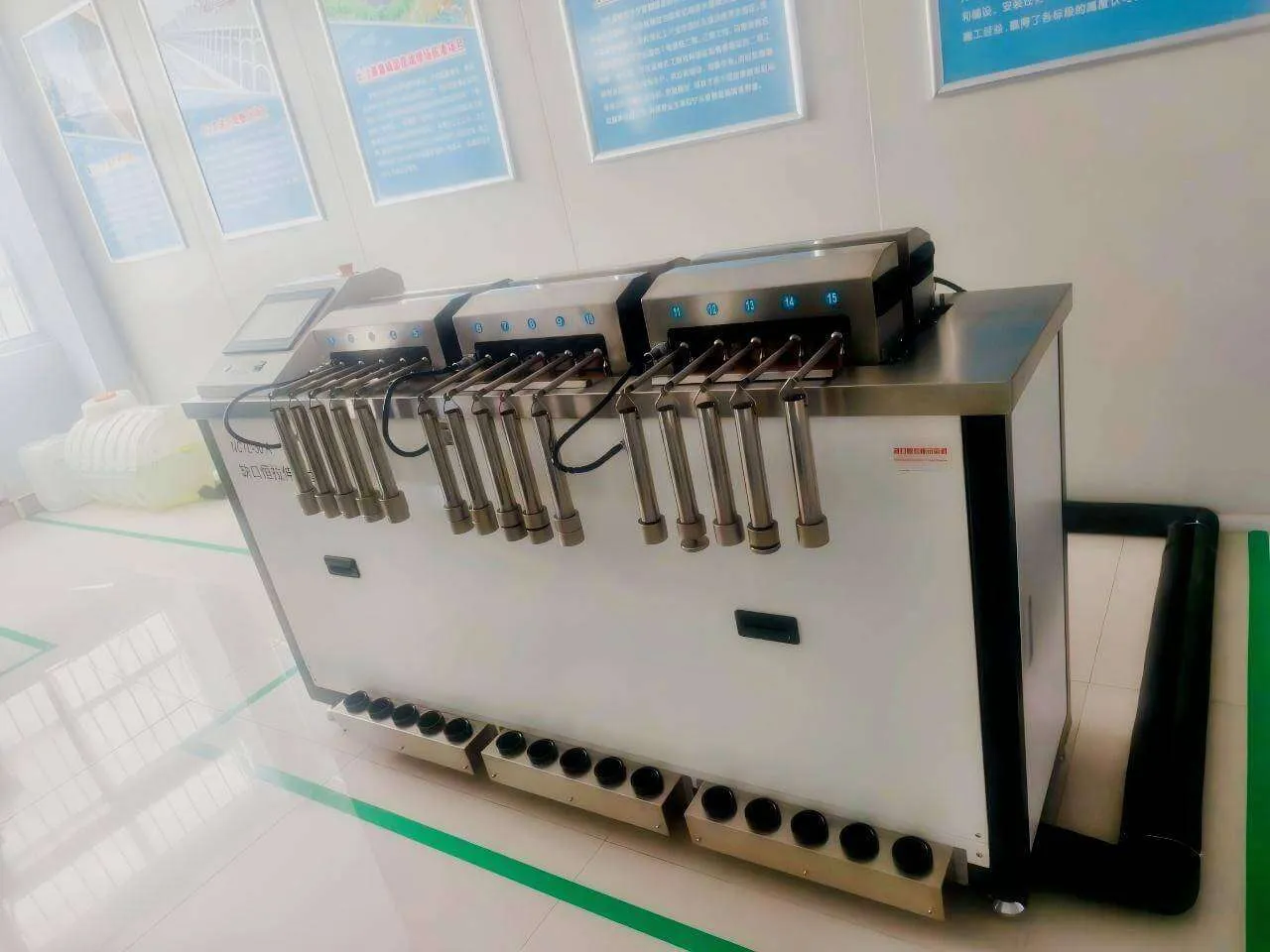
stress cracking test machine
HDPE Geomembrane Applications
Landfill & Waste Containment (e.g., municipal waste landfills, sewage tratment plants, power plant regulating ponds, underground foundation waterproofing and anti-seepage, factory roof moisture-proofing, industrial solid waste treatment, hospital solid waste treatment, etc.)

Mining (e.g., anti-seepage for washing tanks, heap leaching tanks, ash dumps, dissolution tanks, sedimentation tanks, stockpiles, and tailings linings, etc.)
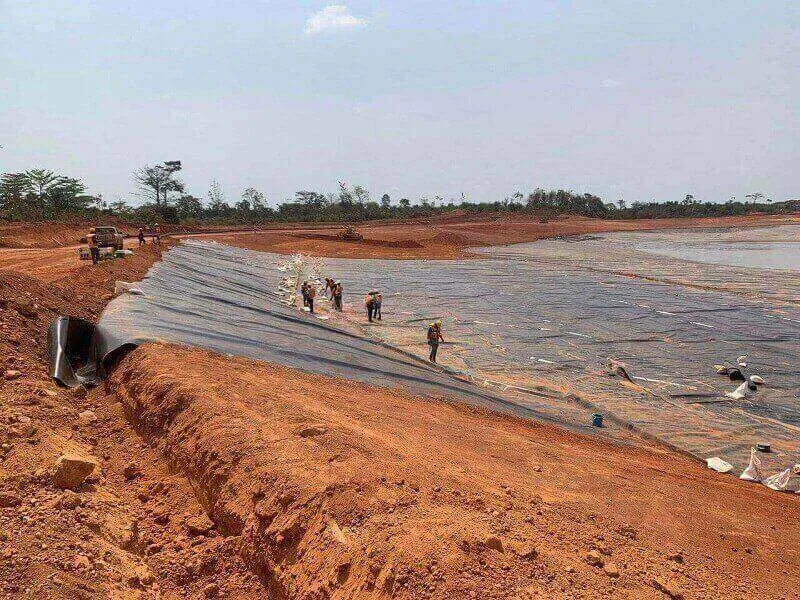
Water management(e.g., anti-seepage, leak prevention, and reinforcement of river, lake, and reservoir embankments, canal anti-seepage, vertical core walls, and slope protection, etc.)

Aquaculture (fish shrimp crab) ponds.fresh water, waste water,Hatchery and Nursery Systems.Read our Aquaculture Pond Project in Indonesia.

Agriculture (reservoirs, drinking water tanks, impoundments, irrigation system waterproofing, agricultural breeding such as pig farm septic tanks)
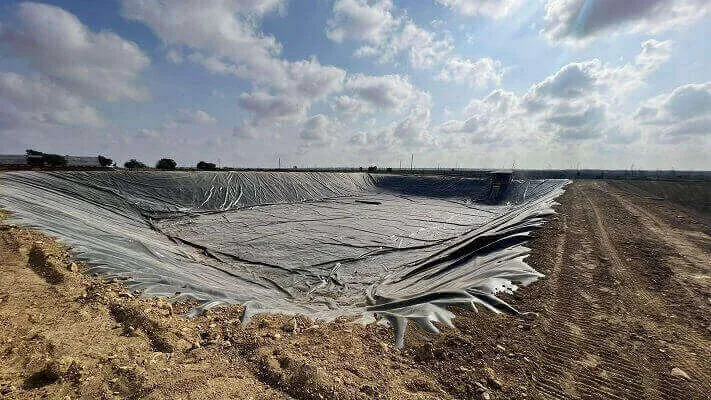
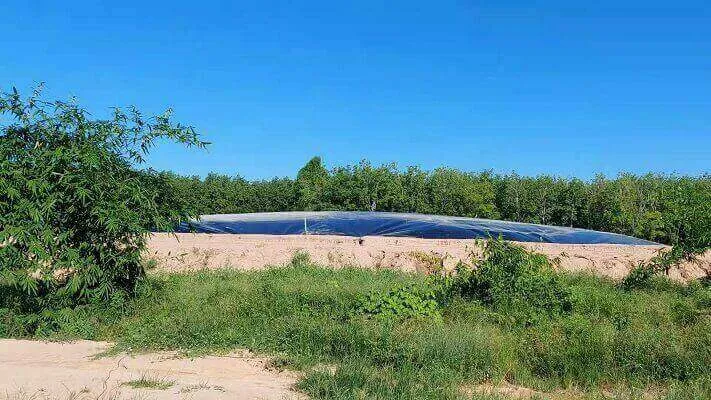
Energy: Oil and Gas Infrastructure,Coal and Coal Ash Management,Thermal Energy Storage,Bioenergy and Biogas Facilities,Solar and Wind Energy Projects etc.
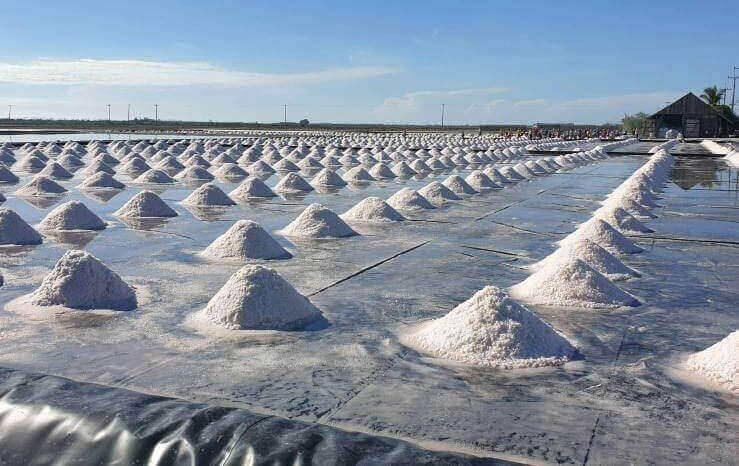
Salt industry (salt field crystallization ponds, brine pond coverings, salt film, salt pond plastic film)
Plan Rolls, Shipping and Site Support
Choose a Roll Layout the Crew Can Handle
An HDPE geomembrane roll must fit both the project layout and the unloading equipment. Wider rolls may reduce field joints, but they can also be harder to move through a restricted access route.
Tell us the planned roll lengths, preferred width, available lifting equipment and delivery access. Confirm roll diameter, core details and gross weight before dispatch. If the site cannot safely handle a proposed roll, resolve the issue before the shipment leaves China.
As an illustration, a smooth sheet measuring 6 m by 100 m at 1.5 mm thickness has an estimated sheet mass of 846 kg when calculated with an assumed density of 940 kg/m³. That is 6 × 100 × 0.0015 × 940. It excludes the core, wrapping and other packaging. It is a planning example, not a declared weight for an actual roll.
Order the Installed Area, Not Just the Footprint
The liner quantity must reflect the developed surface, including slopes, terminations, connection details and the allowances in the approved panel plan. Agree any spare material separately. A flat plan area alone can leave a contractor short when installation begins.
Where cushioning is specified, coordinate the nonwoven geotextile protection layer with the liner supply. Confirm the installation sequence and delivery order so one material does not arrive after the crew needs it.
Separate Material Delivery from Site Installation
A China-based HDPE geomembrane supplier can quote material supply and export delivery without being the local installer. The contract should identify who accepts the ground, welds the sheets, inspects the seams and signs off the work.
Agree delivery terms, the named port or place, packing, customs documentation and unloading responsibilities. Lead time should reflect the approved grade, quantity, testing and shipping schedule. Do not treat production time as the arrival date at the site.
For broader welding and site procedures, use our geomembrane installation guide. For quotation factors, see the HDPE geomembrane price guide. This product page does not replace either the installation specification or a project-specific price offer.
What thickness HDPE geomembrane should be used?
The answer depends not only on the application, but also on budget, soil conditions, load requirements, environmental exposure, and project lifespan.
Please view HDPE Geomembrane Thickness Guide.