
LLDPE Geomembrane Supplier | Flexible Polyethylene Liner Manufacturer
What is LLDPE Geomembrane?
LLDPE Geomembrane is a linear low-density polyethylene liner widely used for waterproofing and environmental protection projects. Compared with HDPE geomembrane, LLDPE offers greater flexibility, excellent elongation properties, and superior resistance to stress cracking, making it ideal for applications that require adaptability on uneven or complex surfaces.
As a trusted geomembrane manufacturer with more than 10 years of production and export experience, we supply smooth and textured LLDPE geomembranes that meet ASTM and GRI GM17 standards. Our products are engineered to deliver long-term performance in demanding conditions while maintaining cost efficiency.
LLDPE geomembrane Specifications
Lldpe geomembrane thickness range:0.75-3mm(30mil-120mil), and 0.75mm/30mil , 1mm/40mil, 1.5mm/60mil, 2mm/80mil thickness are popular.
Roll width:1m-8m, normally 5.8m 6m 7m 8m,customized width
Geomembrane Surface: smooth surface, textured surface
Colors:Mainly black color, blue green white colors can be customized.
LLDPE Geomembrane Manufacture Production Process
Our LLDPE geomembrane resin supplier are all world famous manufacturers,the lldpe liner use calendering process, the polyethylene resin is heated to the melting point in the extruder barrel,and molten plastic is extruded and then passed through pairs of rollers that extrude the molten plastic into a sheet film. The thickness of the liner depends on the gap between the pairs of rollers. The calendering process needs four or more pairs of rollers that gradually reduce the liner thickness, polish the surface, add a textured pattern. After the liner passes through the final rollers, it is cooled and to a winding roller where it is coiled and edge trimmed. 

LLDPE geomembrane Features:
High Flexibility – Suitable for projects with settlement or uneven ground conditions.
Excellent Elongation – Provides superior tear resistance and adapts to ground movement.
Strong Chemical Resistance – Stable performance against acids, alkalis, and industrial liquids.
UV and Weather Resistance – Ensures durability under prolonged outdoor exposure.
Easy Installation – Lower thermal expansion and flexibility reduce welding stress.
Customizable Options – Thickness available from 0.5mm to 3.0mm, smooth or textured finish.
LLDPE Geomembrane Technical Data
Smooth Surface LLDPE Geomembrane TDS

Textured Surface LLDPE Geomembrane TDS

LLDPE geomembrane Price
The cost of LLDPE geomembrane depends on thickness, roll width, surface type, and project quantity.
0.75mm – 1.0mm LLDPE Geomembrane: $0.75 – $1.10 / m²
1.5mm – 2.0mm LLDPE Geomembrane: $1.30 – $2.10 / m²
2.5mm – 3.0mm LLDPE Geomembrane: $2.30 – $3.50 / m²
(Prices are for reference only. Final quotation depends on order volume, customization, and delivery terms.)
LLDPE geomembrane Installation
- Before laying LLDPE membrane, the relevant civil engineering project acceptance certificate must be obtained.
- Before cutting LLDPE membrane, its dimensions should be accurately measured and then cut according to the actual dimensions. Cutting according to the diagram is generally not recommended. Each piece should be numbered and recorded in detail on a dedicated form.
- When laying LLDPE membrane, welds should be minimized to minimize raw material consumption while ensuring quality. This also facilitates quality assurance.
- The overlap width between membranes should generally be no less than 10 cm. Welds should generally be arranged parallel to the maximum slope, i.e., aligned with the slope.
- In corners and deformed areas, the length of the joints should be minimized. Unless otherwise specified, welds should be avoided within 1.5 meters of the top of the slope or stress concentration areas on slopes greater than 1:6.
- During LLDPE membrane laying, avoid creating artificial wrinkles. When temperatures are low, the membrane should be stretched tight and laid flat.
- After the LLDPE membrane is laid, walking on the membrane surface and moving tools should be minimized. Any objects that may cause harm to the anti-seepage membrane should not be placed on the membrane or carried while walking on the membrane to avoid accidental damage to the membrane.
LLDPE geomembrane Applications:
LLDPE geomembranes are widely applied in:
Agriculture & Aquaculture – Farm ponds, fish ponds, shrimp ponds, and irrigation canals.

Mining & Energy – Heap leach pads, evaporation ponds, and secondary containment.

Waste Management – Landfill liners, capping systems, and wastewater lagoons.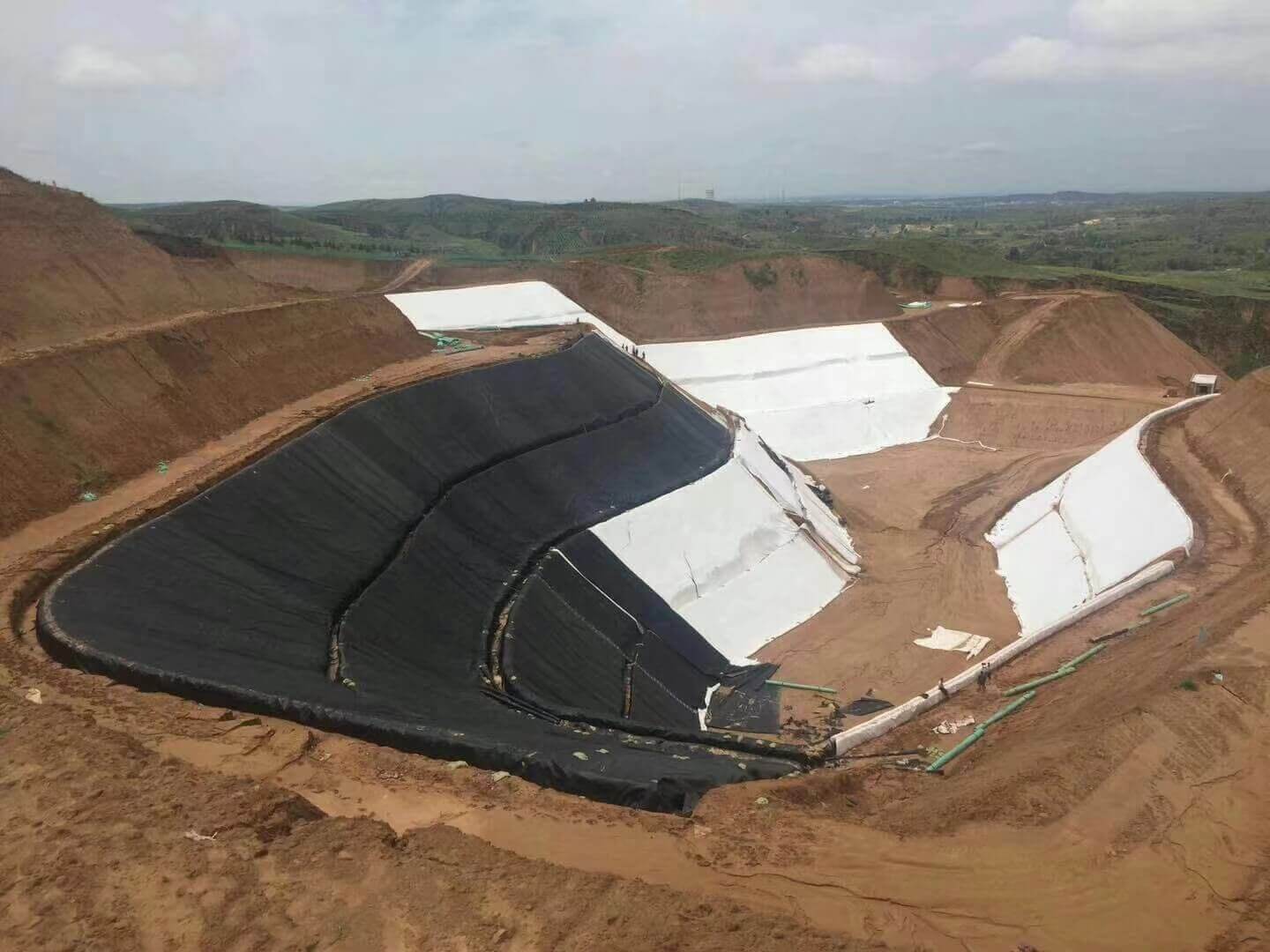
Water Conservation – Reservoirs, canals, and stormwater retention basins.
Industrial Projects – Storage tanks, chemical containment, and biogas facilities.
FAQ
1.What is the difference between LLDPE and HDPE geomembrane?
The main differences lie in flexibility and strength:
Flexibility – LLDPE is more flexible and easier to install, especially on irregular surfaces. HDPE is stiffer and requires more on-site welding.
Elongation – LLDPE can stretch several hundred percent without tearing, while HDPE is stronger in puncture resistance but less adaptable to movement.
In short, LLDPE is preferred for projects requiring flexibility, while HDPE is chosen for applications demanding maximum durability and long-term containment.
2.Is LLDPE geomembrane liner environmentally friendly?
Yes. LLDPE geomembrane is designed to protect soil and groundwater by preventing seepage of contaminated liquids. It is also recyclable at the end of its service life, making it a sustainable choice for many projects.
3. Is geomembrane LLDPE weak or easy to damage?
This is a common misconception. In fact, when installed correctly, LLDPE geomembrane is extremely durable. It has high tear resistance, excellent puncture resistance, and strong chemical stability, ensuring long-term performance in demanding environments.