
Textured Geomembrane for Slopes, Landfills and Mining Projects
Many civil engineering projects are using the geomembrane liner, and some containment projects often need more than a smooth geomembrane surface. In steep slope environments, landfill sidewalls, mining pads, reservoirs and hazardous waste containment systems, textured geomembrane provides significantly higher friction performance and interface stability.
Planetliner supplies high-quality textured HDPE geomembranes engineered for demanding geotechnical and environmental applications worldwide.
Our textured rough geomembrane liners are available in:
- Single-textured HDPE geomembrane
- Double-textured HDPE geomembrane
- Customized textured impermeable geomembrane systems
These liners are designed to improve slope stability, reduce sliding risks and increase long-term project safety.
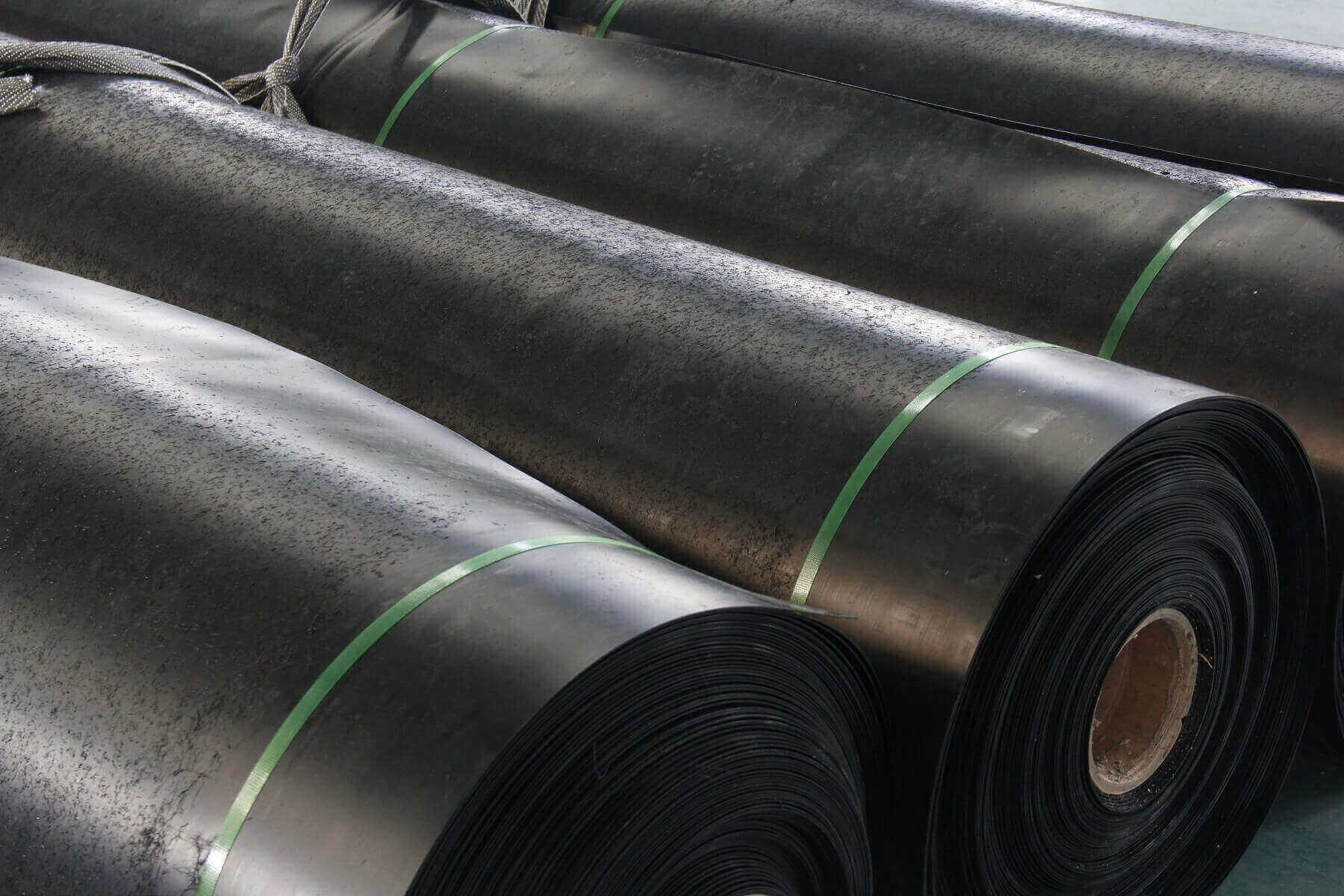
What Is Textured Geomembrane?
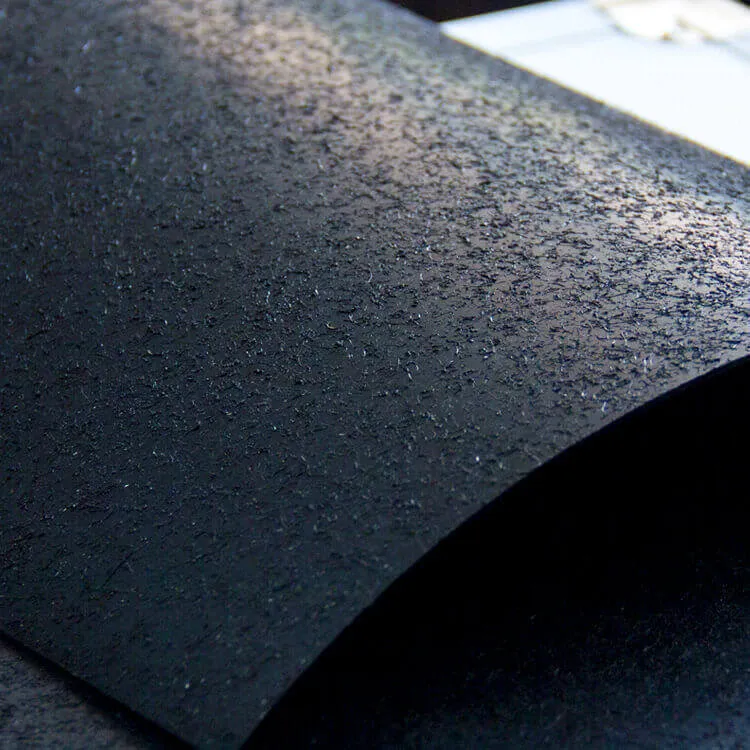
Textured geomembrane is a rough-surface impermeable liner, it is manufactured with engineered asperities on one or both sides of the geomembrane sheet.
Compared with smooth geomembranes, textured HDPE geomembranes offer:
- Higher interface friction
- Better slope stability
- Improved soil interaction
- Enhanced safety on steep embankments
- Reduced liner sliding risks
Textured geomembrane liners are widely used in:
- Landfill liners and caps
- Heap leach mining pads
- Reservoir slopes
- Canal and dam projects
- Wastewater lagoons
- Tailings containment
- Oil and gas containment systems
Types of Textured Geomembrane
1.Single-Textured HDPE Geomembrane
Single-textured geomembrane contains one rough surface and one smooth surface.
It is commonly used when:
- One side requires friction
- The opposite side requires easier welding or drainage contact
- Moderate slope applications are involved
Typical applications include:
- Reservoir slopes
- Canal liners
- Secondary containment

Double-Textured HDPE Geomembrane
Double-textured HDPE geomembrane features rough surfaces on both sides.
This structure provides maximum friction performance for demanding engineering projects.
Double-textured geomembranes are widely used in:
- Landfills
- Heap leach pads
- High slope containment systems
- Mining projects
- Hazardous waste facilities
Many engineers prefer double rough surface geomembranes for projects where long-term slope stability is critical.
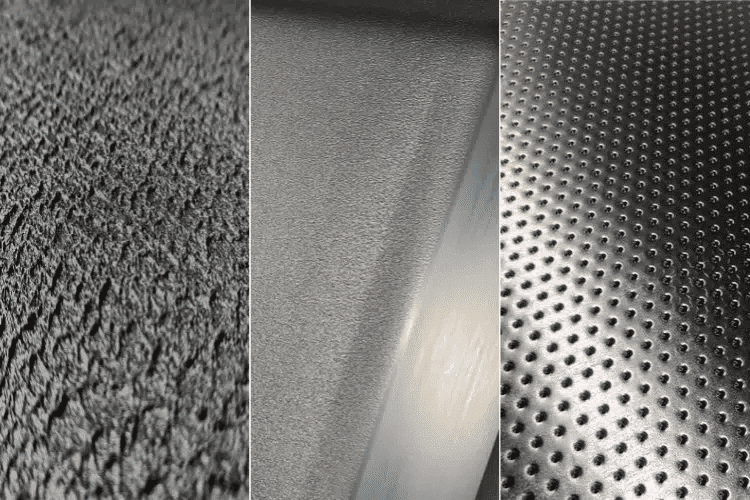
Different Manufacturing Method for Textured Geomembrane Surface
There are three main manufacturing methods for textured surafce, blow film texturing (using nitrogen gas), calender texturing (using a studded mold), and spray texturing. Each method produces a distinct surface profile that affects friction and liner thickness.
Blow Film Texturing(nitrogen gas)
During the manufacturing process, Nitrogen gas is injected into the molten plastic to make some bubbles, and as the bubble expands,cools and bubble explosion, the gas creates an irregular, sandpaper-like texture on the surface. This method is highly effective for creating a high-friction surface and is widely used for critical applications like landfill liners. The texture is an integral part of the sheet.
Spray Texturing
This method need two steps. Firstly, a standard smooth geomembrane is produced,Then, a machine sprays molten HDPE plastic filaments onto the smooth surface. These filaments cool and bond to the liner, creating a very aggressive, high-friction texture. This method allows for a very rough surface but adds a secondary process to production.The Base liner strength is still high.
Calender Texturing(Column point shape)
This method uses a special mold or roller with evenly spaced studs or “columns” to press a uniform pattern onto the geomembrane surface as it’s made. The result is a liner with clean, consistently shaped bumps. This type looks very neat and performs well.
Advantages of Textured Geomembrane
Superior Friction Performance
The rough surface significantly increases interface shear resistance compared with smooth liners.
This helps prevent sliding between:
- Soil and geomembrane
- Geotextile and geomembrane
- Drainage layers and liners
Better Slope Stability
Geomembranes for slope applications require reliable friction angles to maintain long-term structural safety.
Textured geomembrane helps improve:
- Side slope stability
- Embankment safety
- Retaining system reliability
Improved Engineering Safety
Textured liners reduce the risks of:
- Geosynthetic slippage
- Slope failure
- Wrinkling movement
- Construction instability
This is particularly important in mining and landfill environments.
Long Service Life
High-quality HDPE textured geomembranes offer:
- UV resistance
- Chemical resistance
- Oxidation resistance
- Environmental stress crack resistance
Properly installed liners can provide decades of service life.
| Properties | Test method | 0.75mm | 1.0mm | 1.5mm | 2.0mm | 2.5mm |
|---|---|---|---|---|---|---|
| Formulated Density | D 1505/D 792 | 0.94 | 0.94 | 0.94 | 0.94 | 0.94 |
| Thickness owest individual for 8 out of 10 values – % | D5994 | nom.-5 -10 | nom.-5 -10 | nom.-5 -10 | nom.-5 -10 | nom.-5 -10 |
| Tensile strength yield strength – kN/m | D 6693 Type IV | 11 | 15 | 22 | 29 | 37 |
| break strength – kN/m | D 6693 Type IV | 8 | 10 | 16 | 21 | 26 |
| yield elongation – % | D 6693 Type IV | 12 | 12 | 12 | 12 | 12 |
| break elongation – % | D 6693 Type IV | 100 | 100 | 100 | 100 | 100 |
| Tear Resistance (min. ave.) – N | D 1004 | 93 | 125 | 187 | 249 | 311 |
| Puncture Resistance (min. ave.) – N | D 4833 | 200 | 267 | 400 | 534 | 667 |
| Stress Crack Resistance (2) – hr. | D 5397 | 500 | 500 | 500 | 500 | 500 |
| Carbon Black Content (range) – % | D 4218 | 2.0-3.0 | 2.0-3.0 | 2.0-3.0 | 2.0-3.0 | 2.0-3.0 |
| Oxidative Induction Time (OIT) (min. ave.) (a) Standard OIT – min. | D 8117 | 100 | 100 | 100 | 100 | 100 |
| (b) High Pressure OIT – min. | D 5885 | 400 | 400 | 400 | 400 | 400 |
| Oven Aging at 85°C (a) Standard OIT (min. ave.) – % retained after 90 days | D 8117 | 55 | 55 | 55 | 55 | 55 |
| (b) High Pressure OIT (min. ave.) – % retained after 90 days D | D 5885 | 80 | 80 | 80 | 80 | 80 |
| UV Resistance (a) Standard OIT (min. ave.) | D 8117 | Not recommended | Not recommended | Not recommended | Not recommended | Not recommended |
| (b) High Pressure OIT (min. ave.) – % retained after 1600 hrs | D 5885 | 50 | 50 | 50 | 50 | 50 |
Common Applications of Rough Surface Geomembrane
Landfill and Solid Waste Containment
Textured geomembrane liners are widely used in municipal solid waste and hazardous waste facilities.
Their high friction surface improves interaction between:
- Drainage geocomposites
- Geotextiles
- Soil cover systems
Mining Heap Leach Pads
Double-textured HDPE geomembrane is commonly selected for mining operations because of its superior interface stability.
Applications include:
- Gold mining
- Copper mining
- Tailings storage
- Heap leach systems
Reservoir and Dam Projects
The use of geomembrane in reservoirs has increased significantly due to water conservation requirements.
Textured geomembranes are ideal for:
- Steep reservoir slopes
- Irrigation ponds
- Water storage systems
- Canal liners
Oil and Gas Containment
Rough surface geomembranes are frequently used in:
- Frac ponds
- Drilling waste pits
- Secondary containment systems
Their durability helps withstand harsh industrial conditions.
Textured Geomembrane vs Smooth Geomembrane
| Feature | Textured Geomembrane | Smooth Geomembrane |
|---|---|---|
| Surface Friction | High | Low |
| Slope Stability | Excellent | Moderate |
| Installation Difficulty | Slightly Higher | Easier |
| Cost | Higher | Lower |
| Mining Applications | Preferred | Limited |
| Steep Slopes | Recommended | Not Ideal |
Textured Geomembrane Price Factors
Textured geomembrane prices vary depending on several factors:
- Thickness
- Raw material quality
- Single or double texture
- Surface asperity height
- Roll dimensions
- Quantity ordered
- International shipping costs
Common thicknesses include:
- 1.0 mm textured geomembrane
- 1.5 mm textured geomembrane
- 2.0 mm textured geomembrane
Double-textured HDPE geomembrane prices are generally higher than smooth liners because of the specialized manufacturing process.
For large projects, factory-direct sourcing can significantly reduce procurement costs.
Installation Considerations
Proper installation is critical for long-term geomembrane performance.
Surface Preparation
The subgrade should be:
- Smooth
- Compacted
- Free from sharp objects
Welding Requirements
Textured geomembrane welding requires experienced technicians because the rough surface affects seam preparation.
Professional installation teams usually perform:
- Extrusion welding
- Hot wedge welding
- Vacuum testing
- Air pressure testing
Slope Installation
For steep slopes:
- Proper anchoring systems are essential
- Deployment direction matters
- Temporary fixation may be required
How to Choose the Right Textured Geomembrane
When selecting a textured geomembrane liner, engineers should evaluate:
Project Type
- Landfill
- Mining
- Reservoir
- Wastewater
- Oil and gas
Required Friction Angle
Steeper slopes often require:
- Double-textured geomembrane
- Higher asperity texture
Chemical Exposure
Chemical compatibility is critical in mining and industrial applications.
HDPE textured geomembranes are preferred for aggressive environments.
Installation Conditions
Large projects may require:
- Customized roll sizes
- Factory prefabrication
- Technical welding support
FAQs — Textured Geomembrane
1. Is textured geomembrane stronger than smooth geomembrane?
It has higher friction and better interface shear strength, but overall durability depends on thickness and material grade.And the spray textured geomembrane is same as smooth geomembrane.
2. Can textured geomembrane be welded?
Yes. Planetliner’s textured liners have excellent weldability and are compatible with wedge welding and extrusion welding.
3. What thickness should I choose?
Landfills typically use 1.5–2.0mm; reservoirs often use 1.0–1.5mm; mining pads use 1.5–2.0mm textured liners.
4. What is the most common thickness for geomembrane slope stability?
For critical slopes in landfills or dams, the common thickness for textured geomembrane ranges from 1.5mm to 2.5mm (60 mil to 100 mil). The required thickness is ultimately determined by the specific engineering calculations for anticipated stresses and puncture resistance.
Request a Quote
Looking for a textured geomembrane manufacturer or supplier for your next project?
Planetliner can help you select the right rough geomembrane, Send us your project details, thickness requirements and installation conditions for a fast quotation and technical recommendation.