
What is The Best Geotextile Fabric for Drainage?
A soggy lawn, a muddy driveway, or a retaining wall that’s starting to bulge—these are common homeowner headaches often caused by one single problem: poor water drainage. When water has nowhere to go, it can cause soil erosion, structural damage, and unusable outdoor spaces. The solution often lies not in just digging a trench or adding gravel, but in using the right fabric for drainage.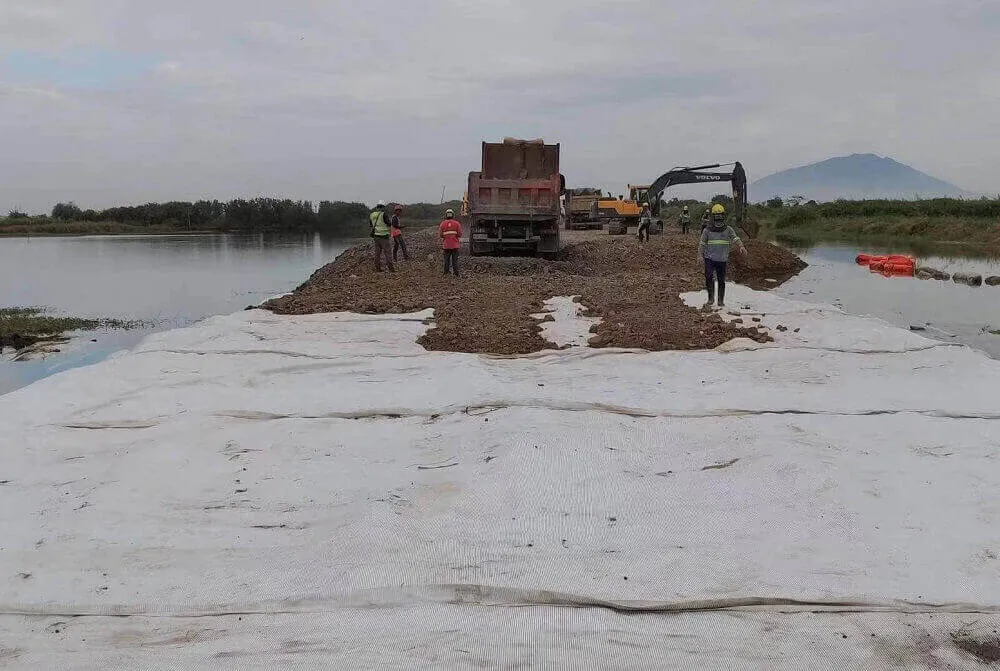
Proper drainage is the unsung hero of successful landscaping and construction. That’s where drainage fabric (often called geotextile cloth, drainage cloth, or drainfield fabric) steps in as a crucial, yet often overlooked, solution. But with terms like woven geotextile fabric and non-woven geotextile floating around, choosing the best fabric for drainage can feel confusing.
What is Geotextile Fabric for Drainage?
A drainage fabric is a permeable material known professionally as a geotextile. Think of it as a specialized cloth designed for use with soil and drainage projects. Its primary job is not to block water, but to manage it. A true geotextile cloth performs three critical functions:
Superior Drainage: Prevents soil saturation by allowing water to pass through quickly, reducing erosion and waterlogging. This is the core function of drainage cloth.
Soil Separation: Acts as a physical barrier, preventing different soil layers (like gravel and clay) from mixing. This is vital for ground separation in roads, paths, and foundations. Mixing leads to instability and failure.
Filtration: Filters out fine soil particles while letting water through. This prevents soil from clogging drainage systems (like pipes or gravel layers) and maintains long-term permeability – key for drainfield fabric.
Reinforcement & Stabilization: Provides tensile strength, distributing loads and improving the stability of soft soils. This makes it excellent as stabilization fabric under driveways, parking areas (road underlayment), or on slopes. Heavy duty geotextile excels here.
Erosion Control: Protects soil surfaces on slopes or channels from being washed away by rain or runoff.
Mud Control: On construction sites or temporary paths, geotextile landscape fabric placed under gravel creates a stable, mud-free surface, crucial for mud control.
It’s important to distinguish a proper geotextile from standard Ground Cover Weed Control Fabric. While weed barriers are great for stopping sunlight, they are often not permeable enough for drainage applications. They can quickly clog with sediment, turning your drainage solution into a dam.
The Two Main Types of Drainage Geotextiles Cloth: Woven vs Non-Woven
The world of geotextiles is primarily divided into two categories. Understanding the difference between them is the key to selecting the best fabric for drainage for your specific needs.
Non-Woven Geotextile: The Filtration Champion
A non-woven geotextile is the most common and effective type of drainage cloth used for water management.
- What it looks like: It has a fuzzy, felt-like appearance. It’s made by pressing and needle-punching synthetic fibers together, creating a random, three-dimensional structure.

- How it works: This structure creates countless tiny pathways for water to flow through in any direction, giving it excellent permeability. At the same time, these small openings are incredibly effective at trapping soil particles, acting as a superb filter.

- Best for: Projects where water flow and filtration are the top priorities,andtheSupermarket DIY use this geotextile too.

Common uses for Non-Woven Geotextile:
- Wrapping French drain pipes and gravel trenches.
- Lining a Drainfield Fabric system.
- Placing behind retaining walls to relieve water pressure.
- Erosion control on small slopes.
For most residential drainage needs, a non-woven geotextile is the answer.
Woven Geotextile Fabric: The Strength and Stabilization Hero
A woven geotextile fabric is engineered for strength, not for high-flow drainage.
- What it looks like: It resembles a thin, plastic tarp or silt fence material. It’s made by interlacing polypropylene strands together in a uniform, grid-like pattern.

- How it works: This woven construction gives it incredible tensile strength, making it highly resistant to tearing and stretching. While water can pass through the small openings in the weave, it does so much more slowly than with non-woven fabric. Its main purpose is to be a Stabilization Fabric.
- Best for: Projects where strength and preventing layers from mixing are more important than fast drainage.
Common uses for Woven Geotextile Fabric:
- Road underlayment and building driveways or gravel paths.
- Mud Control in paddocks or on construction sites.
- Separating soil from aggregate in foundation work.
- Large-scale erosion control under riprap.
When you need a Heavy Duty Geotextile to support weight and provide ground separation, a woven geotextile is the superior choice.
How to choose Best Geotextile Fabric for Drainage? Making the Right Choice
Selecting the right drainage fabric isn’t one-size-fits-all. Consider these factors:
Your Project’s Primary Need:
Need Maximum Water Flow? (French drains, yard drainage, drain fields): Prioritize non-woven geotextile.
Need Soil Separation & Stabilization? (Under driveways, patios, roads): Prioritize woven geotextile fabric.
Combination? Sometimes both are used in layers (e.g., non-woven for filtration/drainage directly against soil, woven for separation/stability above).
Weight & Strength: Measured in ounces per square yard (oz/yd²) or grams per square meter (g/m²). Heavier weights (heavy duty geotextile) offer more strength and puncture resistance for demanding applications like road underlayment or mud control on active sites. Lighter weights suffice for simple drainage trenches or under mulch.
Permeability: How quickly water flows through the fabric (measured in gallons per minute per square foot or similar). Crucial for effective drainage cloth. Non-woven typically has higher permeability.
AOS (Apparent Opening Size): Indicates the size of the pores that control filtration. A smaller AOS number filters finer particles. Match this to your soil type – finer soils need smaller AOS to prevent clogging, while coarser soils can use larger AOS for faster flow. Critical for long-term drainfield fabric performance.
UV Resistance: If exposed to sunlight for extended periods (weeks/months) before being covered, ensure the fabric has UV stabilization to prevent degradation.
Answering Your Key Questions
Let’s address a few more common questions customers have about geotextile landscape fabric.
1.What kind of fabric is used for drainage?
The general term for fabric used in drainage is geotextile. For applications specifically focused on draining water, like French drains, the correct type is a non-woven geotextile. This material is often sold as drainage cloth or Drainfield Fabric.
2.Is landscape fabric the same as drainage fabric?
Not usually. Most standard black plastic landscape fabric sold for weed control is not a true geotextile. It is designed to block sun and may have very low permeability. Using it in a drainage trench is a common mistake that leads to clogs and failure. Always look for a product specifically labeled as a non-woven geotextile for drainage projects.
Installation of Geotextile Fabric
Even the best fabric for drainage fails if installed poorly:
Prepare the Surface: Remove sharp debris, rocks, and roots that could puncture the fabric. Grade appropriately.
Lay it Correctly: Place the fabric with the smoother side (if applicable) typically facing the drainage aggregate or away from the soil requiring filtration. Overlap seams generously (usually 12-18 inches) and secure edges.
Cover Promptly: Protect the fabric from UV degradation and displacement by covering it with soil or aggregate as soon as possible after installation.
Choosing the right drainage fabric – whether it’s a non-woven geotextile for superior flow in a drain field, a woven geotextile fabric for stabilizing a driveway, or a heavy duty geotextile for mud control – is an investment in the longevity and stability of your project. By understanding the roles of geotextile cloth, focusing on your specific needs (drainage, separation, stabilization), and selecting the appropriate type and weight, you ensure effective water management, prevent costly soil issues, and create a solid foundation for success. Don’t let water undermine your hard work; let the right drainage fabric be your solution.Follow our Facebook Linkedin Youtube for more information!
Recent Post
Aquaculture Pond Lining in Indonesia | From Design to Installation
From Project Drawing to Water Filling: An Aquaculture Pond Lining Project in Indonesia This aquaculture pond project in Indonesia started with a project drawing.The customer firstly contacted us
When Is Geotextile Really Necessary?
When Is Geotextile Really Necessary in Civil Engineering Projects? Geotextiles are widely used in modern infrastructure and environmental engineering. However, a common question among engineers, designers, and contractors is: Is geotextile always necessary? In
Woven Polypropylene Geotextile Manufacturer | Engineering Grade & Landscape Fabric
Woven Polypropylene Geotextile Manufacturer | Engineering Grade & Landscape Fabric By Planetliner — Manufacturer of High-Performance Woven PP Fabrics for Global Projects Woven polypropylene geotextile has become a fundamental material in civil engineering, environmental protection,