
Geotextile Woven Fabric for Solar Farms in Brazil
Brazil is one of the fastest-growing markets for solar energy in the world. With thousands of megawatts of solar farms already installed, the country continues to expand its clean energy capacity. However, one of the challenges is weed growth under and around solar panels. Uncontrolled grass not only increases maintenance costs but can also affect electrical safety.
To solve this problem, many solar projects in Brazil are now using geotextile woven fabric as a ground cover. This durable material is designed to control weeds, stabilize soil, and reduce operational costs, making it a reliable solution for long-term solar power generation.
Brazil’s Solar Energy Landscape
Brazil is rapidly expanding its renewable energy capacity, with solar power is a popular type. The country climate offers abundant sunlight, making it ideal for large scale solar farms. However, these installations in areas with soil erosion and dust requires innovative solutions.
Dust accumulation on solar panels can significantly reduce efficiency by blocking sunlight. Traditional methods to control dust, like regular cleaning or gravel cover, are often costly and environmentally disruptive. Brazil use geotextile woven fabric to grow grass under solar panels is helpful for both maintenance and environment concerns.
What is Geotextile Woven Fabric?
Geotextile woven fabric is a strong and durable textile made from polypropylene (PP) or polyester (PET) fibers. Designed for durability and resistance to environmental stress, it is widely used in construction for soil stabilization, drainage, and erosion control. Its drainage nature allows water and air to pass through while keeping soil intact.It is woven together in a crisscross pattern, creating a fabric that is:
High in tensile strength – strong enough to resist tearing and stretching.
Durable – resistant to UV rays, chemicals, and weathering.
Permeable – allows water to drain while preventing weed growth.
Versatile – widely used in construction, agriculture, and infrastructure projects.
In simple words, woven geotextile is a fabric that strengthens the ground, controls vegetation, and improves soil performance.
For Brazil solar famrs, our client choose the Polyeser Woven geotextile fabric,and the Specification is 180gsm.Because the white color can Enhance reflectivity,and Improve the efficiency of solar panels.
Why Solar Farms in Brazil Use Woven Geotextiles?
Solar power plants in Brazil are often built on large open lands, where weeds grow quickly due to the warm climate. Traditional methods like manual weeding or chemical herbicides are expensive, unsafe, and harmful to the environment.
By covering the ground with geotextile woven fabric, solar operators gain multiple benefits:
1. Soil Stabilization and Erosion Control
Geotextile fabric acts as a reinforcement layer, holding soil in place even during heavy rains or winds. This is crucial for protecting solar panel foundations and access roads.
2. Dust Suppression
By facilitating grass growth, the fabric helps eliminate exposed dirt, reducing dust that can coat panels and reduce their efficiency. This means fewer cleanings and lower maintenance costs.
3. Environmental Benefits
The grass cover restores ecological balance by providing habitat for insects and small animals. It also improves soil health and captures carbon dioxide. Similar projects, like in Inner Mongolia, have seen vegetation coverage increase from 19% to over 60%.
4. Improved Solar Efficiency
Plants release moisture into the air, which can cool the surrounding area. Solar panels operate more efficiently at lower temperatures, so this natural cooling can boost energy output.
5. Cost-Effectiveness
While the initial investment might be higher than traditional methods, the long-term savings in maintenance (like less frequent cleaning) and the extended lifespan of the solar farm make it economically viable.
Installation in Solar Power Plants
Installing woven geotextile in solar farms is simple:
The ground is cleared and leveled.
Rolls of geotextile woven fabric are laid under the solar panel rows.
The fabric is secured using stones, pegs, or nails.
The sheets overlap slightly to make sure no weeds can grow through gaps.
This process creates a clean, stable, and low-maintenance surface under the solar panels.
Challenges and Considerations
Material Selection: Choosing the right type of geotextile fabric is very important. It must be strong enough to resist UV degradation and physical wear yet allow grass roots to penetrate.
Water Management: In drier regions, irrigation might be needed initially to establish the grass. Using drought-resistant grass species can minimize water needs.
Maintenance: While the grass reduces dust, it requires occasional mowing to avoid shading the panels. In some projects, like in China, local farmers graze livestock to manage vegetation naturally
Other Applications of Woven Geotextile Fabric
While solar farms are a growing market, woven geotextile fabric is also widely used in other fields:
Road construction – strengthens soil and prevents cracks.
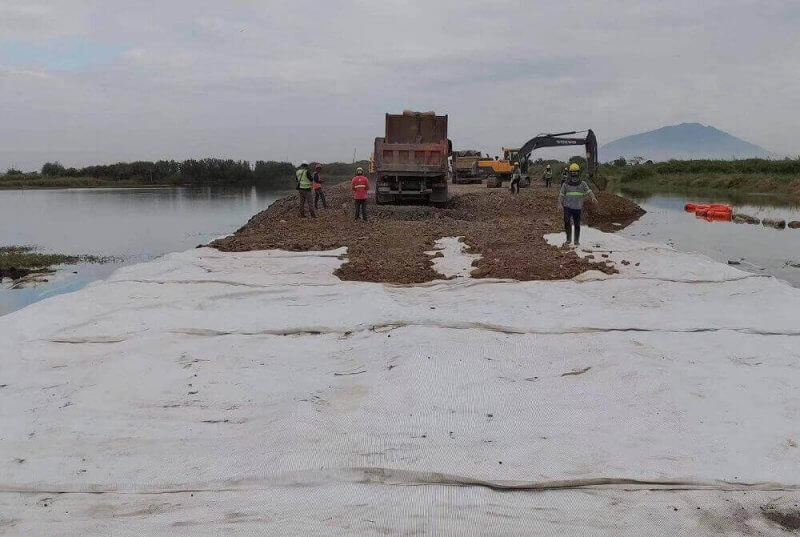
Drainage systems – filters water and controls erosion.
Agriculture – works as a ground cover to control weeds.
Landfills and mining – provides soil stabilization and separation.

These applications show the versatility of woven geotextiles in civil engineering and environmental projects.
Conclusion
The use of geotextile woven fabric in Brazil’s solar farms is a smart and sustainable choice. It reduces weed growth, lowers maintenance costs, protects equipment, and supports the long-term success of solar energy projects.As Brazil continues to expand its renewable energy capacity, woven geotextiles will play a bigger role in ensuring that solar farms remain efficient, clean, and environmentally friendly.
If you are planning a solar project, choosing a reliable geotextile woven fabric supplier is key to long-term performance.Please contact us for solutions, and follow our Linkedin Facebook Youtube Instagram for more details!
Recent Post
Aquaculture Pond Lining in Indonesia | From Design to Installation
From Project Drawing to Water Filling: An Aquaculture Pond Lining Project in Indonesia This aquaculture pond project in Indonesia started with a project drawing.The customer firstly contacted us
When Is Geotextile Really Necessary?
When Is Geotextile Really Necessary in Civil Engineering Projects? Geotextiles are widely used in modern infrastructure and environmental engineering. However, a common question among engineers, designers, and contractors is: Is geotextile always necessary? In
Woven Polypropylene Geotextile Manufacturer | Engineering Grade & Landscape Fabric
Woven Polypropylene Geotextile Manufacturer | Engineering Grade & Landscape Fabric By Planetliner — Manufacturer of High-Performance Woven PP Fabrics for Global Projects Woven polypropylene geotextile has become a fundamental material in civil engineering, environmental protection,