
Nonwoven Geotextile Fabric Supplier | Drainage & Filtration Geotextile

1.What is Nonwoven Geotextile?
Nonwoven geotextile is a synthetic fabric made from polypropylene (PP) or polyester (PET) fibers through needle-punching or heat-bonding processes. It is widely used in civil engineering and environmental projects for filtration, drainage, separation, and soil protection.
Unlike woven geotextiles, nonwoven fabrics have a random fiber structure, which provides excellent permeability and makes them highly effective as a filter layer in soil and water management systems.
As a professional geotextile manufacturer and supplier with over 10 years of experience, we provide high-quality nonwoven geotextiles that meet international standards such as ASTM, ISO, and CE. Our products are designed for long-term performance in demanding construction and environmental applications.
2.Nonwoven Geotextile Specification
Mass weight:100gsm 150gsm 200gsm 250gsm 300gsm 400gsm 500gsm 600gsm 700gsm 800gsm
Width range:1m-6m
Material:Polyester/PET, Polypropylene/PP. All geotextile is 100%virgin material.
Colors:Mainly white color, black blue green colors can be customized.
2.1Nonwoven Geotextile Material Characteristics-PET Geotextile vs PP Geotextile
Nonwoven geotextiles can be produced using polyester (PET) or polypropylene (PP) fibers. While both materials are widely used in civil engineering and environmental applications, they have distinct performance features:
1).PET Geotextile (Polyester Geotextile)
Material Properties: Made from continuous or staple polyester fibers.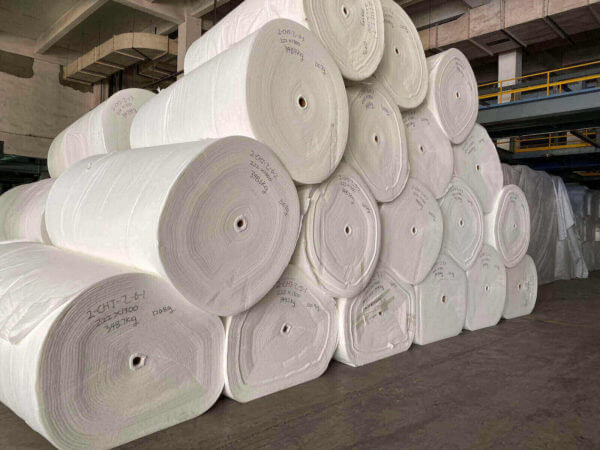
Characteristics:
High tensile strength – excellent mechanical performance.
Good creep resistance – maintains strength under long-term load.
Lower elongation compared to PP, offering greater dimensional stability.
Better resistance to high temperatures than PP.
Applications:
Reinforcement of slopes, retaining walls, and embankments.
Projects requiring long-term stability and higher load-bearing capacity.
Limitations: Sensitive to strong acids; better used in neutral or alkaline soil conditions.
2).PP Geotextile (Polypropylene Geotextile)
Material Properties: Made from polypropylene staple fibers or filaments.
Characteristics:
Lightweight and economical – lower density compared to PET.
Excellent chemical resistance – stable in acidic and alkaline environments.
Higher elongation than PET – more flexible and adaptable to ground movement.
Hydrophobic nature – repels water and resists biological clogging.
Applications:
Drainage and filtration layers.
Road and railway subgrade separation.
Coastal and hydraulic engineering where chemical resistance is essential.
Limitations: Lower melting point; not ideal for high-temperature conditions.
3). Key Differences Between PET and PP Geotextiles
| Feature | PET Geotextile | PP Geotextile |
| Material | Polyester (PET) | Polypropylene (PP) |
| Tensile Strength | Higher | Moderate |
| Elongation | Lower (more rigid) | Higher (more flexible) |
| Chemical Resistance | Strong in alkali, weaker in strong acid | Excellent in acid & alkali |
| Density | Higher | Lower, lightweight |
| Temperature Resistance | Better high-temp resistance | Lower melting point |
| Best Use | Reinforcement, load-bearing, long-term projects | Filtration, drainage, chemical-resistant projects |
2.2Nonwoven Geotextile Construction Characteristics-Staple Fiber vs Filament Nonwoven Geotextile
Nonwoven geotextiles are generally divided into staple fiber geotextile and filament geotextile, both widely used in civil engineering and environmental projects. Although they serve similar purposes, they have some important differences:
1).Staple Fiber Nonwoven Geotextile

Material & Process: Produced by needle-punching short synthetic fibers (usually polypropylene or polyester).
Characteristics:
Good filtration and separation performance.
Economical and widely used for basic engineering projects.
Slightly lower tensile strength compared to filament geotextiles.
Applications:
Road and railway subgrade separation.
Drainage and filtration layers.
Landscaping and agricultural projects.
2).Filament Nonwoven Geotextile
Material & Process: Made by continuous polyester (PET) or polypropylene (PP) filaments bonded together through needle-punching.
Characteristics:
Higher tensile strength and elongation.
Excellent durability and resistance to deformation.
Performs well in reinforcement and protection applications.
Applications:
Reinforcement of slopes, retaining walls, and embankments.
Erosion control and coastal protection.
Projects requiring high mechanical strength and long-term performance.
3). Key Differences between Staple geotextile and Filament Geotextile
| Feature | Staple Fiber Geotextile | Filament Geotextile |
| Fiber Type | Short fibers | Continuous filaments |
| Strength | Moderate | Higher tensile strength |
| Cost | More economical | Slightly higher |
| Durability | Standard | Longer lifespan, stronger |
| Best Use | General filtration and separation | Reinforcement, heavy-duty projects |
3.Nonwoven Geotextile Manufacture Process
Needle-Punched Nonwoven Geotextile:This type is created by mechanically interlocking fibers using needle-punching machines. It is strong, durable, and commonly used in applications requiring filtration and separation.
Heat-Bonded Nonwoven Geotextile:Fibers are bonded using heat, creating a smoother and more compact surface. This type is suitable for projects requiring high filtration efficiency.
Spunbond Nonwoven Geotextile:Manufactured by extruding continuous filaments, spunbond geotextiles are lightweight and have excellent dimensional stability, making them ideal for erosion control.
4.Nonwoven Geotextile Features: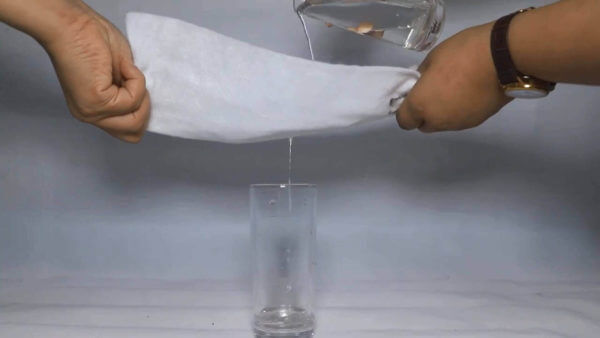
Excellent Filtration – Allows water to pass while retaining soil particles.
High Permeability – Ensures effective drainage in subgrade and retaining wall projects.
Separation Function – Prevents mixing of soil layers, improving ground stability.
Durability – Resistant to puncture, tearing, and environmental degradation.
Chemical and Biological Resistance – Stable against acids, alkalis, and microorganisms.
UV Stability – Suitable for both underground and outdoor use.
Lightweight and Easy to Install – Supplied in rolls for efficient handling and construction.
5.Nonwovn Geotextile Price
The price of nonwoven geotextile depends on weight (gsm), material (PP or PET), roll width, and project quantity.
Lightweight nonwoven (100–300 gsm): $0.25 – $0.60 / m²
Medium weight (400–600 gsm): $0.70 – $1.20 / m²
Heavy duty (700–1200 gsm): $1.30 – $2.50 / m²
(Prices are for reference only; please request a customized quotation for your project needs.)
6.Nonwovn Geotextile Applications:
Nonwoven geotextiles are widely recognized as versatile engineering materials that enhance soil performance, provide stability, and extend the lifespan of construction projects. They are applied in different industries where separation, filtration, drainage, and protection are critical. Below are some of the main applications:
1). Road Construction and Highways
Purpose: Separation of subgrade soil from aggregates, preventing mixing and ensuring long-term road stability.
Benefit: Improves bearing capacity, reduces rutting, and lowers maintenance costs.
Example: Highway base layers reinforced with filament nonwoven geotextile to distribute loads effectively.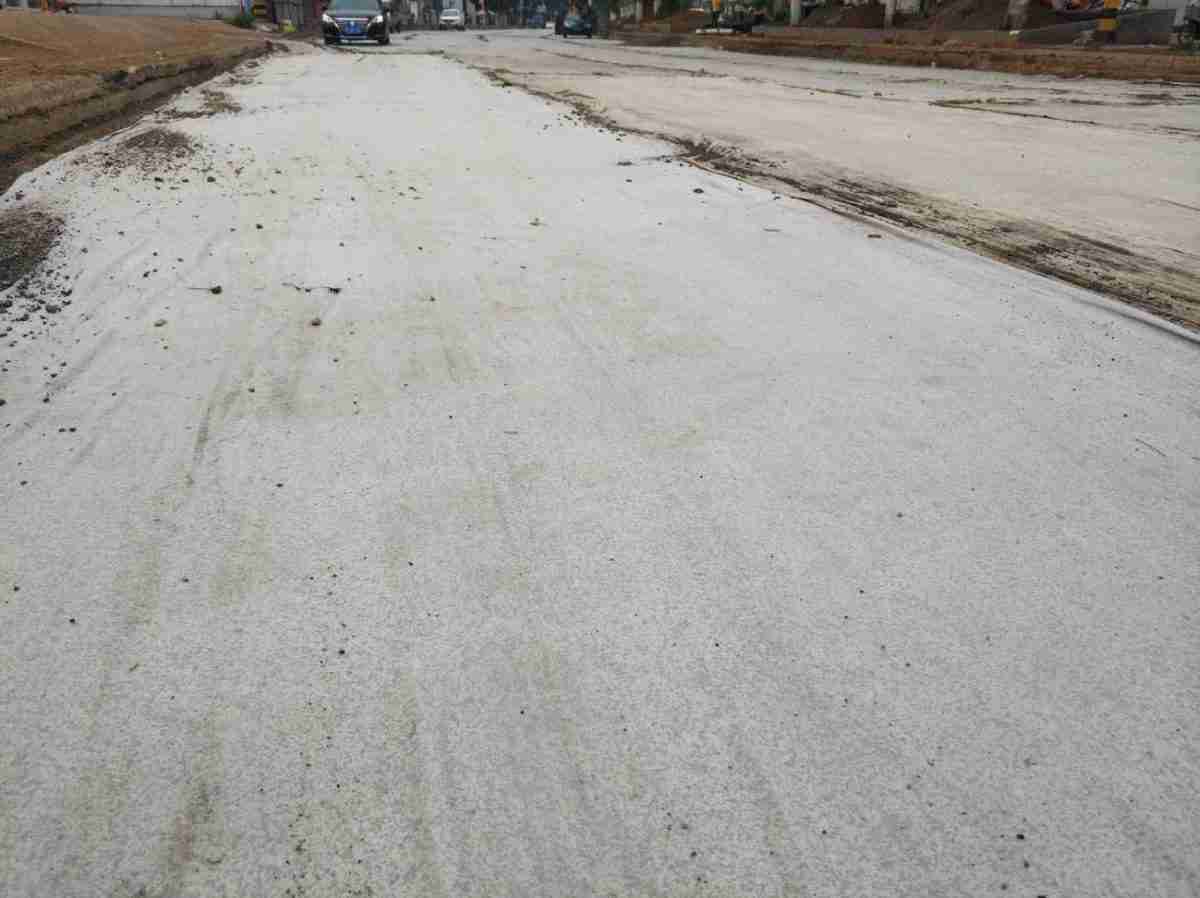
2). Railway Engineering
Purpose: Provides filtration and separation between ballast and subsoil.
Benefit: Maintains track stability, improves drainage, and extends service life.
Example: PET nonwoven geotextile applied beneath ballast layers for high-speed rail projects.
3). Landfills and Environmental Projects
Purpose: Works as a protective layer for geomembranes, preventing puncture and leakage.
Benefit: Enhances environmental safety and long-term sealing performance.
Example: Staple fiber nonwoven geotextile used as cushion layers in solid waste landfills.
4). Erosion Control and Slope Protection
Purpose: Stabilizes soil on embankments, riverbanks, and coastal areas.
Benefit: Prevents soil loss, enhances vegetation growth, and protects against washouts.
Example: PP nonwoven geotextile combined with turf reinforcement mats in shoreline protection.
5). Drainage Systems
Purpose: Provides excellent filtration and permeability while preventing soil clogging.
Benefit: Improves subsurface drainage for roads, sports fields, and landscaping.
Example: Used as a filter layer in French drains and retaining wall backfills.
6). Mining and Energy Projects
Purpose: Protects liners in heap leach pads, tailing ponds, and biogas projects.
Benefit: Extends service life of geomembranes under heavy load and sharp aggregates.
Example: Filament geotextile applied in copper and gold mining operations.
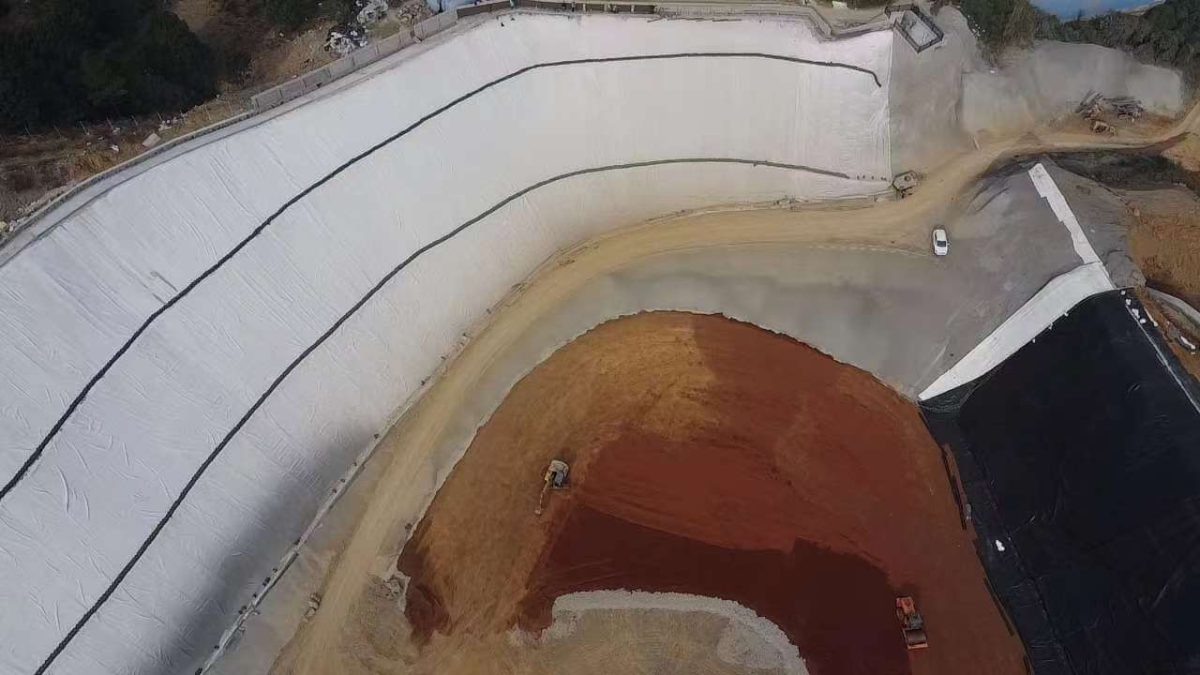
7). Waterproofing and Reservoirs
Purpose: Acts as a cushion and protection layer for geomembranes in reservoirs, canals, and dams.
Benefit: Prevents puncture from sharp stones and enhances sealing effectiveness.
Example: Nonwoven PET geotextile used under HDPE geomembranes in irrigation ponds.
7.Nonwoven geotextile Installation
- Geotextiles must only be cut with a geotextile cutter (hook cutter). If cutting is performed on-site, special protective measures must be taken for other materials to prevent unnecessary damage to the geotextile.
- When laying the geotextile, all necessary measures must be taken to prevent damage to underlying materials.
- When laying the geotextile, care must be taken to prevent the ingress of rocks, large amounts of dust, or moisture, which could damage the geotextile, block drains or filters, or hinder subsequent connections, into the geotextile or beneath it.
- After installation, visually inspect all geotextile surfaces to identify any damaged areas, mark them, and repair them. Ensure that the surface is free of foreign material that could cause damage, such as broken needles.
- Geotextile connections must adhere to the following guidelines: Under normal circumstances, horizontal connections must not occur on the slope (connections must follow the slope contour and not intersect it), except where repairs are required.
- If sewing is used, the seam must be made of the same or higher material as the geotextile and must be chemically and UV-resistant. The seams should have a clear color difference with the geotextile to facilitate inspection. 7. During installation, pay special attention to the seams to ensure that no soil or gravel from the gravel cover layer enters the middle of the geotextile.
FAQ
Q1: What is the main difference between nonwoven and woven geotextiles?
A1: Nonwoven geotextiles are made from fibers bonded together, offering excellent filtration and drainage. Woven geotextiles are produced by interlacing threads, providing higher tensile strength. Nonwoven is often used for filtration and separation, while woven is preferred for reinforcement.
Q2: How do I choose between PET geotextile and PP geotextile?
A2: PET geotextiles (polyester) provide better resistance to creep and long-term load, making them suitable for roadways and retaining walls. PP geotextiles (polypropylene) are lighter, chemically inert, and more resistant to acids and alkalis, making them ideal for drainage, landfills, and coastal projects.
Q3: What are the typical applications of nonwoven geotextiles?
A3: Nonwoven geotextiles are widely used in road construction, drainage systems, landfills, erosion control, retaining walls, agriculture, and mining.
Q4: How long can nonwoven geotextiles last in soil?
A4: High-quality nonwoven geotextiles can last more than 10–50 years underground, depending on UV exposure, chemical environment, and installation quality.
Q5: What is the standard thickness of nonwoven geotextile?
A5: Thickness typically ranges from 0.8 mm to 5 mm, depending on project requirements. Heavier geotextiles are used for filtration and reinforcement, while lighter ones are for separation and drainage.
Q6: Can nonwoven geotextile replace gravel or sand filters?
A6: Yes, in many cases nonwoven geotextiles act as a filter layer, reducing the need for thick gravel layers, saving cost and construction time.
Q7: How do I know what GSM (grams per square meter) I need?
A7: The GSM depends on your project. Light geotextiles (100–200 GSM) are used for landscaping and small drainage, while heavy-duty geotextiles (400–800 GSM) are used for roads, railways, and landfills.
Q8: Are nonwoven geotextiles resistant to chemicals and biological attack?
A8: Yes, PP geotextiles have strong resistance to most chemicals, bacteria, and fungi, ensuring long service life in soil and water applications.
Q9: Can I install nonwoven geotextile myself?
A9: For small landscaping or drainage projects, yes. For large-scale projects like landfills or highways, professional installation is recommended to ensure correct overlapping, anchoring, and performance.