
Polypropylene Geotextile | PP Woven & Nonwoven Geotextile Manufacturer
Polypropylene Geotextile (PP Geotextile) is one of the most widely used geosynthetic materials in modern civil engineering, environmental protection, transportation infrastructure, landscaping, and agricultural applications. Manufactured from high-quality polypropylene fibers or tapes, it offers excellent chemical resistance, high tensile strength, outstanding durability, and long-term performance under various soil and environmental conditions.
Depending on manufacturing technology and project requirements, polypropylene geotextiles are available in woven and nonwoven structures. Woven polypropylene geotextiles are primarily used for soil reinforcement and stabilization, while nonwoven polypropylene geotextiles provide superior filtration, drainage, separation, and protection. Polypropylene is also widely used to manufacture woven landscape fabric, commonly known as weed barrier fabric, for landscaping and agricultural ground cover applications.
As one of the most popular geotextile materials, polypropylene geotextile plays a vital role in improving soil stability, extending the service life of infrastructure, reducing maintenance costs, and supporting sustainable construction practices. It is widely used in highways, railways, embankments, retaining walls, landfills, drainage systems, mining projects, coastal engineering, erosion control, gardens, nurseries, and greenhouses.

What Is Polypropylene Geotextile?
Polypropylene geotextile is a permeable geosynthetic fabric manufactured from polypropylene (PP), a lightweight thermoplastic polymer known for its excellent resistance to chemicals, moisture, bacteria, and biological degradation. Unlike conventional construction fabrics, polypropylene geotextiles are engineered to interact with soil by providing separation, filtration, reinforcement, drainage, and protection functions.
The material allows water to flow freely while preventing the movement of soil particles, making it highly effective in maintaining the stability and integrity of engineered structures. Because polypropylene has an extremely low water absorption rate and excellent resistance to acids, alkalis, and microorganisms, PP geotextiles perform exceptionally well in harsh environments where long-term durability is required.
Polypropylene geotextiles are commonly classified into two major categories:
- Woven Polypropylene Geotextile
- Nonwoven Polypropylene Geotextile
Within nonwoven products, they can be further divided into continuous filament and staple fiber geotextiles according to the manufacturing process.
Benefits of Polypropylene Geotextile
Polypropylene geotextiles have become one of the preferred materials for infrastructure and environmental engineering because they combine excellent mechanical performance with outstanding chemical stability.
Excellent Chemical Resistance
Polypropylene is naturally resistant to most acids, alkalis, salts, and chemicals found in soil and groundwater. This makes PP geotextiles suitable for landfills, mining facilities, wastewater treatment plants, and chemically aggressive environments.
Superior Soil Separation
One of the primary functions of polypropylene geotextile is separating different soil layers while preventing the migration of fine particles. This helps maintain the structural integrity of roads, railways, and foundations.
High Water Permeability
Nonwoven polypropylene geotextiles allow water to pass through efficiently while retaining soil particles, making them ideal for drainage systems, retaining walls, French drains, and erosion control projects.
High Tensile Strength
Woven polypropylene geotextiles provide excellent tensile strength and load distribution, improving soil bearing capacity and reducing long-term settlement in transportation and infrastructure projects.
Lightweight and Easy Installation
Compared with traditional construction materials, polypropylene geotextiles are lightweight, easy to transport, and simple to install, reducing construction time and labor costs.
Long Service Life
With proper installation and UV protection when required, polypropylene geotextiles provide reliable long-term performance under demanding engineering conditions.
Cost-Effective Solution
By improving soil stability, reducing aggregate requirements, and minimizing maintenance costs, polypropylene geotextiles offer significant economic benefits throughout the project life cycle.
Types of Polypropylene Geotextile
Different engineering applications require different polypropylene geotextile structures. Planetliner supplies a complete range of woven and nonwoven polypropylene geotextiles to meet diverse project requirements.
High Strength Woven Polypropylene Geotextile
High Strength Woven Polypropylene Geotextile is manufactured by weaving high-tenacity polypropylene tapes or yarns into a stable fabric structure. Designed primarily for reinforcement and stabilization, it provides excellent tensile strength with relatively low elongation, allowing loads to be distributed more effectively across weak soils.
This type of geotextile is widely used in transportation infrastructure and foundation engineering where long-term mechanical performance is essential.
Key Features
- High tensile strength
- Excellent dimensional stability
- Low elongation under load
- Outstanding reinforcement performance
- Good puncture resistance
- Excellent resistance to chemicals and moisture
- Long service life
Typical Applications
- Highway construction
- Road subgrade stabilization
- Railway foundations
- Airport runways
- Embankments
- Retaining wall reinforcement
- Soft ground improvement
- Heavy-duty working platforms
Because of its excellent structural performance, woven polypropylene geotextile is one of the most commonly specified materials for civil engineering reinforcement projects.

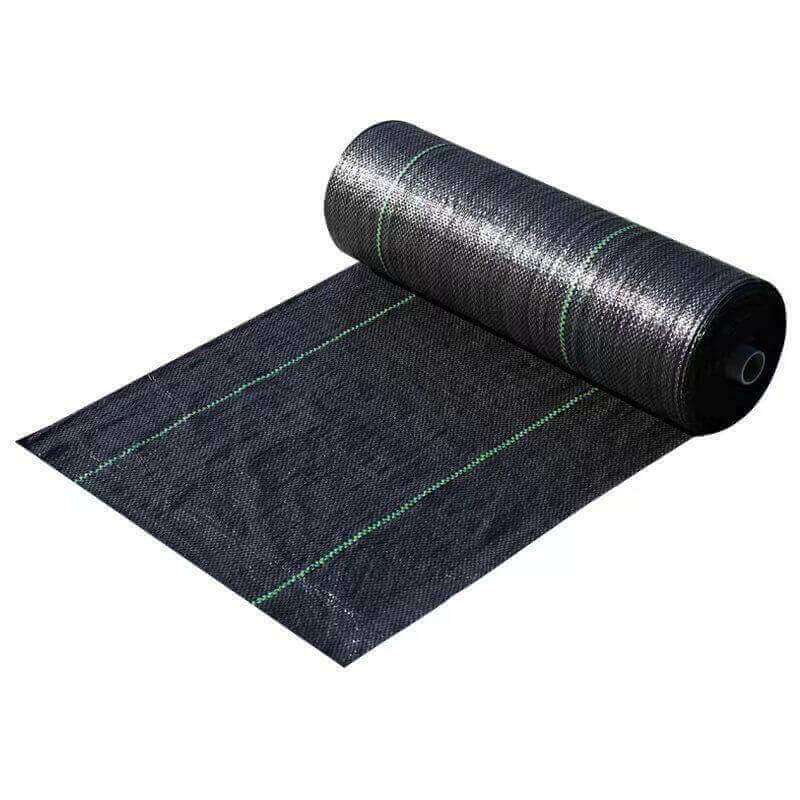
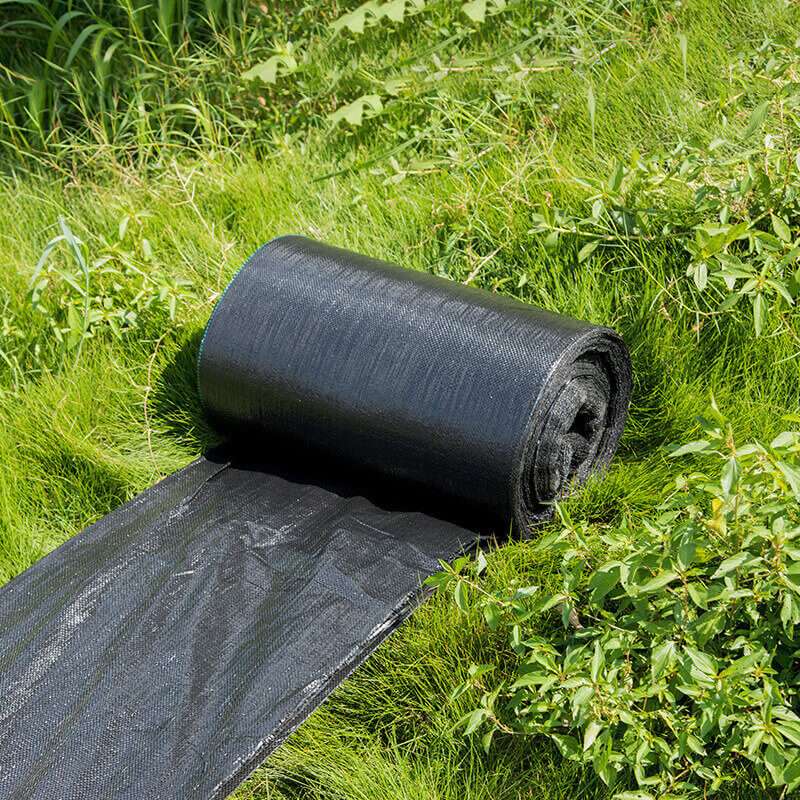
Polypropylene Landscape Fabric
Polypropylene Landscape Fabric is a lightweight woven geotextile specifically developed for landscaping, gardening, agriculture, and horticulture. It is also widely known as woven weed barrier fabric or ground cover fabric.
Unlike structural woven geotextiles used in infrastructure construction, landscape fabric focuses on weed suppression while maintaining water permeability and air circulation, allowing healthy plant growth without excessive weed competition.
Key Features
- Effective weed control
- High water permeability
- Excellent air circulation
- UV stabilized for outdoor applications
- Lightweight and easy installation
- Available with planting guide lines
- Resistant to tearing and puncture
Typical Applications
- Garden landscaping
- Decorative gravel areas
- Greenhouse flooring
- Nursery ground cover
- Orchard weed control
- Vegetable gardens
- Artificial turf installation
- Walkways and pathways
Polypropylene landscape fabric has become one of the most popular solutions for reducing herbicide use while maintaining attractive and low-maintenance landscapes.
Polypropylene Nonwoven Geotextile
Polypropylene Nonwoven Geotextile is manufactured using needle punching or spunbond technology to create a highly permeable fabric capable of performing filtration, drainage, separation, and protection functions.
Compared with woven geotextiles, nonwoven polypropylene products generally provide higher permeability and better filtration performance, making them suitable for drainage systems and environmental engineering applications.
Depending on the manufacturing process, polypropylene nonwoven geotextiles are available as continuous filament geotextiles and staple fiber geotextiles.
Polypropylene Filament Geotextile
Polypropylene filament geotextile is manufactured from continuous polypropylene filaments that are mechanically bonded through needle punching.
It offers:
- Higher tensile strength
- Better puncture resistance
- Excellent dimensional stability
- Superior durability
- Consistent filtration performance
It is commonly used in landfill engineering, drainage systems, coastal protection, geomembrane cushioning, mining, and infrastructure projects requiring long service life.
Polypropylene Staple Fiber Geotextile
Polypropylene staple fiber geotextile is manufactured from short polypropylene fibers bonded through needle punching technology.
Its advantages include:
- Cost-effective production
- Excellent filtration capability
- High flexibility
- Good drainage performance
- Easy installation
Staple fiber geotextiles are widely used for road construction, foundation separation, erosion control, landscaping, drainage systems, and general civil engineering projects where reliable filtration and separation are required.
Polypropylene Filament vs Staple Fiber Geotextile
Both polypropylene filament geotextile and polypropylene staple fiber geotextile are widely used in civil engineering and environmental projects. Although they perform similar functions, their manufacturing processes and performance characteristics differ, making each suitable for specific applications.
| Property | Polypropylene Filament Geotextile | Polypropylene Staple Fiber Geotextile |
|---|---|---|
| Raw Material | Continuous PP Filaments | PP Staple Fibers |
| Manufacturing Process | Needle Punched Continuous Filament | Needle Punched Staple Fiber |
| Tensile Strength | Higher | Moderate |
| Puncture Resistance | Excellent | Good |
| Filtration Performance | Excellent | Excellent |
| Drainage Capacity | Excellent | Good |
| Durability | Higher | Good |
| Cost | Higher | More Economical |
| Typical Applications | Landfills, Mining, Railways, Highways | Roads, Drainage, Landscaping, General Civil Engineering |
Filament polypropylene geotextiles are generally recommended for projects requiring higher tensile strength, long-term durability, and enhanced puncture resistance. Staple fiber polypropylene geotextiles provide a cost-effective solution for filtration, separation, and drainage applications where moderate mechanical performance is sufficient.
Applications of Polypropylene Geotextile
Polypropylene geotextiles are widely used across transportation infrastructure, environmental engineering, water management, landscaping, and agricultural projects because of their excellent mechanical properties and long-term durability.
Road Construction
Polypropylene woven geotextiles improve the bearing capacity of weak subgrades by separating aggregate layers and reinforcing soft soils. They reduce rutting, minimize aggregate loss, and extend pavement service life.
Railway Construction
PP geotextiles provide soil stabilization, separation, and reinforcement beneath railway ballast, helping maintain track stability while reducing long-term settlement.
Drainage Systems
Nonwoven polypropylene geotextiles are commonly used in French drains, retaining wall drainage systems, foundation drainage, and subsurface drainage because they allow water to flow while preventing soil particles from clogging drainage media.
Landfill Engineering
Polypropylene nonwoven geotextiles protect geomembranes against puncture damage while providing filtration and drainage functions within landfill lining and capping systems.
Mining Projects
Mining operations use polypropylene geotextiles in heap leach pads, tailings storage facilities, access roads, and containment systems where chemical resistance and durability are critical.
Coastal and Hydraulic Engineering
PP geotextiles help control erosion, stabilize shorelines, protect riverbanks, and improve the performance of coastal protection structures.
Retaining Walls and Embankments
High-strength woven polypropylene geotextiles reinforce soil structures, improve load distribution, and increase the long-term stability of retaining walls and embankments.
Landscaping and Agriculture
Polypropylene landscape fabric effectively suppresses weeds while allowing water and nutrients to penetrate the soil. It is widely used beneath gravel pathways, decorative stone, artificial turf, garden beds, orchards, nurseries, and greenhouse flooring.


Frequently Asked Questions
1.What is the difference between woven and nonwoven polypropylene geotextile?
Woven polypropylene geotextiles are primarily used for reinforcement and stabilization because of their high tensile strength. Nonwoven polypropylene geotextiles provide superior filtration, drainage, separation, and protection due to their higher permeability.
2.What is the difference between polypropylene filament and staple fiber geotextile?
Filament geotextiles are manufactured from continuous polypropylene filaments and generally provide higher tensile strength, better puncture resistance, and longer service life. Staple fiber geotextiles are produced from short fibers and offer a more economical solution for filtration and drainage applications.
3.Is polypropylene geotextile waterproof?
No. Polypropylene geotextile is permeable rather than waterproof. It allows water to pass through while preventing the movement of soil particles, making it ideal for filtration and drainage applications.
4.Is polypropylene geotextile resistant to chemicals?
Yes. Polypropylene has excellent resistance to acids, alkalis, salts, and most chemicals found in soil and groundwater, making it suitable for chemically aggressive environments.
5.Is landscape fabric the same as geotextile?
Landscape fabric is a type of woven polypropylene geotextile designed specifically for weed control and ground cover. Structural geotextiles used in civil engineering are engineered to provide reinforcement, separation, filtration, and stabilization under higher mechanical loads.
6.Can polypropylene geotextile be used for road construction?
Yes. High-strength woven polypropylene geotextiles are widely used in road construction to reinforce weak subgrades, improve load distribution, reduce settlement, and extend pavement service life.
7.How do I choose the right polypropylene geotextile?
The appropriate polypropylene geotextile depends on the intended application, soil conditions, required tensile strength, filtration performance, drainage capacity, and project specifications. Woven geotextiles are generally selected for reinforcement and stabilization, while nonwoven geotextiles are preferred for filtration, drainage, and protection.