What is a hdpe high density polyethylene sheet?
High-density polyethylene, also called HDPE, is a strong, flexible, and durable material widely used in environmental and industrial engineering. A high-density polyethylene sheet is a flat panel made from HDPE resin. These sheets are known for their resistance to chemicals, UV rays, and punctures. They are widely used in projects that require waterproofing and long-term containment solutions.As a dedicated manufacturer of geotechnical materials, we have many experience in modern environmental protection and civil engineering: the HDPE geomembrane. You may have encountered many terms for this product, such as HDPE sheet, high density polyethylene liner, or HDPE pond liner.

A high-density polyethylene (HDPE) sheet is a plastic sheet made from a high-molecular-weight polymer, known for its excellent strength, chemical resistance, and waterproofing properties. This material is manufactured through a specialized extrusion process, forming a uniform sheet structure with thicknesses ranging from 0.5mm to 3.0mm, widths up to 8 meters, and customizable lengths.For example, our popular thickness are 0.5mm 0.75mm 1mm 1.5mm 2mm,the normal length is 50m 100m 140m 200m for different thickness.
HDPE sheets property meet the ASTM GRI GM13 Standardhave excellent physical and chemical properties, including high tensile strength, puncture resistance, UV stability, and extremely low permeability. These characteristics make them ideal for containment applications, such as landfills, mining operations, water conservation projects, and agricultural ponds.

What is the Difference Between HDPE and High Density Polyethylene?
There is no difference between HDPE and high density polyethylene. HDPE is simply the abbreviation for high density polyethylene. This thermoplastic polymer is made from petroleum. It has a high strength-to-density ratio and is one of the most commonly used plastics in construction and environmental applications.
In engineering applications, HDPE may be referred to by different names depending on its use and manufacturing process, such as:
HDPE geomembrane
HDPE liner
HDPE pond liner
HDPE textured sheet (for enhanced friction on slopes)
The key differences between these products lie in thickness, surface texture (smooth or textured), colors,and additives (such as UV stabilizers and antioxidants).
How to produce the High Density Polyethylene Sheet liner?
Key Features of hdpe high density polyethylene sheet

- Exceptional Chemical Resistance: HDPE is incredibly resistant to a wide range of chemicals, acids, and solvents. This makes it the perfect choice for containing potentially hazardous materials.
- Superior Durability: The material is extremely tough, with high resistance to punctures, tears, and abrasion. A properly installed HDPE lining can last for decades.
- Outstanding UV Resistance: We formulate our black HDPE geomembrane liner with a precise amount of high-quality carbon black. This additive acts as a powerful screen against ultraviolet (UV) radiation from the sun, preventing the material from becoming brittle and cracking over time. This is critical for exposed applications like pond liners.
- Complete Impermeability: A high density polyethylene liner is virtually waterproof. Its low permeability prevents liquids from seeping through, ensuring total containment and protecting the soil and groundwater beneath.
- Flexibility and Strength: While incredibly strong, the material is flexible enough to conform to the contours of the ground. For steep slopes where extra grip is needed, we manufacture a HDPE textured sheet, which has a structured surface to increase friction and stability.
Cases: HDPE Geomembranes in Projects
Tanzania Mining Industry: Preventing Environmental Contamination
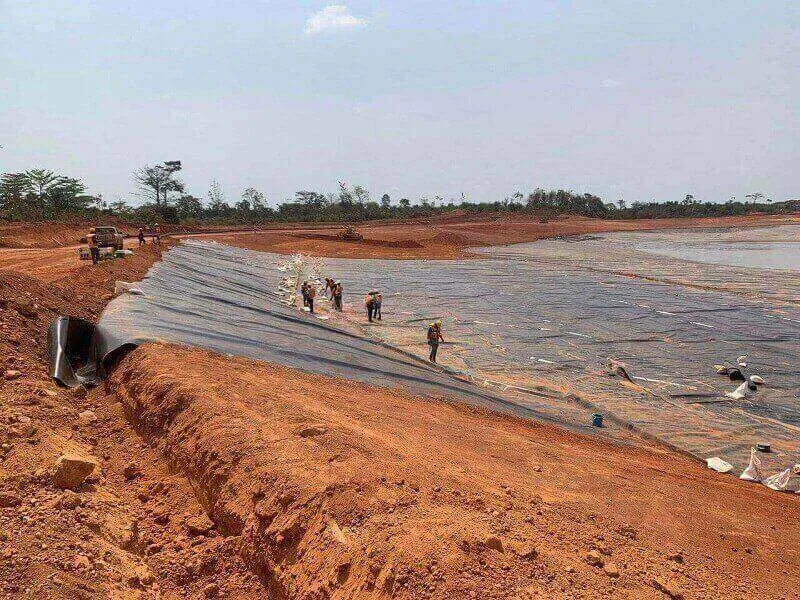
In the mining industry, a process called heap leaching is common. This process uses a cyanide solution to dissolve gold from crushed ore. The single most important requirement is to ensure that not a single drop of this highly toxic solution escapes into the environment. A client in Tanzania approached us with this exact challenge for their new gold mine. The site faced intense equatorial sun and needed a containment solution that was both chemically inert and could withstand decades of UV exposure.In Tanzania gold and gemstone mining operations, HDPE geomembranes play a crucial role in preventing toxic leaks. Mining produces wastewater containing heavy metals and chemicals, which can contaminate soil and groundwater if not properly contained.
Based on our experience, we recommended our 2.0mm HDPE geomembrane liner. The project involved lining a massive heap leach pad, several processing ponds, and stormwater collection channels. The HDPE lining was selected specifically for its proven resistance to cyanide solutions and other mining chemicals. Our expert technicians supervised the installation, heat-welding each high density polyethylene roll together to create one single, monolithic barrier. Every seam was tested to guarantee a leak-proof seal.Over 200,000 m² of HDPE liners were installed, effectively preventing cyanide and other toxins from seeping into the environment.
Malaysia Landfill Project: Safeguarding Groundwater
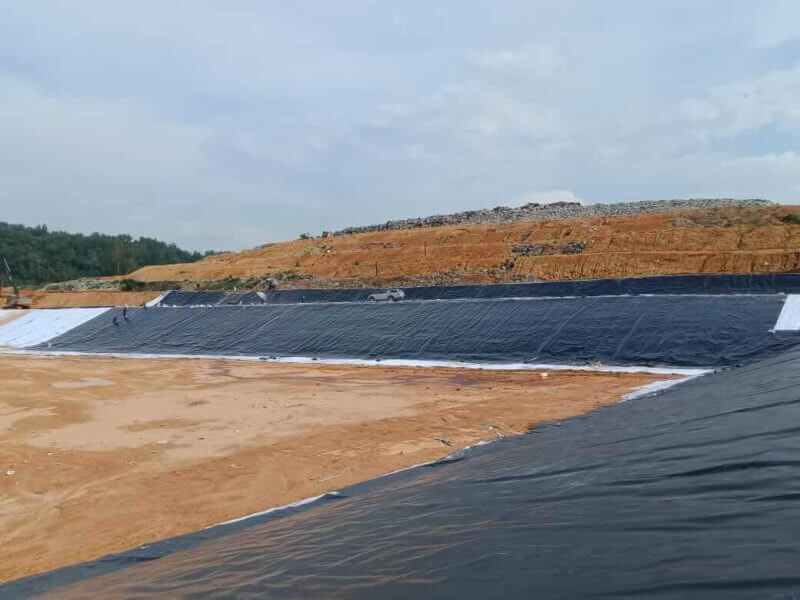
A rapidly growing municipality in Malaysia needed to construct a new sanitary landfill. Malaysia’s climate includes a heavy monsoon season, meaning the landfill would be exposed to significant amounts of rainfall. When rainwater mixes with decomposing waste, it creates a toxic liquid called leachate. The local environmental agency required a state-of-the-art lining system to contain this leachate and prevent it from contaminating the region’s groundwater, which was a vital source of drinking water. The landfill design also included steep interior slopes.A sanitary landfill Malaysia, demonstrated the effectiveness of HDPE liners in waste management. The facility spans 15 hectares and processes 2,000+ tons of municipal solid waste daily.
A multi-layered system was designed with our HDPE geomembrane as the primary barrier. For the base of the landfill, a smooth 1.5mm HDPE liner was deployed. The engineering team selected 1.5mm HDPE geomembrane liners as the primary containment layer, roll size 7*100m,combined with 600g continuous filament non woven geotextile protection and drainage systems. The wide rolls of HDPE minimized field seams, improving installation efficiency and reliability.
Why Choose HDPE for Containment Applications?
Compared to alternative materials, HDPE geomembranes offer:
Superior Chemical Resistance – Withstands acids, alkalis, salts, and organic solvents.
Ultra-Low Permeability – Prevents liquid and gas migration (permeability < 1.0×10⁻¹³ cm³·cm/cm²·s·Pa).
Excellent Durability – UV-stabilized for long-term outdoor use (-60°C to 60°C).
High Tensile Strength – Accommodates ground settlement without tearing.
Environmentally Safe – Non-toxic and does not leach harmful substances.
Cost-Effective – Faster installation and lower maintenance than concrete alternatives.
Considerations for HDPE Geomembrane Selection & Installation

To ensure optimal performance:
- Thickness Selection – Landfills: ≥1.5mm | Mining: ≥2.0mm
- Surface Texture – Textured HDPE for slopes (better friction) | Smooth HDPE for flat surfaces
- Welding Quality – Dual-track thermal fusion welding with air pressure/vacuum testing
- Protective Layer – Use geotextile or sand to prevent punctures and UV damage
- Subgrade Preparation – Remove sharp objects and compact soil for a smooth base
As environmental regulations tighten worldwide, HDPE geomembranes are becoming the go-to solution for mining, landfills, and water containment. From Tanzania’s mines to Malaysia’s waste facilities, this material ensures safe, durable, and cost-effective environmental protection.
From a simple HDPE pond liner for a farm to a complex HDPE geomembrane liner for an industrial facility, the core requirements are always quality, reliability, and expertise. As manufacturers, we do not just sell a product; we provide a promise of security. Our commitment to using premium resins and adhering to strict international standards like GRI-GM13 ensures that every HDPE sheet and high density polyethylene roll that leaves our facility is built to last.As a leading HDPE geomembrane manufacturer, we continue to innovate, providing high-performance polyethylene solutions for global projects.Follow our Linkedin Facebook for more informations!
Recent Post
Aquaculture Pond Lining in Indonesia | From Design to Installation
From Project Drawing to Water Filling: An Aquaculture Pond Lining Project in Indonesia This aquaculture pond project in Indonesia started with a project drawing.The customer firstly contacted us
When Is Geotextile Really Necessary?
When Is Geotextile Really Necessary in Civil Engineering Projects? Geotextiles are widely used in modern infrastructure and environmental engineering. However, a common question among engineers, designers, and contractors is: Is geotextile always necessary? In
Woven Polypropylene Geotextile Manufacturer | Engineering Grade & Landscape Fabric
Woven Polypropylene Geotextile Manufacturer | Engineering Grade & Landscape Fabric By Planetliner — Manufacturer of High-Performance Woven PP Fabrics for Global Projects Woven polypropylene geotextile has become a fundamental material in civil engineering, environmental protection,