
Pond Liner: How To Choose The Perfect Pond liner in 2024?
If you’re thinking about building an aquaculture pond, a fish pond shrimp pond, or a larger water reservoir, it is very important to choose the right pond liner. Pond liners play a crucial role in maintaining water levels, ensuring water quality, and supporting the overall health of aquatic environments.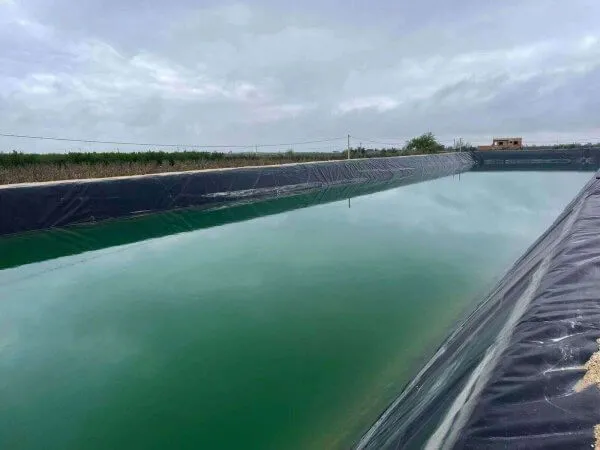
A pond liner is a waterproof barrier which is placed at the bottom of the pond,the pond liner can prevent water from seeping into the soil. No matter what pond you’re building, a small fish pond, a larger aquaculture pond, or a massive water reservoir, the right pond liner is the first step to make a healthy, sustainable water environment.
When you start to choose a pond liner, there are several materials available for the ponds. Each material has its own features and is workable to different types of ponds and water reservoirs. Here are the most popular types of pond liner:
HDPE Pond Liners: HDPE (High-Density Polyethylene) liners are known for their durability and resistance to punctures. They’re highly UV-resistant, which means they won’t degrade when exposed to the sunshine. This makes them an excellent choice for both fish ponds and aquaculture ponds that require long lifetime liners.
The HDPE liner offer better puncture resistance than either EPDM or PVC liner, while the weight is less than others,So it is easy to ship and install the hdpe liner.In addition, HDPE sheets can be welded together with a heat gun, which make more stable joining than liner tape.
Meanwhile,HDPE liners are strong enough so that there is no need of underlay for ponds. And no need to replace the pond liner once your pond is built because HDPE liners can last up to 40 years with good care.
However,HDPE liners is a little more expensive than either EPDM or PVC pond liner. However, the extra cost is well worth for experienced pond owners as the long lifetime. 
Our company is a manufacturer and supplier of HDPE liner,the property meet the ASTM GM13 standard, thickness range 0.3mm to 3mm,and normal width is 5.8m 7m and 8m.
EPDM Rubber Liners: EPDM (Ethylene Propylene Diene Monomer) rubber liners are flexible and easy to install. EPDM is a rubbe material that folds easily around corners, helping you to create highly unique pond shapes. Another advantage is that less worry when measuring cuts,because you can expand your pond later by simply adding another EPDM sheet to your existing liner.
The main disadvantage to EPDM are that the material is relatively heavy and not all that resistant to punctures compared to other flexible liner materials.And they are not as resistant to UV and chemical exposure as HDPE liners.
PVC Pond Liners: PVC (Polyvinyl Chloride) liners are affordable and easy to find. The pvc is not quite as heavy as EPDM liners and has a little more resistance to punctures. PVC liners are relatively flexible and you can use liner tape to seal together multiple sheets. But , PVC pond liners often contain arsenic and other chemicals that are toxic to fish. PVC maybe have cracking if it is exposed to colder weather or to direct sunlight, so you’ll want to cover it with soil. Also,pvc liner may not last as long as HDPE or EPDM liners, especially in larger aquaculture ponds or water reservoirs
Choosing the Right Pond Liner for Your Project
Before planning to build an aquaculture pond or a fish pond, it is very important to select the right pond liner.
Size and Depth of the Pond: For large-scale projects like an aquaculture pond or a dam water reservoir, the pond liner should withstand high water pressure and potential damage from fish or other aquatic creatures. HDPE liners are often preferred for these purposes due to their strength and durability.
Water Quality Requirements: For a fish pond or aquaculture pond, it is important to keep water quality. The liner should be non-toxic and safe for fish, plants, and other aquatic life. HDPE liners are a popular choice because they are made of virgin material, and resistant to chemicals and UV sunshine and do not leach harmful substances into the water.
Environmental Factors: Consider the local climate and environmental conditions. For example, if your pond will be exposed to direct sunlight, an HDPE liner, which is UV-resistant, would be good choice. And In colder climates, flexibility may be more important to suit any expansion and contraction caused by temperature changes.
Long-Term Durability: For long-term projects like dam lining or a water reservoir, lifetime is a top considering factor. The liner should be able to withstand external pressures, such as soil movement or the damage of sharp objects. Again, HDPE liners are suggested due to the strength and long service life.
An aquaculture pond is designed for the farming of fish shrimp or other aquatic organisms. These ponds require careful management of water quality and levels.
Water stroage: An effective pond liner will prevent water seepage, reducing the need for constant water pumping and maintaining stable water levels. This is very important for aquaculture ponds, where consistent water levels are crucial for fish health and growth,and can keep water quality and PH value too.
Supporting Water Quality: The liner creates a barrier that prevents contaminants from the soil from leaching into the pond. This helps maintain a clean and healthy environment for fish and other aquatic organisms.The HDPE Liner can reduce the possibility of disease transmission,and Reduces the cost of medicines for fish farming,and reduce the risk of large-scale fish and shrimp deaths due to disease.
System stability: In an aquaculture pond, the liner must withstand frequent use and interaction with fish, equipment, and possible animals. An HDPE liner is a great choice here.The hdpe liner can prevent the loss of pond failure due to wind and wave action,and able to construct deeper ponds.
Increase output and Reduce maintenance cost:Because the HDPE liner long lifetime, it can help to reduce harvest duration time and enhance vitality and freshness of fish and shrimp.Ponds are easily washed and cleaned with minimal equipment and labor,no need to wait for the pond bottom to be treated before restart of new cycle.Pond construciton is stable and subgrade repairs not needed.The Pond liner can reduce sediments at pond base and reduce the clean time and cost,frequent liner change is not required as our pond liner tear,puncture and UV resistance is excellent.
How to Install a Pond Liner for a Fish Pond or Aquaculture Pond?
To install a liner for a fish pond or an aquaculture pond, the installation process is also very important.
Prepare the Site: Digging the pond to your needed length width depth and shape. Remove all rocks, roots, or sharp objects that could damage the liner. Slope the sides to prevent soil erosion.
Lay a Protective Layer: Add a layer of sand or a geotextile fabric underlayment to protect the pond liner from punctures. This layer acts as a cushion and provides extra protection against any sharp objects that might be left behind.
Install the Pond Liner:
- Usually in corners and deformed areas, the length of joints should be shortened as much as possible. Except for special requirements, on slope gradient >1:6, within 1.5 meters from the top slope or the stress concentration area, no welds should be provided as much as possible.
- Tractors, hoists and other machinery should be used for the laying of large bundles of PE geomembrane. If the conditions are not available or small bundles of PE film, manual laying can also be used. For slope laying, the hoist is used to slowly spread from the top of the slope to the bottom of the slope. The bottom of the slope is processed into a fixed ditch.
- When laying the geomembrane construction process, we should strive for less welds, and try to save raw materials on the premise of ensuring quality.
- According to the specified order and direction, the geomembrane is laid in partitions and areas.
- During the laying of HDPE geomembrane, artificial folds should be avoided. When the temperature is low, it should be tightened as much as possible and flattened.
- When laying the PE geomembrane, it should be properly relaxed, and manual hard folding and damage should be avoided.
- The overlap width of the seam between the geomembranes is generally not less than 10cm. Usually, the direction of the welding seam is parallel to the large slope, that is, it is arranged along the slope direction.
- When laying the geomembrane, the nodes formed between the geomembranes should be T-shaped and not cross-shaped.
- The welding overlap surface of geomembrane shall not have dirt, sand, accumulated water (including dew) and other debris that affect the welding quality.
- After the geomembrane construction process is completed, walking on the membrane surface, moving tools, etc. should be minimized. Any objects that can cause damage to the geomembrane should not be placed on the membrane or carried on the membrane, so as to avoid damage to the geomembrane .
- When laying the geomembrane on the slope, the direction of the joints should be parallel to the large slope line, and should be laid in the order from bottom to top.
- The geomembrane and seam should be properly attached to the slope at the bend of the slope.
- After the geomembrane is laid, before the protective layer is covered, sand bags weighing 20-40kg should be placed at every 2-5m at the corner of the geomembrane.
Secure the Edges: Anchor the edges of the liner with rocks, soil or others. Make sure the liner is tight and secure to prevent any shifting or movement.
Fill the Pond: Gradually fill the pond with water, allowing the liner to settle into place. Check for any wrinkles or folds and smooth them out as needed.
Add Plants and Fish shrimp: Once the pond is filled and the liner is secure, you can start adding aquatic plants and fish shrimp.
When you start larger-scale projects like water reservoirs or dam liners, the need for a high-quality pond liner becomes important. These applications require liners that can withstand massive water pressure, resist punctures, and handle environmental stress. An HDPE liner is often the best choice for these applications due to its unmatched durability, flexibility, and resistance to UV rays.
For the pond liner, welcome to visit our workshop, we can provide you our HDPE pond liner at a good price,100%virgin raw material, and have the SGS test report,please contact 86 13561726755,and the linkedin, facebook.
Recent Post
Aquaculture Pond Lining in Indonesia | From Design to Installation
From Project Drawing to Water Filling: An Aquaculture Pond Lining Project in Indonesia This aquaculture pond project in Indonesia started with a project drawing.The customer firstly contacted us
When Is Geotextile Really Necessary?
When Is Geotextile Really Necessary in Civil Engineering Projects? Geotextiles are widely used in modern infrastructure and environmental engineering. However, a common question among engineers, designers, and contractors is: Is geotextile always necessary? In
Woven Polypropylene Geotextile Manufacturer | Engineering Grade & Landscape Fabric
Woven Polypropylene Geotextile Manufacturer | Engineering Grade & Landscape Fabric By Planetliner — Manufacturer of High-Performance Woven PP Fabrics for Global Projects Woven polypropylene geotextile has become a fundamental material in civil engineering, environmental protection,