
Landfill Cap with HDPE and LLDPE Geomembranes
The growing global population generates a great amount of waste, much of which ends up in landfills. While modern landfills are engineered to be containment facilities, their long term safety and environmental protection reply on a critical final step: the landfill cap. A landfill cap is one of the most important parts of waste management projects. It is the final cover system placed over a landfill to protect the environment and keep the waste sealed. A proper landfill cap prevents rainwater from entering the landfill, controls gas emissions, and reduces risks to soil and groundwater.
Today, HDPE geomembrane and LLDPE geomembrane are the most widely used materials for landfill cap systems. These products are strong, flexible,UV resistant and resistant to chemicals, making them a trusted choice in the waste containment industry.
What is a Landfill Cap?
A landfill cap is a protective layer,which is placed over the top of a landfill once one cell is closed. Its main purposes are:
Prevent water infiltration: Its main job is to minimize the amount of rainwater and surface water that seeps into the waste. This is very importnat because when water mixes with waste, it creates a harmful polluted liquid called leachate. Less water inside means less leachate to treat and manage.
Control landfill gas: Landfills produce methane and other gases as organic waste decomposes. The cap system, often in partnership with a gas collection system, helps control and direct these gases so they can be safely vented or even used for energy.
Reduce erosion: A protective vegetative layer on the cap prevents wind and water from eroding the underlying layers and exposing the waste.
Provides a stable surface for future land use: Once a landfill is capped, the land can often be reused for parks, recreational areas, or other beneficial uses.
A well-designed landfill cap extends the life of the landfill site and protects the surrounding environment for decades.

The Layers of a Landfill Cap System
A typical cap system, from bottom to top, includes:
Foundation Layer: The top of the compacted waste, graded to allow for drainage.
Gas Collection Layer (optional): A layer of sand or gravel with pipes to collect landfill gas.
Geomembrane Layer: The HDPE or LLDPE liner, acting as the primary waterproof barrier.
Protective Layer: Often a geosynthetic clay liner (GCL) or soil layer that protects the geomembrane from puncture from above.
Drainage Layer: A layer of sand or gravel that collects any water that gets past the surface, directing it to drains.
Topsoil Layer: Soil where vegetation grows. The roots help prevent erosion.
This entire system works in harmony, with the geomembrane as the central seal.
Why Use Geomembranes in Landfill Caps?
Geomembranes are synthetic liners,it is waterproof impermeable. They provide an impermeable barrier that prevents liquids and gases from escaping. In landfill capping, geomembranes are often combined with other layers such as clay, drainage fabric, and soil.
Benefits of Geomembranes in Landfill Caps:
Excellent waterproofing
High chemical resistance
Long-term durability (20–30 years or more)
Easy installation with welded seams
Cost-effective compared to clay alone
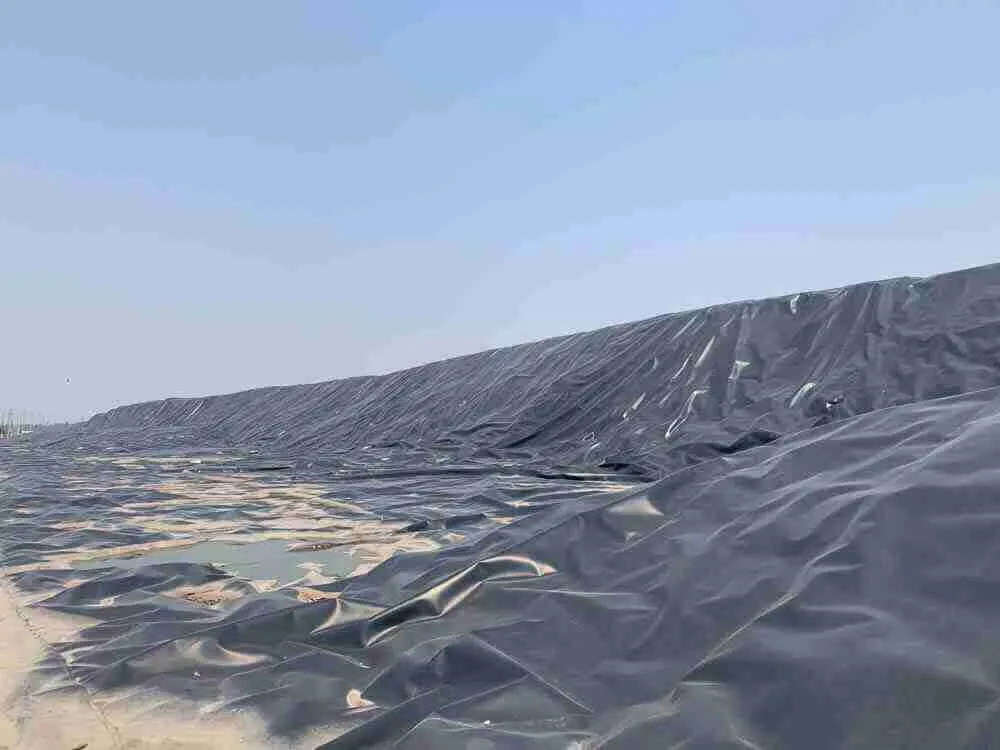
HDPE Geomembrane for Landfill Cap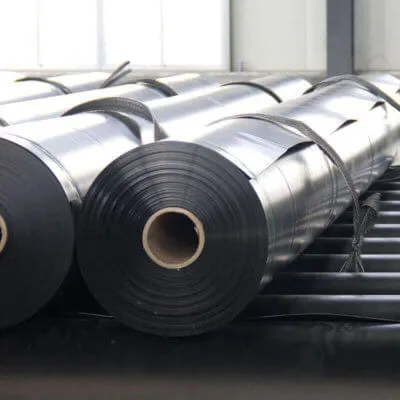
HDPE (High-Density Polyethylene) geomembrane is the most common liner material used in landfill caps.HDPE is known for its incredible tensile strength, chemical resistance, and durability. It is a stiff material with a high resistance to ultraviolet (UV) light and temperature extremes.
Key Features of HDPE:
High chemical resistance: Resists acids, salts, and leachate.
Strong tensile strength: Handles stress and pressure from waste.
UV resistance: Performs well under sunlight exposure.
Long service life: More than 30 years in many cases.
Low permeability: Prevents leakage effectively.
Due to its nice nature, HDPE is often specified for the primary barrier layer in a landfill cap. Its durability provides confidence in the long-term containment of the waste. However, its stiffness can make installation more challenging on uneven surfaces or in applications requiring more flexibility.HDPE liners are usually available in thicknesses such as 0.75mm 1mm 1.5mm, 2.0mm, and 2.5mm, depending on project requirements.
LLDPE Geomembrane for Landfill Cap

LLDPE (Linear Low-Density Polyethylene) geomembrane is another popular choice for landfill caps.LLDPE is much more flexible and elastic than HDPE. It can stretch and conform to uneven surfaces without stressing the material. It also has excellent chemical resistance, though its formulation can be more varied.
Key Features of LLDPE:
High flexibility: Can adapt to uneven ground or settlement.
Good puncture resistance: Handles rocks or sharp objects better.
Easier installation: Requires less effort to weld compared to HDPE.
Cost-effective: Often cheaper for medium-scale projects.
LLDPE is an excellent choice for the geomembrane in a landfill cap, especially on steeper slopes or where significant settlement is anticipated. Its ability to accommodate ground movement makes it a reliable long-term solution.
When to Choose LLDPE Over HDPE?
If the landfill is located in an area with uneven terrain.
If flexibility is more important than strength.
If budget limits require a lower-cost solution.
HDPE vs. LLDPE for Landfill Cap
| Property | HDPE Geomembrane | LLDPE Geomembrane |
|---|---|---|
| Strength | High tensile strength | Medium tensile strength |
| Flexibility | Less flexible | Very flexible |
| Chemical resistance | Excellent | Good |
| UV resistance | Excellent | Good |
| Cost | Slightly higher | More cost-effective |
Both HDPE and LLDPE are effective for landfill caps. The choice depends on site conditions, design requirements, and budget.
Extended Applications of HDPE & LLDPE in Landfill Projects
Beyond landfill capping, geomembranes are also used in:
Bottom liner systems: Prevent waste from polluting soil and groundwater.
Leachate ponds: Safe storage and treatment of contaminated water.
Gas collection systems: Capturing methane for safe burning or energy use.
Slope protection: Preventing erosion on landfill sides.

FAQs About Landfill Caps and Geomembranes
Q1: What is the standard thickness for landfill cap geomembranes?
A: The common thickness is 1mm 1.5mm to 2.0mm HDPE or LLDPE, depending on project design.
Q2: How long does a landfill cap geomembrane last?
A: With proper installation, HDPE and LLDPE geomembranes can last 10–30 years or longer.
Q3: Which is better for landfill caps: HDPE or LLDPE?
A: HDPE is stronger and more durable, while LLDPE is more flexible. The choice depends on site needs.
Q4: Can geomembranes be used alone without clay?
A: Yes, but for maximum safety, engineers often use a composite system (geomembrane + clay liner).
Q5: Do geomembranes resist UV light?
A: Yes, HDPE has excellent UV resistance, while LLDPE performs well with protective cover soil.
Q6:What happens if a landfill is not capped?
A:Without a proper cap, rainwater would continuously infiltrate the waste, generating large volumes of contaminated leachate that could pollute groundwater. Landfill gas would escape into the atmosphere uncontrolled, contributing to air pollution and greenhouse gas emissions. The site would also be prone to erosion, odors, and could attract disease-carrying vectors
Q7. Can a landfill be used for anything after it is capped?
A:Yes. Many closed and capped landfills are transformed into community assets. Common post-closure uses include parks, golf courses, and nature reserves. The design of the landfill cap can be tailored to accommodate the intended future use of the land.
Q8. What is the role of vegetation on a landfill cap?
A:The vegetative layer is the final touch on a landfill cap. The plants help to stabilize the topsoil, preventing erosion from wind and rain. Their root systems also help to absorb water, further reducing the amount of moisture that could potentially infiltrate the waste. The choice of vegetation is important; typically, native grasses and shallow-rooted plants are used to avoid damaging the underlying geomembrane.
Q9: What happens if the geomembrane gets a tear or puncture?
A: Quality control is essential. During installation, crews survey the liner and any small holes or faulty seams are repaired with patches. The protective layers (like GCLs and drainage gravel) placed above the geomembrane are specifically designed to shield it from punctures from rocks or equipment.
Q10: Is this technology only used for landfills?
A: No! The same capping technology is used for many containment applications. This includes capping old industrial sites with contaminated soil (brownfields), lining ponds that hold mining waste (tailings), and even in agriculture for water conservation.
Conclusion
A landfill cap system is essential for closing waste sites safely and protecting the environment. Using HDPE and LLDPE geomembranes ensures a long-lasting and effective barrier against water, gas, and erosion.
HDPE geomembrane is best for strength, chemical resistance, and UV protection.
LLDPE geomembrane is ideal for flexibility and projects with uneven settlement.
Choosing the right geomembrane depends on the project’s location, budget, and environmental conditions. With proper design and installation, a landfill cap can remain effective for decades, ensuring safety for communities and nature.As a manufacturer and contractor of geomembrane, our engineers can give your solutions for check, and follow our Linkedin Facebook Youtube Instagram for more informations!
Recent Post
Aquaculture Pond Lining in Indonesia | From Design to Installation
From Project Drawing to Water Filling: An Aquaculture Pond Lining Project in Indonesia This aquaculture pond project in Indonesia started with a project drawing.The customer firstly contacted us
When Is Geotextile Really Necessary?
When Is Geotextile Really Necessary in Civil Engineering Projects? Geotextiles are widely used in modern infrastructure and environmental engineering. However, a common question among engineers, designers, and contractors is: Is geotextile always necessary? In
Woven Polypropylene Geotextile Manufacturer | Engineering Grade & Landscape Fabric
Woven Polypropylene Geotextile Manufacturer | Engineering Grade & Landscape Fabric By Planetliner — Manufacturer of High-Performance Woven PP Fabrics for Global Projects Woven polypropylene geotextile has become a fundamental material in civil engineering, environmental protection,