
What Geosynthetics material used in Mining Industry?
Mining is one of the most resource-intensive and environmentally sensitive industries in the world. With the increasing demand for minerals and metals in the global economy, mining operations continue to expand, especially in regions rich in natural resources. Geosynthetic materials, such as geomembranes, geotextiles, geogrids, and geocomposites, play a critical role in supporting safe, efficient, and sustainable mining practices.
I will provides an overview of how geosynthetics are used in mining, key mining regions and their materials demand, future trends in the mining industry after 2025.
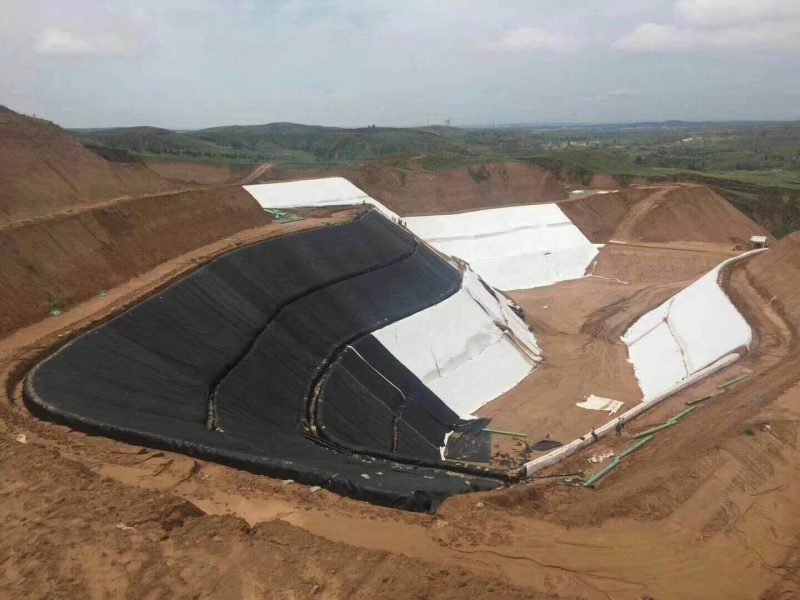
Global Mining Industry Regions and Trends
Major mining countries include China, Australia, Russia, Canada, South Africa, Brazil, Chile, and the United States. These countries produce a wide range of mineral commodities such as copper, gold, iron ore, coal, and lithium. However, in recent years, African nations such as the Democratic Republic of the Congo, Zambia, Ghana, and South Africa have become increasingly important due to their rich mineral reserves, relatively low labor costs, and growing infrastructure.
Africa: DRC (copper/cobalt), South Africa (gold/platinum), Ghana (gold), Guinea (bauxite), Zambia (copper)
Americas: Chile (copper), Brazil (iron ore), Peru (copper/gold)
Asia-Pacific: Australia (iron ore/lithium), Indonesia (nickel)
From 2025 onwards, several global trends are expected to shape the mining industry:
- Sustainable mining and ESG compliance: Mining companies will face increasing pressure to reduce environmental impact and meet international environmental, social, and governance (ESG) standards.
- Waste and tailings management: There will be more focus on managing mine waste safely and economically using engineered containment systems.
- Digital and automated mining: The use of remote monitoring, drones, AI, and automation will increase across sites.
- Increased demand for battery minerals: Minerals like lithium, cobalt, and nickel will be in high demand due to electric vehicle and battery production.
Geosynthetic materials will continue to play a vital role in addressing many of these trends, especially in waste containment, environmental protection, and slope stabilization. Our company has supported mining companies across Asia, Africa, and Latin America in meeting these challenges with reliable and proven products.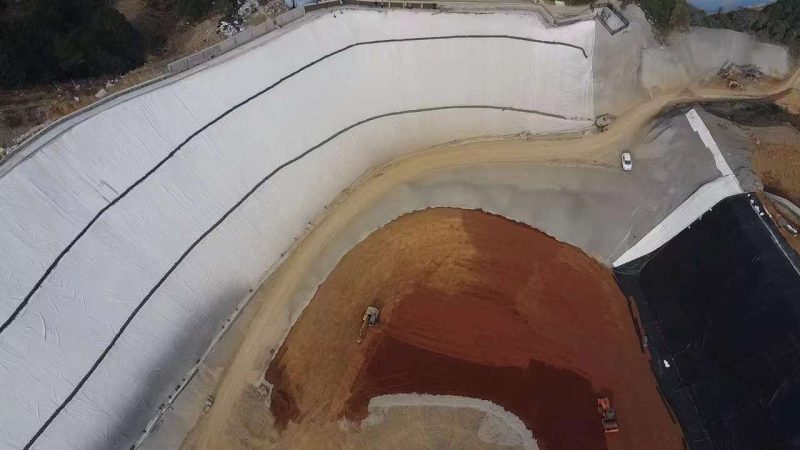
Mining Process and Geosynthetic Applications
A simplified mining production process includes:
- Exploration and site preparation
- Drilling and blasting
- Excavation and hauling
- Crushing and grinding
- Processing and separation
- Tailings and waste disposal
- Site rehabilitation
Geosynthetics are used in several critical stages:
1. Heap Leach Pads
Geomembranes, especially HDPE liners (1.5 mm to 2.0 mm), are installed to prevent leachate from contaminating the groundwater. These liners must meet international standards such as GRI-GM13. Key properties include:
- Tensile strength: >25 kN/m
- Puncture resistance: >400 N
- Chemical resistance to acidic leachate
Independent laboratories have verified the chemical resistance and mechanical durability of [Your Company Name]’s HDPE liners through ASTM testing methods.
2. Tailings Storage Facilities (TSFs)
Tailings dams and ponds use composite liner systems made of geotextiles, geomembranes, and geonets to contain fine waste material and water.
- Non-woven geotextile (300–600 g/m²) protects the liner and improves drainage.
- HDPE geomembrane (1.5 mm) provides impermeability.
Proper installation by certified technicians ensures long-term performance and leakage prevention.
3. Access Roads and Platforms
Woven geotextiles and geogrids are used to reinforce weak subgrades and extend the life of haul roads.
- CBR puncture resistance: >1500 N
- Tensile strength: 50–100 kN/m
Our geogrids have been successfully used in high-traffic haul road construction in Ghana and Peru, reducing maintenance frequency by 40%.
4. Drainage Systems
Geocomposites and geonets are used to collect and channel water safely around mining infrastructure, reducing erosion and equipment damage. This contributes to operational safety and prevents downtime.
5. Slope and Embankment Stabilization
High-strength geogrids and erosion control mats protect slopes from collapse and erosion during mining operations and after closure. Our products are designed and tested for both static and dynamic loading conditions.
Case Studies: Geosynthetics in African Mining Projects
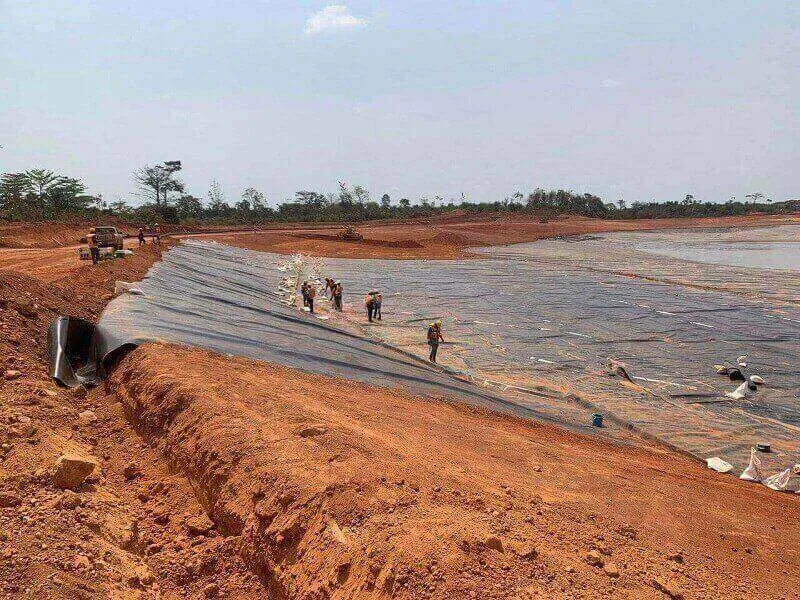
Democratic Republic of the Congo (DRC)
The DRC is a leading producer of copper and cobalt. In a copper mine near Kolwezi, the project use 500,000 square meters of 1.5 mm textured HDPE geomembrane for heap leach pads. The product had high UV resistance and excellent weldability, which allowed fast installation and long-term performance. Compared to imported liners, the materials saved the contractor over 20% in total cost. This data is supported by client reports and procurement records.
Zambia
Zambia has several active copper and gold mines. In a tailings dam expansion project, we provided a full liner system: 1.5 mm HDPE geomembrane, 600 g/m² non-woven geotextile, and a 200 mil geonet. Our integrated geosynthetic system improved drainage, reduced seepage risk, and simplified installation. The local mining company praised the cost-efficiency and technical support provided by our engineering team. All products were factory-tested and met ISO 9001 quality standards.
Ghana
Gold mining is a major economic activity in Ghana. A gold mine in the Ashanti region required a geomembrane liner system for a new tailings pond. We offered a customized solution using both smooth and textured HDPE geomembranes along with protective geotextiles. The product passed third-party testing for mechanical and chemical properties, including ASTM standards. Installation was completed 10% ahead of schedule, with no post-installation defects reported.
South Africa
South Africa is rich in platinum, gold, and coal. In a coal mine slurry containment project, we delivered 1.0 mm smooth HDPE liner and woven geotextiles. Despite challenging terrain and weather, the installation achieved leak-free performance. The client reported zero liner-related issues after 12 months of continuous operation. Post-project site monitoring was conducted to verify environmental compliance.
Why Choose Our Geosynthetic Products for mining industry?
As a professional manufacturer and exporter of geosynthetic materials with over 15 years of experience, we offer:
- Competitive pricing with factory-direct sales
- Products certified to international standards (ISO, GRI, ASTM)
- Technical guidance and project-specific consultation
- Fast production and flexible shipping to African countries and other regions
Our team includes experienced engineers, QA/QC specialists, and logistics experts to ensure each order is manufactured, tested, and delivered to meet client expectations. We have contributed to over 100 successful mining-related projects across 20+ countries.
Geosynthetics are essential in modern mining operations. From ensuring groundwater protection to stabilizing mine infrastructure, these materials help meet technical, environmental, and economic demands. As the mining industry evolves after 2025, especially in Africa, high-performance and affordable geosynthetic products will play a greater role.
We welcome inquiries from mining contractors, engineering consultants, and project developers. For technical specifications, testing reports, or a customized quotation, please contact our technical team.Follow our Linkedin Facebook and Youtube for more information!
Recent Post
Aquaculture Pond Lining in Indonesia | From Design to Installation
From Project Drawing to Water Filling: An Aquaculture Pond Lining Project in Indonesia This aquaculture pond project in Indonesia started with a project drawing.The customer firstly contacted us
When Is Geotextile Really Necessary?
When Is Geotextile Really Necessary in Civil Engineering Projects? Geotextiles are widely used in modern infrastructure and environmental engineering. However, a common question among engineers, designers, and contractors is: Is geotextile always necessary? In
Woven Polypropylene Geotextile Manufacturer | Engineering Grade & Landscape Fabric
Woven Polypropylene Geotextile Manufacturer | Engineering Grade & Landscape Fabric By Planetliner — Manufacturer of High-Performance Woven PP Fabrics for Global Projects Woven polypropylene geotextile has become a fundamental material in civil engineering, environmental protection,