
Non Woven Geotextile 2024 the best introduction from geosynthetic manufacturer
The non woven geotextile is more and more popular in the civil engineering projects,and become import role of these projects,like road construction,Landfill,mining,landscape and others.

In this ariticiles,the The contents of the article are as follows
What is non woven geotextile?
Production process and quality control
Types of Non Woven Geotextile
Features and application?
Applications
1.What is Non Woven Geotextile?

Non woven geotextile is a synthetic material,which is made from synthetic fibers that are bonded together using mechanical, chemical, or thermal processes.Not same as woven geotextiles that is made by weaving fibers together, non woven geotextile is produced without weaving,mostly by needle punched process,so the fabric is flexible, and permeable. This makes it ideal for various applications in construction and environmental
engineering, where filtration, drainage, and soil stabilization are essential.
2.Production of Non Woven Geotextile
The production of non woven geotextile as follows:
Fiber Selection: The first step to make non woven geotextile is selecting the right type of fabric. These are usually made from synthetic materials like polypropylene/pp or polyester/pet, which provide strength, durability, and resistance to chemicals and UV degradation.And some fabric with colors,like black, green,and others in advance.
Production Process: The selected fabrics are then bonded together using one of three main methods: mechanical entanglement (needle-punching), thermal bonding, or chemical bonding. Each method offers different properties in terms of strength, flexibility, and permeability.

And our short fiber nonwoven geotextile method is needle punching,and the long fiber continuous filament geotextile is made by spunbonding.The staple fiber geotextile production process of geotextile includes feeding, breaking, carding, laying nets, and then finishing into rolls after needling. The production process of filament geotextile is relatively complex, the polyester slice is melted and the fiber filament is extruded and Stretched. After stretching again, the filaments are made according to the design of the technical parameters. Through various self-developed production processes, the fibers are needled and then thermally bonded.
Finishing: After bonding, the geotextile is finished to enhance its properties. This may include additional treatments for UV resistance, increased permeability, or added strength.And some geotextile surface can be hot treated to have a flat result.
Quality Control Points for Non Woven Geotextile
Throughout production, quality control measures are very important to ensure the material meets industry standards. This involves many items, for example, uniformity, strength, thickness,mass weight, width and length, and other required parameters.
Ensuring the quality of non woven geotextile is crucial for its effectiveness in various applications. Here are some key quality control points:
Strength: The geotextile must have enough tensile and tear strength to withstand the stresses it will encounter during installation and service.Here are our nonwoven geotextile technical data sheet,if you have any question,please feel free to contact me.

Permeability: The material should allow water to pass through while preventing soil particles from migrating, making it effective for drainage and filtration.
UV Resistance: Since non woven geotextiles are often exposed to sunshine, UV resistance is essential to prevent degradation for a long time.
Thickness and Weight: Stable thickness and mass weight ensure uniform performance for the projects.
Chemical Resistance: The geotextile must be resistant to chemicals in the soil or water to avoid damage and ensure lifetime,expecially the PP Geotextile.
Size:The width and length of the roll is important for the projects area to cover.Our max width is 7m, and the popular width is 5.8m 5.9m or 5.95 for projects. For online sales in supermarket, 1m and 2m width are popular.

3.Types of Non Woven Geotextile
There are several types of non woven geotextile, each designed for specific applications:
From the production process, there are needle punched geotexitle,thermally bonded geotextile and chemically bonded geotextile.
Needle-Punched Non Woven Geotextile: This is the most common type, made by mechanically interlocking fibers using needles. It is highly permeable and ideal for filtration, drainage, and separation applications.the production capacity is big and the price is cheap.
Thermally Bonded Non Woven Geotextile: Produced by applying heat to bond the fibers together, this type offers a smoother surface and is often used for applications requiring lower permeability, such as protecting geomembranes.
Chemically Bonded Non Woven Geotextile: Made by applying a chemical binder to the fibers, this type offers high strength and stability, making it suitable for reinforcement applications.
From the material fabric, there are Polyester and Polypropylene geotextile.
Polyester (PET) geotextiles: polyester geotextiles have high strength and wear resistance, while having good UV resistance, suitable for long-term exposure to the sun. In addition, polyester geotextiles also have good chemical stability and can resist the erosion of most chemical substances.
Polypropylene (PP) geotextile: polypropylene geotextile has excellent acid and alkali resistance and corrosion resistance, and has good heat resistance and low temperature resistance. This geotextile is suitable for a variety of complex environmental conditions, especially in soils with high pH.
From the geotextile fabric, there are staple short fiber and continuous filament long fiber geotextile.
Filament geotextile: has excellent heat and light resistance, good corrosion resistance, high strength, strong ultraviolet resistance, high temperature resistance, good creep resistance, good ductility.
Short fiber geotextile: high strength, corrosion resistance, good water permeability, good microbial resistance, convenient construction, complete specifications.
4.Features of Non Woven Geotextile
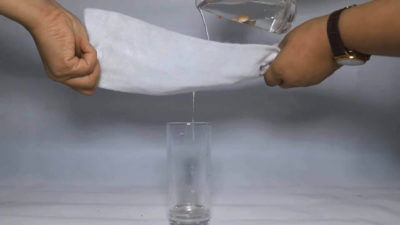
Non woven geotextile offers several features that make it suitable for a wide range of applications:
High Permeability: The fabric material allows water to pass through and stop soil particles, making it ideal for filtration and drainage applications.
Flexibility: Non woven geotextiles are highly flexible, allowing them to conform to various surfaces and shapes, which is particularly useful in complex construction projects.
Durability: Made from synthetic fibers, non woven geotextiles are resistant to UV rays, chemicals, and biological degradation.
Cost-Effective: Compared to other materials like woven geotextiles, non woven geotextile is cheap, making it a cost-effective choice for large-scale projects.
5.Applications of Non Woven Geotextile
The features of non woven geotextile makes it suitable for a wide range of applications, including:
Road Construction: Used as a separator between the soil and the aggregate, non woven geotextile prevent mixing and maintain the integrity of the road structure.
Drainage Systems: The fabric high permeability allows it to be used in drainage systems, where it facilitates water flow while preventing soil erosion.

Erosion Control: By stabilizing soil, non woven geotextiles are effective for erosion control in embankments, slopes, and riverbanks.
Landfills: Used as a liner and protecting material in landfills, non woven geotextiles help geomembrane liner to prevent leachate contamination and help manage water flow.
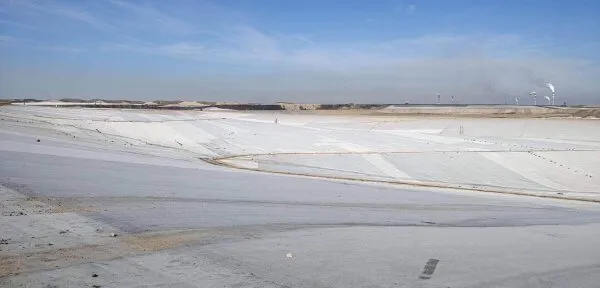
Coastal Protection: In coastal engineering, non woven geotextiles are used for shoreline protection, breakwaters, and other marine structures.
Non woven geotextile is an essential material for a wide range of construction and engineering projects. With its high permeability, flexibility, and durability, it offers significant advantages for road construction, drainage, erosion control, and more. By understanding its types, features, and quality control points, you can make an informed choice that ensures the success of your project. Whether you’re dealing with a fabric geotextile or a geotextile cloth, choosing the right non woven geotextile can make all the difference.
Our company is a supplier of nonwoven geotexitle with 10+year experience,have non woven geotexitle, woven geotextile,geomembrane and geonet products and so on, and can provide solutions for projects. Welcome your visit to our group,and make mutual benefit cooperation.
Please feel free to follow our linkedin, facebook, for more details.
Recent Post
Aquaculture Pond Lining in Indonesia | From Design to Installation
From Project Drawing to Water Filling: An Aquaculture Pond Lining Project in Indonesia This aquaculture pond project in Indonesia started with a project drawing.The customer firstly contacted us
When Is Geotextile Really Necessary?
When Is Geotextile Really Necessary in Civil Engineering Projects? Geotextiles are widely used in modern infrastructure and environmental engineering. However, a common question among engineers, designers, and contractors is: Is geotextile always necessary? In
Woven Polypropylene Geotextile Manufacturer | Engineering Grade & Landscape Fabric
Woven Polypropylene Geotextile Manufacturer | Engineering Grade & Landscape Fabric By Planetliner — Manufacturer of High-Performance Woven PP Fabrics for Global Projects Woven polypropylene geotextile has become a fundamental material in civil engineering, environmental protection,