
What is the non woven road fabric?
In modern road construction, geotextiles play a critical role in ensuring long-term stability, performance, and cost-effectiveness. The most commonly used geotextiles are non woven road fabrics and woven geotextiles. Each type has its own specific characteristics and advantages and disadvantages. As a professional manufacturer and exporter of both non woven and woven geotextile fabrics, we can tell you the the difference between woven and non woven geotextile materials,and help you to choose the right material for road.
What is Non Woven Road Fabric?
Non woven road fabric is a type of geotextile,it is made from polypropylene or polyester fibers that are bonded together through mechanical, chemical, or thermal processes. Unlike woven geotextiles, these fibers are not woven together but instead form a felt-like, porous structure. This structure makes non woven fabrics ideal for filtration, drainage, and separation applications in civil engineering projects.
Our non woven geotextiles are manufactured from polyester or polypropylene fabric through a needle-punching process. They are lightweight, flexible, and highly permeable, allowing for effective water flow while maintaining soil stability.
Woven vs Non Woven Geotextile: Understanding the Difference
Woven Geotextiles: These are made by interlacing two sets of yarns (warp and weft) at right angles, much like traditional textiles. This weaving process creates a fabric with high tensile strength and low elongation (stretch). Think of them as strong, stable grids.
Non Woven Geotextiles (Non Woven Road Fabric):These are manufactured by bonding synthetic fibers together mechanically (needle-punching), thermally, or chemically. Needle-punched non wovens, the most common for roads, involve entangling fibers with barbed needles, creating a felt-like, porous structure.
The difference between woven and non woven geotextile are mainly in their manufacturing process and performance characteristics.
1. Manufacturing Process
Woven geotextile fabrics are produced by weaving polyester or polypropylene tapes or fibers in a crisscross pattern.
Non woven geotextile fabrics are made by bonding or felting fibers together using heat or needle punching.


2. Permeability and Drainage
Non woven geotextiles offer superior water permeability, making them ideal for drainage and filtration.
Woven fabrics have lower permeability and are better suited for applications that require reinforcement and load distribution.
3. Strength and Durability
Woven geotextiles typically have higher tensile strength, which is important for load-bearing projects.
Non woven fabrics are less strong in tension but provide better elongation and flexibility.
4. Applications
Non woven road fabric is widely used in road construction, railway subgrades, drainage systems, and erosion control.
Woven geotextiles are ideal for base reinforcement, retaining walls, and stabilization of soft soils.
Non Woven vs Woven Fabric: Which is Better for Road Construction?
When choosing between woven and non woven geotextile for road construction, the key factors to consider include the soil conditions, drainage requirements, traffic load, and environmental conditions.
Advantages of Our Non Woven Road Fabric
As a leading manufacturer and exporter of non woven and woven geotextiles, we offer premium products with the following advantages:
1. High Water Permeability
Our non woven geotextiles allow rapid water flow while preventing soil particles from migrating. This helps to maintain proper drainage in roads, preventing damage from water accumulation.
2. Excellent Filtration and Separation
The porous structure of our fabric makes it ideal for separating different layers of soil and aggregate, preventing mixing and maintaining structural integrity.
3. Cost-Effective Solution
Compared to woven geotextiles, non woven fabrics are often more economical, especially for projects where filtration is the primary requirement.
4. Easy Installation
Our geotextiles are lightweight, flexible, and easy to cut and install. This reduces labor costs and speeds up the construction process.
5. UV and Chemical Resistance
Made from high-quality polypropylene, our fabrics offer excellent resistance to chemicals, biological degradation, and UV exposure.
Use Non Woven Road Fabric When:
The project requires high filtration and drainage, such as in road shoulders or subsoil drainage systems.
The site has wet or clay soils, which need separation from aggregates to prevent mixing.
There is a need to prevent waterlogging and maintain long-term road integrity.
Woven Geotextile Advantages:
High Tensile Strength & Modulus:Excels in applications requiring high load-bearing capacity and minimal stretch (low elongation), such as reinforcement over very soft soils or in steep slopes.
Robustness: Often highly resistant to installation damage.
Superior Stabilization: Provides excellent confinement for granular materials under heavy, repetitive loads when high tensile strength is paramount.
Use Woven Geotextile When:
The primary goal is soil stabilization and reinforcement, especially in high-traffic roads or highways.
The project involves very soft subgrades where high tensile strength is critical.
The site conditions require a long-lasting geotextile with minimal elongation.
In many road construction projects, a combination of both types may be used to maximize performance.
Why Non Woven Road Fabric Popular in Road Construction?
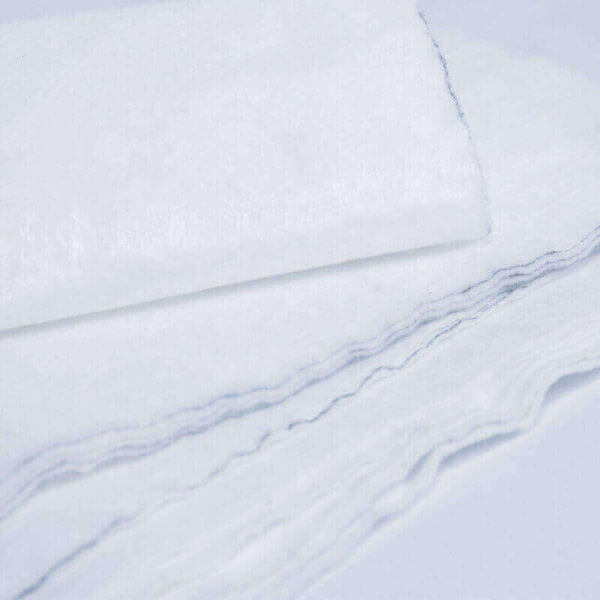
For the core functions needed in most road projects – separation, filtration, and drainage – non woven geotextile is frequently the superior choice:
- Protecting the Subgrade:Placed directly on the prepared soil (subgrade), non woven fabric acts as a separator. It prevents pumping – where fines migrate up into the base aggregate under traffic loads – which weakens the road structure. It also prevents aggregate from punching down into soft subgrades.
- Enhancing Drainage:Water entering the road base from the surface or rising from the subgrade can be catastrophic. Non woven fabric allows this water to drain laterally within its plane to ditches or outlets, preventing saturation and subsequent weakening of the base material.
- Effective Filtration: As water moves, the fabric filters out soil particles that could otherwise clog the drainage system or contaminate the base aggregate, maintaining system performance long-term.
- Reinforcement (Secondary):While woven fabrics are primary for reinforcement, non wovens provide significant secondary reinforcement benefits by distributing loads over a wider area of the subgrade, reducing localized stress and deformation.
- Construction Platform:Provides a stable working surface over soft or wet soils, facilitating construction in challenging conditions.
Professional Recommendations for Road Projects
1. Prioritize Core Functions:For most standard road construction over soils of moderate stability (CBR > 3), non woven road fabric is the optimal, cost-effective solution for separation, filtration, and drainage.
2. Site Assessment is Key:Conduct thorough geotechnical investigations. Understand the subgrade soil type, strength (CBR), moisture content, and drainage conditions. This dictates the functional requirements.
3. Specify Properties, Not Just Type:Do not just specify “non woven.” Specify the required properties based on engineering design:
Grab Tensile Strength & Elongation
Puncture Resistance (CBR or Pyramid)
Apparent Opening Size (AOS) or Permittivity/Filtration Rating(Critical for filtration performance)
Flow Rate/Transmissivity(For drainage applications)
Weight (Mass per Unit Area)
4. Consider Long-Term Performance:Select fabrics with high resistance to UV degradation (during storage/short-term exposure) and chemical/biological resistance suitable for the site environment.
5. Proper Installation is Crucial:Even the best fabric fails if installed poorly. Ensure subgrade preparation, proper overlap (as per specifications), immediate cover placement, and avoidance of construction traffic damage.
Our nonwoven geotextile have stape geotextile and continous filament geotextile,the weight range from 100gsm to 1000gsm,Max width is 6m.

To choose the right geotextile woven vs non woven for your road project, consider the following guidelines:
For rural roads or temporary access roads, where drainage is critical and traffic load is moderate, use non woven geotextile.
For permanent roads with heavy truck traffic, consider using woven geotextile for reinforcement, possibly in combination with a non woven fabric for filtration.
In areas with poor drainage or high water tables, always prioritize non woven geotextile to prevent subgrade failure.
Ensure the selected fabric meets local standards and project specifications in terms of weight, strength, permeability, and durability.
Choosing the right geotextile is essential to the success of any road construction project. Understanding the woven versus non woven fabric differences enables engineers and contractors to design more reliable, durable, and cost-effective roads.
Non woven road fabric provides superior drainage and separation, while woven geotextiles excel in reinforcement and load distribution. Both types have their place in modern road construction. By working with an experienced manufacturer and supplier, you can ensure that the correct fabric is selected for each application.
If you are planning a road construction project and are unsure which geotextile to use, feel free to contact our technical team. We offer expert guidance, competitive prices, and fast global delivery of high-quality non woven and woven geotextiles.Follow our Linkedin Facebook Youtube for more details!
Recent Post
Aquaculture Pond Lining in Indonesia | From Design to Installation
From Project Drawing to Water Filling: An Aquaculture Pond Lining Project in Indonesia This aquaculture pond project in Indonesia started with a project drawing.The customer firstly contacted us
When Is Geotextile Really Necessary?
When Is Geotextile Really Necessary in Civil Engineering Projects? Geotextiles are widely used in modern infrastructure and environmental engineering. However, a common question among engineers, designers, and contractors is: Is geotextile always necessary? In
Woven Polypropylene Geotextile Manufacturer | Engineering Grade & Landscape Fabric
Woven Polypropylene Geotextile Manufacturer | Engineering Grade & Landscape Fabric By Planetliner — Manufacturer of High-Performance Woven PP Fabrics for Global Projects Woven polypropylene geotextile has become a fundamental material in civil engineering, environmental protection,