
Waste Containment & Environmental Protection Solutions
Effective waste management requires reliable containment systems to prevent environmental contamination, control leachate migration, and ensure long-term regulatory compliance.Geomembrane for landfilling is becoming more and more necessary now,and the long-term performance of hdpe geomembranes as landfill liners is essential too. Sanitary landfill geomembrane are made of polyethylene resin,and waste management geomembrane normally use the 1.5mm or 2mm thickness as a bottom geomembrane barrier.
Planetliner provides excellent waste containment geomembrane and geotextile solutions for modern waste infrastructure, supporting landfill operators, industrial facilities, and environmental contractors worldwide.
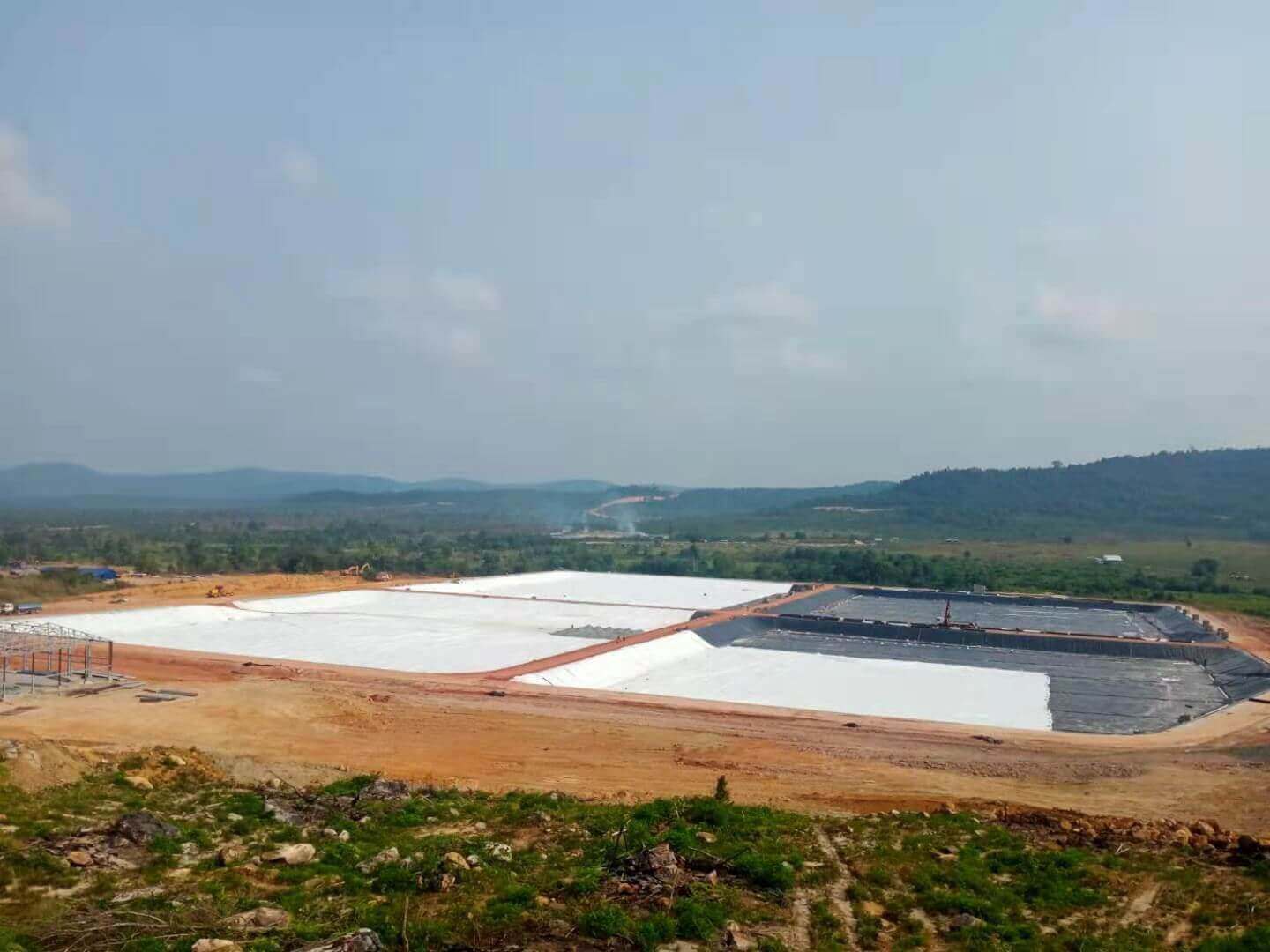
Landfill and Solid Waste
Modern landfills must be designed to control leachate and prevent groundwater contamination. Waterproof liner systems are critical to achieving long-term environmental protection.Landfill geomembrane liners act as low-permeability barriers to stop leachate migration and reduce contamination risk. The geomembrane liner landfill can have a less impact on the environment and public health. We offer hydraulic and gas barriers, leachate collection and management, filtration, and protection to ensure long-term environmental sustainability and regulatory compliance.
Typical challenges:
- leachate leakage risk
- landfill gas migration
- long-term liner durability
- differential settlement
- regulatory compliance pressure
Recommended containment system:
- HDPE Geomembrane for landfill waste— primary fluid barrier
- GCL (optional composite) — secondary barrier
- Nonwoven Geotextile — protection & filtration
- Drainage layer — leachate collection support
Typical applications:
- municipal solid waste (MSW) landfill
- hazardous waste landfill
- landfill cell lining
- landfill capping systems
- contaminated soil containment
Mining Waste Containment
Mining operations generate large volumes of tailings and process waste that must be safely isolated from the surrounding environment,and the mining waste can lead to soil and water pollution, ecosystem damage, public hazard and long-term health risks.
Typical challenges
- aggressive chemical exposure
- high loading from tailings
- long service life requirements
- puncture risk from coarse materials
- settlement over time
Recommended system
- HDPE geomembrane liner systems for chemical resistance
- Textured geomembrane for slope stability
- Heavy nonwoven geotextile for protection
- Leak detection layer (large facilities)
Typical waste scenarios
- tailings storage waste cells
- process residue containment
- waste rock leach control
- contaminated soil stockpiles

Agricultural Waste Management
Agricultural operations generate organic and liquid wastes that require controlled containment to avoid soil and groundwater pollution.The increasing demand for food production, requires more efficient agricultural waste management solutions to help achieving regulatory compliance.
Typical challenges:
- manure seepage
- lagoon leakage
- odor and environmental compliance
- variable subgrade conditions
- cost sensitivity for farms
Recommended solutions:
- Flexible geomembrane liners for lagoons
- Protection geotextile where subgrade is rough
- Cover systems where required by regulation
Typical applications:
- manure lagoons
- biogas digestate ponds
- livestock waste containment
- agricultural slurry storage

Wastewater Treatment
Wastewater facilities require reliable containment systems to manage sludge, effluent, and process water while meeting strict environmental regulations.
Wastewater geomembrane are widely used because they provide durable liquid barriers and long service life in containment environments. Ensure regulatory compliance, sustainability and long-lasting and protection for lagoons, ponds and tanks.
Typical challenges
- chemical exposure
- continuous wet conditions
- sludge management
- basin leakage
- maintenance access
Recommended systems
- HDPE geomembrane for primary containment
- LLDPE (when flexibility needed)
- Nonwoven geotextile protection layer
Typical applications
- wastewater lagoons
- sludge ponds
- industrial effluent basins
- treatment plant containment cells

How to Select the Right Waste Containment System
Key engineering factors include:
Thickness selection
- landfill /mining primary liner → typically ≥1.5 mm
- wastewater lagoon → typically 1.0–1.5 mm
- agricultural waste → 0.75–1.0 mm
Chemical compatibility
Critical for:
- hazardous waste
- mining waste
- industrial effluent
Subgrade condition
If subgrade contains:
- sharp stones
- demolition debris
- coarse tailings
→ protection geotextile strongly recommended
Global Waste Project Support
Planetliner supports waste containment projects & geomembrane landfill across:
- Southeast Asia
- South America
- Africa
- Middle East
We assist with:
- liner selection
- thickness recommendation
- BOQ estimation
- export logistics
FAQs
What liner is used in landfill?
Modern landfills typically use composite liner systems combining geomembrane with clay or GCL barriers to reduce leachate migration.
How long does geomembrane for landfill and leachate last?
Service life depends on thickness, exposure, and installation quality, typically designed for multi-decade performance.
Do all waste ponds need geotextile?
Projects with rough or stony subgrade generally require a protection layer to reduce puncture risk.
Get Waste Containment Recommendation & Quote
Tell us your waste type, pond/cell size, and subgrade condition.Our engineering team will recommend the optimal liner system within 12–24 hours.