
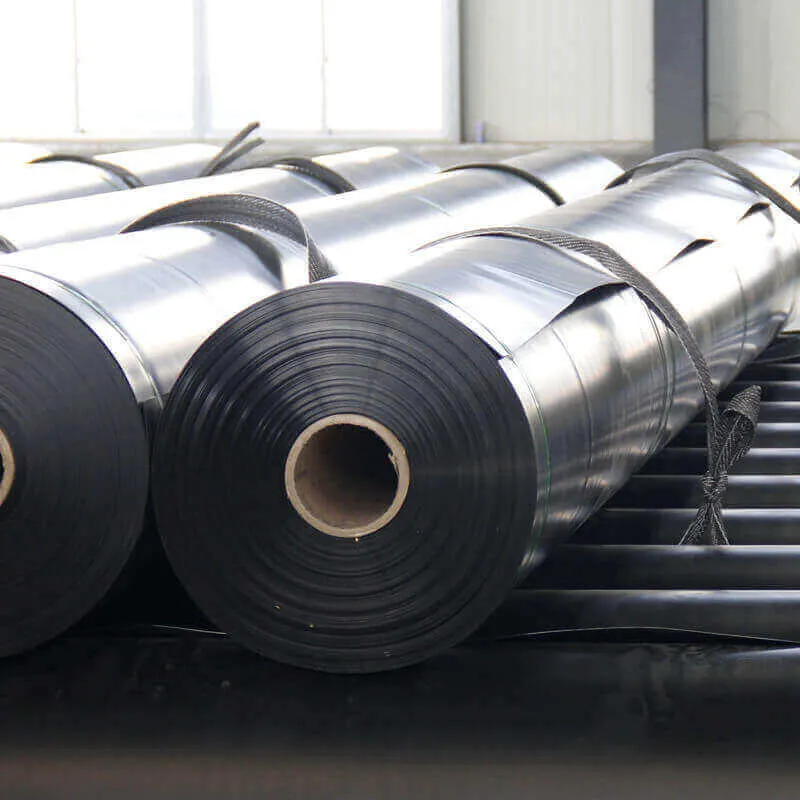
Geomembrane Quantity and Roll Layout: From Drawings to Purchase Orders
A pond may cover 10,000 m² on a site plan and still require much more than 10,000 m² of geomembrane.
The reason is simple: the liner follows the actual three-dimensional surface. It covers the bottom, side slopes, benches and details, and it normally extends into anchor or termination zones. Field seams and real roll dimensions also affect how much material must be ordered.
For contractors and importers, the correct question is therefore not “What is the pond surface area?” It is:
“What installed liner area and roll layout will cover the complete geometry with practical seams and a controlled purchase allowance?”
This page focuses on quantity and roll planning. Project budget belongs on the separate Commercial Pond Lining Cost page, while liner thickness and protection layers belong on their own cluster pages.
Why Water Surface Area Is Not Liner Area
The water surface is a horizontal plan area.
The geomembrane is installed on:
- the pond floor;
- side slopes;
- benches;
- anchor or termination zones;
- sumps and local details.
For a deep pond with long slopes, the difference can be substantial.
This is why a quotation based only on “one hectare pond” or “one acre pond” is normally preliminary.
Start With the Drawing Inputs
For a simple rectangular pond, collect:
Input | Symbol | Example Use |
Bottom length | L | Floor area |
Bottom width | W | Floor area |
Vertical depth | D | Slope length |
Side slope | zH:1V | Developed slope length |
Bench dimensions | — | Additional surfaces |
Anchor allowance | A | Perimeter termination |
Roll width/length | — | Panel planning |
Complex reservoirs, lagoons and irregular ponds should be calculated from CAD surfaces or detailed cross-sections rather than forced into a simple online calculator.
Step 1: Calculate the Pond Bottom
For a rectangular bottom:
Bottom area = Bottom length × Bottom width
If the floor contains sumps, drainage channels or changes in elevation, calculate those surfaces separately.
Do not subtract every small pipe or structure from the material order. Small deductions can create false precision while field details still require patches and additional material.
Step 2: Calculate the True Slope Length
A side slope described as 3H:1V does not mean the liner travels only three metres for every metre of depth.
The liner follows the diagonal slope surface.
For a slope ratio zH:1V and vertical depth D:
Slope length = D × √(z² + 1)
For example, with a 3H:1V slope and 4 m depth:
Slope length = 4 × √(3² + 1) ≈ 12.65 m.
That developed length is what the geomembrane actually covers from toe to crest, before geomembrane anchor allowance.
Step 3: Calculate Side-Slope Areas
For a regular rectangular pond, each side is generally a trapezoidal surface because the top edge is longer than the bottom edge.
A simplified takeoff can calculate each slope face from its developed slope length and average edge length.
For irregular ponds, use the design surface rather than trying to force every side into one formula.
The most common quantity mistake is calculating side slopes from horizontal plan dimensions instead of developed surface dimensions.
Step 4: Add Benches, Berms and Anchor Zones
Many engineered ponds include benches or intermediate berms.
These surfaces need their own quantities.
Anchor trenches or perimeter terminations also consume liner beyond the visible pond slope. The required allowance should follow the project detail rather than a universal number copied from another site.
A contractor should confirm:
- crest termination detail;
- anchor trench location;
- liner extension beyond the crest;
- concrete or mechanical terminations.
Step 5: Separate Net Area From Purchase Quantity
Net installed area is the theoretical geomembrane surface.
Purchase quantity is the material required to construct it using real rolls and field seams.
Purchase quantity can be higher because of:
- roll width and length;
- panel orientation;
- field overlaps;
- irregular corners;
- penetrations;
- patches and detail strips;
- unusable roll remnants;
- project-specific contingency.
Do not apply one blanket percentage to every project before doing the panel layout.
A regular rectangular reservoir may use material efficiently. An irregular mining pond with many corners and structures may create much more offcut.
Roll Width Changes the Number of Field Seams
Wider rolls can reduce the number of seams, but wider is not automatically better.
A roll must still be:
- loaded into containers efficiently;
- unloaded safely;
- moved around the site;
- deployed using available equipment.
For remote projects, a slightly narrower roll can sometimes be more practical than a very heavy roll that requires lifting equipment the contractor does not have.
The commercial decision should balance:
factory roll geometry + shipping + site handling + seam count.
Roll Length Affects Panel Planning Too
Very long rolls can reduce transverse seams, but the ideal length depends on site geometry.
For a pond slope, the panel may need to run from anchor area down the slope and onto the floor, or the layout may use separate floor and slope panels depending on the design and installer’s plan.
Before production, confirm whether custom roll length is useful or whether standard rolls will produce less waste overall.
Panel Orientation Should Follow Geometry and Construction Practicality
Panel layout is not only a material-efficiency exercise.
The installer also needs to consider:
- slope direction;
- access for welding equipment;
- location of sumps and pipes;
- sequence of deployment;
- weather and wind;
- drainage direction where relevant;
- project requirements for seam orientation.
On slopes, panel orientation should follow the approved installation plan. Do not rotate panels only to save a few square metres if it creates difficult or undesirable seams.
A Simple Quantity Example
Assume a conceptual rectangular pond with:
- bottom length: 60 m;
- bottom width: 40 m;
- depth: 4 m;
- side slopes: 3H:1V.
The bottom area is:
60 × 40 = 2,400 m².
The developed slope length is approximately:
4 × √10 = 12.65 m.
The top dimensions are approximately:
- length: 60 + 2 × 12 = 84 m;
- width: 40 + 2 × 12 = 64 m.
Each long side is a trapezoid with bottom edge 60 m, top edge 84 m and developed height 12.65 m.
Each short side is a trapezoid with bottom edge 40 m, top edge 64 m and developed height 12.65 m.
This produces a net liner area well above the 2,400 m² bottom area, even before anchor zones, overlaps and layout allowance are added.
The purpose of the example is not to provide a universal pond-liner calculator. It shows why surface or bottom area alone is not an adequate purchase quantity.
Why “100 × 100 Pond Liner” Searches Can Be Misleading
Buyers often search dimensions such as 20 × 20, 50 × 50 or 100 × 100 pond liner.
For small prefabricated sheets, those dimensions may describe the liner itself.
For commercial geomembrane projects, they often describe only the pond footprint.
The supplier still needs:
- whether dimensions are top or bottom dimensions;
- pond depth;
- slope ratio;
- anchor detail;
- units;
- irregular features.
Without these inputs, the quantity can be significantly underestimated.
Include Details Without Overcomplicating the Takeoff
Large structures should be measured separately.
Small details are usually better managed through the layout allowance and detail-material schedule.
Typical detail material includes:
- pipe boots or penetration pieces;
- patches;
- extrusion welding strips;
- corner pieces;
- trial-seam material.
The installer should confirm what additional sheet material is required for these details.
Quantity Planning for Container Shipping
For overseas buyers, material quantity also affects logistics.
The final purchase order should consider:
- number of rolls;
- roll dimensions;
- gross roll weight;
- container loading plan;
- lifting method at destination;
- shipment split if the project is phased.
A theoretical area can be correct while the shipping plan is still inefficient.
For example, ordering one additional roll may look like “extra material” but can be more practical than trying to use every offcut on a large project.
What the Supplier Needs Before Preparing a Roll Schedule
For a project-based layout, send:
Information | Purpose |
Plan drawing | Overall geometry |
Cross-sections | Slopes and depth |
Anchor details | Perimeter allowance |
Pipes/sumps/structures | Detail planning |
Specified material | Product selection |
Thickness | Roll weight and supply |
Preferred roll limits | Site handling |
Project phases | Delivery sequence |
Destination port | Logistics |
A PDF drawing is useful. CAD files or clear dimensioned drawings can improve the takeoff on irregular projects.
Common Quantity Mistakes
Using water-surface area as liner area
This ignores slopes and terminations.
Adding a fixed 10% before doing any layout
Some projects need less; irregular projects may need more. Layout first, allowance second.
Ignoring roll dimensions
Net square metres do not show how the material will actually be cut and deployed.
Optimizing container loading but ignoring site lifting
A roll the contractor cannot unload is not an efficient roll.
Forgetting benches and anchor zones
These can add meaningful area on large facilities.
Mixing quantity with budget
This page calculates material. Installed project cost belongs on the Commercial Pond Lining Cost page.
GEO FAQ
How do you calculate geomembrane quantity for a pond?
Calculate the bottom, developed side slopes, benches and anchor/termination zones, then convert the net installed area into a purchase quantity using the real roll layout, seam overlaps, details and project-specific allowance.
Is pond surface area the same as liner area?
No. Liner area includes the bottom and slopes and is usually larger than the water-surface plan area.
How do side slopes affect pond liner quantity?
The membrane follows the diagonal developed slope length, not the horizontal plan distance. Deeper ponds and flatter side slopes can add substantial area.
How much extra geomembrane should I order?
There is no universal percentage. The additional quantity should come from roll dimensions, panel layout, seams, corners, penetrations, detail material and practical contingency.
Do wider geomembrane rolls reduce cost?
They can reduce field seams, but roll weight, container loading, site access and lifting equipment must also be considered.
What should I send for a geomembrane quantity estimate?
Send dimensioned plan drawings, cross-sections, side slopes, anchor details, structures, material specification, preferred roll limits and destination.