
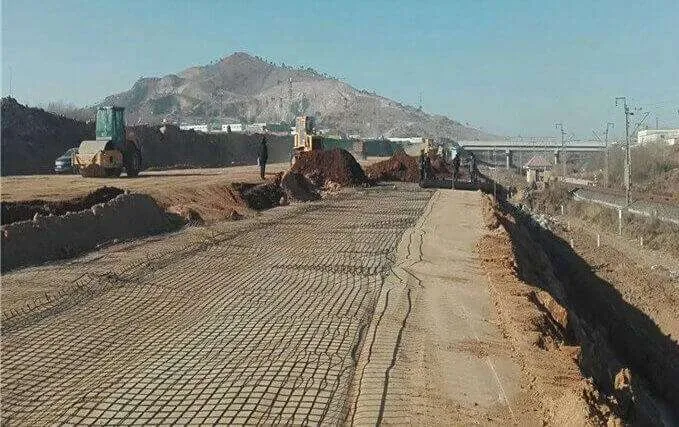
Geosynthetic Solutions for Subgrade Stabilization
Weak subgrades can cause rutting, aggregate contamination, excessive deformation and construction-access problems. Geosynthetics can improve the performance of the aggregate–subgrade system through stabilization, confinement, separation and filtration.
Planetliner supplies PP geogrids and engineering geotextiles for access roads, haul roads, yards and transport infrastructure. Start with the expected loads and ground investigation rather than choosing a roll by weight or tensile strength alone.
Quick Answer
For weak road subgrades, a PP geogrid is commonly used to improve aggregate confinement and load distribution, while woven or nonwoven geotextiles can prevent intermixing between weak soil and granular fill. The correct solution depends on subgrade strength, aggregate properties, traffic loading, drainage and the required engineering function.
What Project Problems Does This Application Solve?
- Rutting under construction or service traffic
- Loss of aggregate into soft subgrade
- Contamination of the base course by fine soil
- Reduced bearing performance in wet conditions
- Excessive aggregate thickness or maintenance demand
- Difficulty maintaining a stable working platform
Recommended Geosynthetic System
| Project Condition | Recommended Product | Primary Function | Selection Focus |
| Weak subgrade + granular base | PP geogrid | Stabilization | Aperture/aggregate interaction and junction performance |
| Soil and aggregate intermixing | Woven geotextile | Separation + strength | Survivability and tensile properties |
| Separation with filtration need | Nonwoven geotextile | Separation + filtration | AOS, permittivity, puncture |
| Higher tensile reinforcement demand | PET geogrid | Reinforcement | Long-term tensile performance |
How to Select the Right Materials
First define whether the project needs stabilization, separation, filtration or true tensile reinforcement. Review subgrade CBR or equivalent strength, aggregate gradation, base thickness, traffic/loading, groundwater and construction method. Geogrid should not be selected only by ultimate tensile strength; aperture geometry, junction behavior and interaction with aggregate are also relevant. Geotextile should not be selected only by GSM.
Information needed for road stabilization design
Provide the subgrade strength, soil grading, groundwater conditions, traffic or equipment loads, allowable rutting and proposed aggregate. Include aggregate grading and angularity as well as layer thickness. For a construction platform, the equipment load case can be more demanding than the future service traffic.
Laboratory tensile strength alone does not predict the performance of a reinforced aggregate layer. Compare evidence relevant to the actual system and use the project’s approved design method. Any reduction in aggregate thickness requires design justification; it should not be assumed from a supplier’s general percentage claim.
For deep soft ground beneath a raised embankment, review basal reinforcement. That application involves different stability and settlement questions from near-surface road stabilization.
Installation and purchasing checks
Prepare the formation without unnecessarily disturbing weak soil. Confirm overlaps or seams, reinforcement direction, wrinkles and damaged areas before placing aggregate. Specify cover thickness and spreading equipment for the site conditions. Do not permit construction traffic directly on exposed geosynthetics unless the approved method explicitly allows it.
Place and compact aggregate using a sequence that avoids pushing the fabric out of position. Inspect drainage routes and monitor early rutting so construction problems are identified before more fill is placed.
Compare delivered material cost with overlap waste, roll handling, installation, aggregate supply and maintenance needs. Ask for roll dimensions, test methods, declared property basis and traceable identification. Learn more about separation and filtration where fine-soil migration is the main concern.
Typical Industries and Projects
This application is commonly relevant to: Transportation; Mining; Energy; Site Development. The exact material system should be matched to the engineering function, site conditions, design life and project specification.
Project / Case Reference

Example: a temporary access road over soft, wet soil may use a separation geotextile directly on the prepared subgrade and a geogrid within the granular layer. The geotextile limits contamination while the geogrid helps stabilize the aggregate. The final design should be checked against expected traffic and local soil conditions.
Frequently Ask Questions
Geogrid or geotextile for weak subgrade?
They solve different functions. Geogrid primarily stabilizes or reinforces the granular layer; geotextile is commonly used for separation and filtration. Many weak-subgrade systems use both.
Is PP or PET geogrid better for road stabilization?
PP geogrid is widely used for aggregate stabilization. PET geogrid is often considered where long-term tensile reinforcement is the dominant function. Selection depends on the design mechanism.
Can geosynthetics reduce aggregate thickness?
They may improve system performance and, in engineered designs, can support optimized aggregate sections. Any reduction should be based on the applicable design method and project conditions.
Can geogrid replace geotextile?
Not when soil separation or filtration is required and the geogrid cannot provide it. Its open structure normally allows fine soil to pass. Some designs need both materials.
Which is better for roads, woven or nonwoven geotextile?
Choose by function and measured performance. Woven products may suit tensile and separation demands; nonwoven products are often considered for filtration and separation. Neither construction type is automatically suitable for every soil.
Will stabilization stop all settlement?
No. Deep compressible layers can still settle. Ground treatment, staged loading or another foundation solution may be needed in addition to geosynthetics.
Related Products, Industries & Solutions
Related solutions: Separation & Filtration; Basal Reinforcement; Drainage Systems.
Related products: PP Geogrid; Woven Geotextile; Nonwoven Geotextile.
Discuss Your Project with Planetliner
Send your project drawing, application, dimensions, soil or slurry conditions, required engineering function, existing specification and destination. Planetliner can help identify suitable geosynthetic material options, specifications and quantities for further engineering and procurement evaluation.
CTA: Send Your Project Requirements → Get a Geosynthetic Material Recommendation