What is the advantage of textured geomembrane?
In modern civil engineering, geomembranes play a critical role in waterproofing, environmental protection and slope stability. Among all geomembrane types, textured geomembrane has become the preferred material for projects that require strong friction performance, improved soil interaction and enhanced safety on steep surfaces.
Used in landfills, mining pads, reservoirs, canals, wastewater treatment and slope protection, textured geomembrane provides greater shear resistance than smooth liner, making it essential for high-risk containment applications.We produce the geomembrane liner with 100% virgin resin, have blow film process and calendering process. Our geomembrane liner thickness range 0.3mm-3mm thickness, and max width is 8m, with customized length, and black is the normal color, which is with the carbon black and can be UV resistant.
Planetliner manufactures both HDPE textured geomembrane and LLDPE textured geomembrane, designed for global export to Africa, Southeast Asia, South America and the Middle East.
1. What Is Textured Geomembrane?
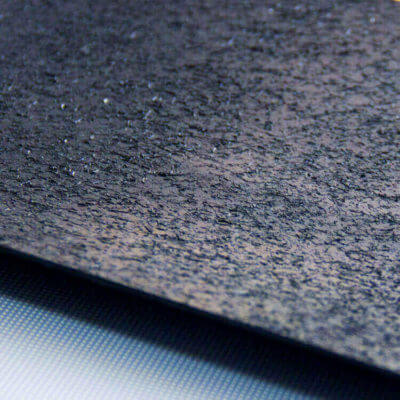
Textured geomembrane is an HDPE or LLDPE geomembrane with a rough surface on one or both sides.
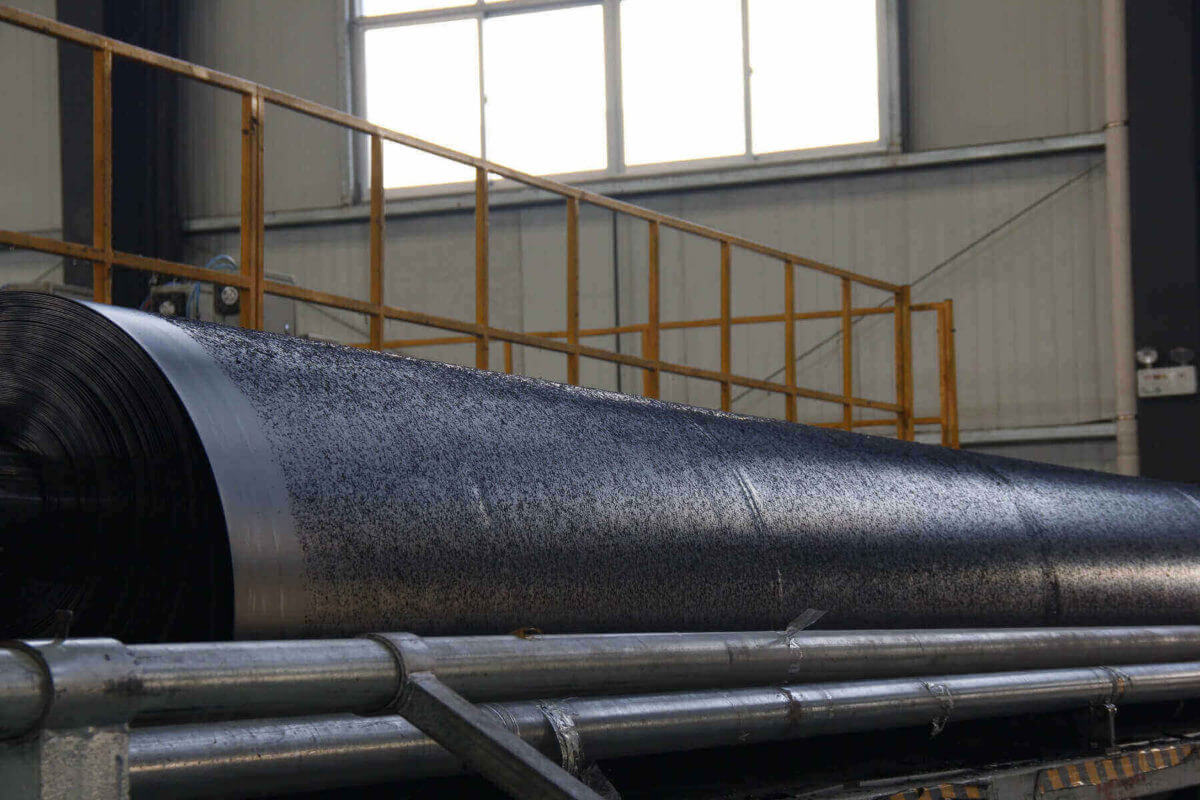
To make the textured geomembrane liner, first step is to make the smooth geomembrane liner, the smooth geomembrane liner use the virgin resin,and property meet the ASTM GM13 standard.Then the textured surface machine melt the polyethylene resin and spray the polyehylene fiber on the smooth geomembrane liner, make a rough surface.
With the sparyed fiber, textured surface geomembrane can have a strong friction between geomembrane and other products, like the nonwoven geotextile, so the slope structure will be fixed and stable. And the worker can stay stable on the texture surface liner, safe for workers.
The textured geomembrane liner max width is 8m, and have a blank area at both edges,20cm smooth area without textured fiber. This smooth area is used to weld the two geomembrane liners together,it is useful for the engineers.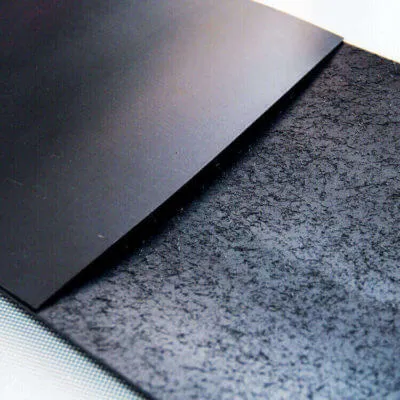
Key characteristics include:
higher friction angle
enhanced anti-slip performance
excellent chemical resistance
strong puncture resistance
UV stability and long service life
suitable for exposed or buried use
Planetliner produces single-sided textured and double-sided textured geomembranes, depending on slope design and project specifications.
2. Why Use Textured Instead of Smooth Geomembrane?
Smooth HDPE geomembrane works well for general waterproofing, but textured geomembrane is essential where safety and slope stability matter.
✔ Higher Friction Angle = Safer Slopes
The textured surface prevents sliding between soil and liner, which is critical in:
landfill side slopes
embankments
tailing dams
mining heap leach pads
reservoir side walls
✔ Better Performance in Steep Conditions
Smooth geomembranes may slip when used on slopes over 1:3.
Textured liners maintain stability under mechanical stress.
✔ Superior Interface Shear Strength
Projects involving geotextile + geomembrane composite systems rely on high interface friction to prevent failures.
✔ Improved Worker Safety During Installation
Textured products provide better grip and reduce the risk of sliding on wet or steep surfaces.
Planetliner’s textured geomembrane is engineered specifically for projects where slope stability is a non-negotiable requirement.
3. Applications of Textured Geomembrane
Textured geomembrane is used wherever both waterproofing and slope safety are required:
1. Mining: Heap Leach Pads and Tailings Dams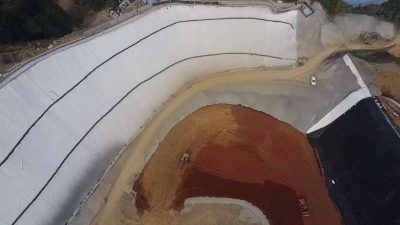
Mining facilities use large, steep pads to leach metals. The liner must withstand massive overburden pressure while preventing the ore material from sliding.
Heap Leach Pads: Textured geomembrane provides the required base friction to safely stack millions of tons of ore.
Tailings Dams: Used on the embankment slopes to prevent the erosion and sliding of the containment system.
2. Environmental: Waste Containment&Landfill Capping and Closures
When closing a landfill, the final cover system involves layers of soil and drainage materials placed over the geomembrane.
Landfill Capping: This is a classic geomembrane slope stability challenge. The texture ensures the protective topsoil layers do not slide off the synthetic barrier, maintaining the long-term integrity of the environmental seal.
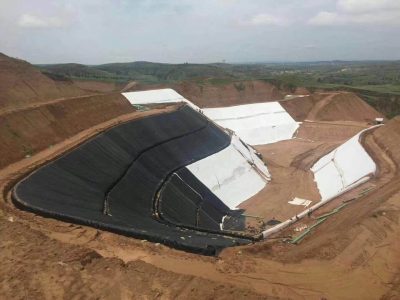
3. Water Containment: Steep Dams and Reservoirs
For deep reservoirs or hydropower dams built into steep terrain, textured HDPE liner prevents the liner from slipping down the slope when the water level fluctuates.
Planetliner supplies textured geomembrane rolls optimized for fast deployment and reliable long-term performance.
About the geomembrane surface, we can produce smooth surface and textured surface,do you know what is the advantage of the textured geomembrane liner? and how it is be made?
4. Which Geomembrane Should You Choose?
For deep reservoirs or hydropower dams built into steep terrain, textured HDPE liner prevents the liner from slipping down the slope when the water level fluctuates.
Technical Deep Dive: Smooth vs Textured Geomembrane
The choice between the two is a technical decision based purely on site conditions and design requirements.
| Smooth vs Textured Geomembrane Comparison | ||
| Feature | Smooth Geomembrane (e.g., HDPE) | Textured Geomembrane (e.g., HDPE Textured Liner) |
| Interface Friction | Low (Used for the base or smooth surfaces) | High (Essential for slopes and vertical interfaces) |
| Welding Complexity | Easy (Faster and simpler fusion welding) | More Complex (Requires precise dual-wedge welding along the flat margins) |
| Cost | Lower per square meter | Higher (Due to the specialized manufacturing process) |
| Common Application | Flat pond bottoms, double-liner systems | Steep slopes, abutments, vertical walls |
Meanwhile,there are HDPE textured and LLDPE textured geomembrane,Both materials are used widely, but their performance differs:
HDPE Textured Geomembrane
highest chemical resistance
excellent long-term durability
preferred for landfills and mining
strong puncture resistance
LLDPE Textured Geomembrane
more flexible
easier to install on complex surfaces
better elongation
ideal for ponds, reservoirs and irregular shapes
Planetliner helps contractors choose the right material based on soil conditions, slope gradient, environmental exposure and regulatory requirements.
5. How Thickness Affects Performance
Common textured geomembrane thicknesses:
1.0mm — small reservoirs, agriculture ponds
1.5mm — wastewater treatment, slope lining
2.0mm — landfills, mining, heavy-duty containment
2.5mm–3.0mm — extreme load or high-pressure environments
Thicker liners offer higher mechanical strength and longer service life.
Manufacturing and Quality Control
Textured geomembrane is typically produced using one of two methods:
Co-extrusion: The geomembrane is extruded with the texture formed directly onto the surface while the polymer is still molten.
Blown Film: Used for lighter products, where the texture is imprinted during the blowing process.
6.Case Study 1 — 2.0mm Textured HDPE for Landfill Side Slopes
A Central Asian landfill expansion project required strong friction stability for steep sidewalls. Planetliner supplied 2.0mm double-sided textured HDPE geomembrane to increase the friction angle between clay soil and geotextile layers.
Outcome:
no sliding during installation
secure slope anchoring
improved long-term containment performance
7.Case Study 2 — 1.5mm Textured LLDPE for Mining Heap Leach Pad
A mining operator in Africa needed a geomembrane with high flexibility and enhanced shear strength for an uneven leaching surface.
Planetliner recommended 1.5mm textured LLDPE, resulting in: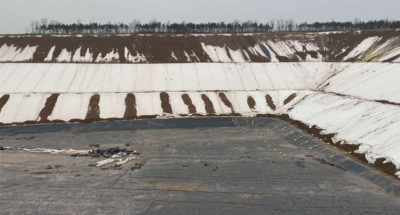
faster installation
excellent surface conformity
stable performance under heavy ore loads
8. FAQs — Textured Geomembrane
1. What is textured geomembrane used for?
It is used for slope stability in landfills, mining pads, reservoirs and containment projects requiring high friction and anti-slip performance.
2. Is textured geomembrane stronger than smooth geomembrane?
It has higher friction and better interface shear strength, but overall durability depends on thickness and material grade.
3. Can textured geomembrane be welded?
Yes. Planetliner’s textured liners have excellent weldability and are compatible with wedge welding and extrusion welding.
4. What thickness should I choose?
Landfills typically use 1.5–2.0mm; reservoirs often use 1.0–1.5mm; mining pads use 1.5–2.0mm textured liners.
5. Do you export textured geomembrane?
Yes. Planetliner exports textured HDPE and LLDPE geomembrane worldwide with certificates, QA/QC reports and logistics support.
6.Does the texture affect the welding strength of the geomembrane?
Yes. Welding a textured geomembrane is generally more complex than welding a smooth one. The technician must ensure the textured surface is properly ground down or masked near the seam to allow for a clean, continuous heat fusion weld. Professional installation is essential to maintain seam integrity.
7. What is the most common thickness for geomembrane slope stability?
For critical slopes in landfills or dams, the common thickness for textured geomembrane ranges from 1.5mm to 2.5mm (60 mil to 100 mil). The required thickness is ultimately determined by the specific engineering calculations for anticipated stresses and puncture resistance.
Textured geomembrane is a critical material for projects where waterproofing, friction performance and slope stability cannot be compromised.
Planetliner provides dependable textured HDPE and LLDPE geomembranes engineered for harsh environments and long-term results.
For specifications, samples or project support, Planetliner is ready to assist.Follow our Linkedin, Facebook ,Youtube for more informations!
Recent Post
Aquaculture Pond Lining in Indonesia | From Design to Installation
From Project Drawing to Water Filling: An Aquaculture Pond Lining Project in Indonesia This aquaculture pond project in Indonesia started with a project drawing.The customer firstly contacted us
When Is Geotextile Really Necessary?
When Is Geotextile Really Necessary in Civil Engineering Projects? Geotextiles are widely used in modern infrastructure and environmental engineering. However, a common question among engineers, designers, and contractors is: Is geotextile always necessary? In
Woven Polypropylene Geotextile Manufacturer | Engineering Grade & Landscape Fabric
Woven Polypropylene Geotextile Manufacturer | Engineering Grade & Landscape Fabric By Planetliner — Manufacturer of High-Performance Woven PP Fabrics for Global Projects Woven polypropylene geotextile has become a fundamental material in civil engineering, environmental protection,