
What Is the Difference Between GCL and Geomembrane?
When it we have containment and lining systems in environmental/landfills, civil, and mining projects, two popular materials are often used: GCL (Geosynthetic Clay Liner) and Geomembrane. While they may sound similar and often have the same general purpose—preventing fluid migration. But they are very different in how they are made, how they work, and where they’re best used.
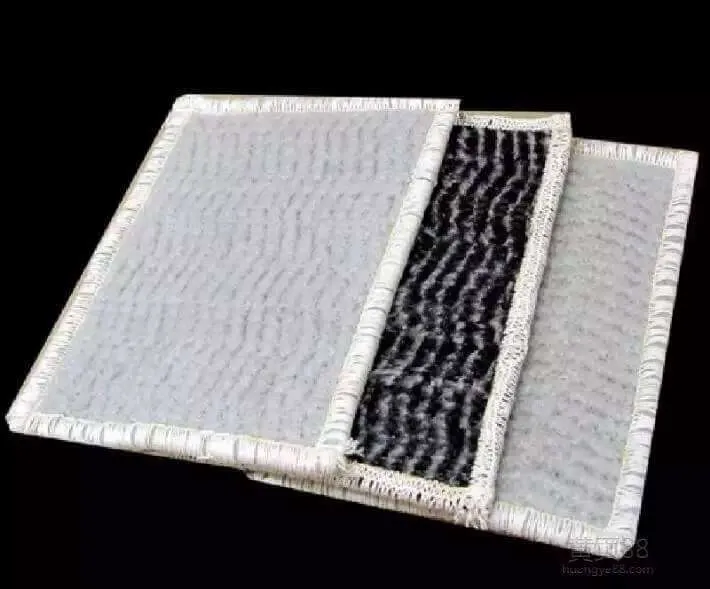
1. What is a Geosynthetic Clay Liner (GCL)?
A GCL is a layered product made by sandwiching bentonite clay between two geotextiles (usually nonwoven and/or woven fabrics). Bentonite swells when it comes into contact with water, creating a low-permeability barrier that prevents fluid from passing through.
Key Features:
Made from natural sodium bentonite clay
Comes in roll form
Self-sealing around minor punctures
Can “heal” itself to some degree when damaged
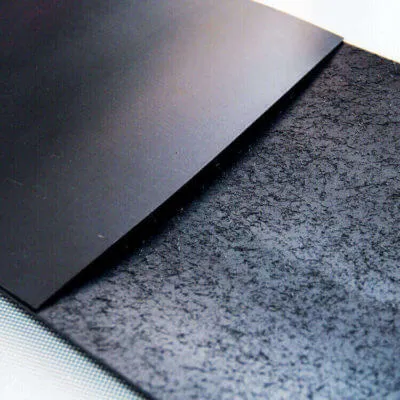
2. What is a Geomembrane?
A geomembrane is a synthetic liner made from plastic-based materials such as HDPE, LLDPE, PVC, or EPDM. These liners are engineered to be highly impermeable and are widely used in critical containment applications like landfills, ponds, and mining facilities.
Key Features:
Manufactured from plastic resins
Smooth or textured surfaces
Chemically resistant
Very low permeability
3. Main Differences Between GCL and Geomembrane
| Feature | GCL (Geosynthetic Clay Liner) | Geomembrane |
|---|---|---|
| Material Composition | Natural bentonite clay + geotextiles | Synthetic polymer (e.g., HDPE, PVC) |
| Permeability | Low, but higher than geomembrane | Extremely low (almost impermeable) |
| Self-Sealing | Yes (minor punctures) | No (damage must be repaired manually) |
| Installation | Easier on uneven ground; more flexible | Requires smooth subgrade; may wrinkle |
| Thickness | Typically ~6–10 mm | Typically 0.5–2.5 mm |
| Chemical Resistance | Moderate | High (varies by polymer type) |
| Cost | Generally lower | Higher upfront material cost |
| Durability | Good, but can dry out | Very durable; resistant to UV and weather |
| Usage | Slopes, under liners, backup barrier | Primary containment layer |
4. Where Are GCLs Used?
GCLs are often used as part of composite liners or secondary liners in projects where additional protection or backup is needed. They are ideal for:
Landfill caps and liners
Canal and irrigation lining
Mining heap leach pads
Pond and lagoon linings
Vertical cutoff walls
GCLs are especially useful in areas with irregular subgrades, where flexibility and self-healing are big advantages.


5. Where Are Geomembranes Used?
Geomembranes are used when maximum containment is required. They are commonly found in:
Municipal and hazardous waste landfills
Mining tailings ponds
Water reservoirs and ponds
Secondary containment (fuel, chemical storage)
Geomembranes offer superior chemical resistance and are usually the primary barrier in high-risk containment systems.


6. Can GCL and Geomembrane Be Used Together?
Yes! In fact, many large-scale projects use both in what’s called a composite liner system. This typically consists of:
One layer of geomembrane on top
One layer of GCL underneath
This combo provides the best of both worlds: the geomembrane offers excellent impermeability, while the GCL acts as a secondary seal that can self-heal and protect against leaks caused by punctures or tears in the geomembrane.

7. How to Choose Between GCL and Geomembrane
Here are a few questions to ask when deciding which liner is better for your project:
A. What are you containing?
For chemicals or hazardous waste, geomembrane is the safer choice.
For non-toxic water containment, GCL may be enough.
B. What is your site like?
Uneven, rocky terrain? GCL is easier to install.
Flat engineered subgrade? Geomembrane works well.
C. What’s your budget?
GCLs are usually cheaper, both in materials and installation.
Geomembranes are more expensive, but offer top-level protection.
D. What are the risks of failure?
If failure could lead to environmental disaster, go with geomembrane or a composite liner system.
If the risk is lower, and cost is a big concern, GCL may be a smart solution.
8. Installation Tips
GCL Installation
Prepare a smooth subgrade (remove sharp rocks).
Roll out GCLs with 6-inch overlaps.
Hydrate with water spray (unless prehydrated).
Cover with soil or geomembrane immediately to prevent drying.
Geomembrane Installation
Weld seams using hot wedge or extrusion methods.
Conduct spark testing to detect pinhole leaks.
Anchor edges in trenches to prevent wind uplift.
Frequently Asked Questions (FAQ)
Q1: Is GCL waterproof?
Not 100%, but it’s highly water-resistant. Bentonite swells to form a tight seal that prevents water flow.
Q2: Can GCL replace geomembrane?
In some low-risk or cost-sensitive projects, yes. But for hazardous or chemical containment, a geomembrane is better.
Q3: Which lasts longer?
Geomembranes generally have longer life spans (up to 50+ years), especially with UV protection.
Q4: Can I install GCL myself?
GCL is relatively easy to install but still requires attention to overlaps, sealing, and anchoring. Professional guidance is recommended.
Please follow our Linkedin Facebook for more details,and we do best to support you!
Recent Post
Aquaculture Pond Lining in Indonesia | From Design to Installation
From Project Drawing to Water Filling: An Aquaculture Pond Lining Project in Indonesia This aquaculture pond project in Indonesia started with a project drawing.The customer firstly contacted us
When Is Geotextile Really Necessary?
When Is Geotextile Really Necessary in Civil Engineering Projects? Geotextiles are widely used in modern infrastructure and environmental engineering. However, a common question among engineers, designers, and contractors is: Is geotextile always necessary? In
Woven Polypropylene Geotextile Manufacturer | Engineering Grade & Landscape Fabric
Woven Polypropylene Geotextile Manufacturer | Engineering Grade & Landscape Fabric By Planetliner — Manufacturer of High-Performance Woven PP Fabrics for Global Projects Woven polypropylene geotextile has become a fundamental material in civil engineering, environmental protection,