
What is an HDPE Pond Liner?
1. Introduction
Ponds are beautiful and useful features, serving various purposes like supporting ecosystems, enhancing landscapes, and storing or treating water. Depending on their role, they might hold fish, plants, drinking water, or even waste materials. But no matter the purpose, one thing is clear: a good pond liner is essential to prevent leaks and ensure durability.
Pond liners come in many forms, but the most common materials are:
- PVC (Polyvinyl Chloride)
- RPE (Reinforced Polyethylene)
- EPDM (Ethylene Propylene Diene Monomer)
- HDPE (High-Density Polyethylene)
- LLDPE (Linear Low-Density Polyethylene)

2. PVC Pond Liners
PVC pond liners are lightweight, flexible, and one of the most affordable options available. They’re easy to handle, making installation simple. However, PVC is not the most durable material. It’s prone to tearing, especially when exposed to UV rays for extended periods, and it may leach harmful chemicals into the water over time.
If you’re looking for a budget-friendly liner for a small decorative pond that doesn’t require high durability, PVC could work. But for long-term or larger projects, better options exist.
3. Reinforced Polyethylene (RPE) Pond Liners
RPE liners are tough, lightweight, and highly durable. They are made with multiple layers, including a woven core for strength and outer layers for flexibility and UV protection.
Advantages:
Lightweight and thin: Easier to transport and install.
No underlayment required: Thanks to its puncture resistance.
Long-lasting: With added UV stabilizers, it holds up well against the sun.
Limitation:
RPE isn’t as flexible as EPDM, so it may not conform as easily to complex pond shapes.
4. Ethylene Propylene Diene Monomer (EPDM) Pond Liners
EPDM liners are well-known for their flexibility and fish-safe properties, making them ideal for decorative and ecological ponds.
Advantages:
Highly flexible: Perfect for ponds with uneven or curved surfaces.
UV-resistant: Withstands sun exposure for years.
Safe for aquatic life: Doesn’t release harmful chemicals into the water.
Drawbacks:
Low puncture resistance: It’s prone to tearing, requiring frequent repairs.
Heavy material: Makes it costly to ship and install.
High maintenance costs: Over time, upkeep can become expensive.
5. High-Density Polyethylene HDPE Pond Liners
HDPE Pond liners are among the toughest and most durable options. They’re popular in industrial and environmental applications but are equally suitable for ponds.
Advantages:
Durable and flexible: Resists chemicals, corrosion, and extreme temperatures.
Long lifespan: Can last over 30 years with proper installation.
Cost-effective: Offers excellent value for its durability.
Fish and plant safe: Won’t harm aquatic life.
Permanent seals: Can be fusion-welded for leak-proof joints.
Limitation:
HDPE pond liner requires skilled installers and specialized equipment for welding, which can increase upfront costs.
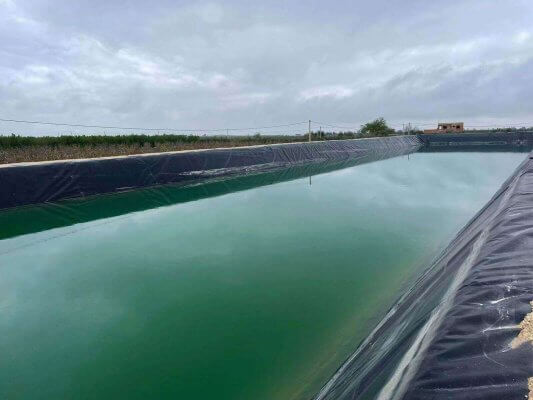

6. LLDPE Pond Liners
LLDPE liners combine flexibility with strength, offering a middle ground between HDPE and other materials.
Advantages:
Soft and pliable: Easier to fold and shape than HDPE.
Durable: Resists tearing and punctures well.
Weather-resistant: Performs well in cold temperatures.
Drawbacks:
Lower tensile strength: Not as strong as HDPE, so it may stretch or tear under heavy stress.
Less UV-resistant: May degrade faster without proper protection.
7. Summary of Liner Options
Here’s a quick comparison of the main pond liner types:
PVC: Budget-friendly and flexible but not very durable.
RPE: Lightweight, strong, and long-lasting but less flexible.
EPDM: Very flexible and safe for aquatic life but heavy and high-maintenance.
HDPE: Extremely durable and cost-effective but needs professional installation.
LLDPE: Flexible and durable but not as strong or UV-resistant as HDPE.
8. Choosing the Right HDPE Liner
If you decide on an HDPE liner, remember that not all products are equal. Look for liners that meet GRI GM13 standards, which guarantee high quality. For example, Our HDPE liners exceed these standards and are made using flat-die cast extrusion for consistent thickness and strength.
9.Installing an HDPE Pond Liner
1). Introduction
Ponds serve many purposes, from supporting ecosystems and enhancing landscapes to storing water for industrial, agricultural, or waste treatment needs. A well-designed pond requires proper containment to function effectively, and geomembranes like HDPE (High-Density Polyethylene) liners play a key role in this process. HDPE liners are known for being tough, flexible, and highly resistant to chemicals, making them an excellent choice for long-term pond projects.
This guide will walk you through the essential steps involved in installing an HDPE pond liner, ensuring a successful and durable installation.
2). Preinstallation Checklist
Before installing your HDPE pond liner, it’s important to prepare the site thoroughly.
Site Preparation:
Avoid Risks: Choose a site that isn’t prone to flooding or high groundwater pressure. This ensures the pond liner won’t face unnecessary stress or damage over time.
Position Above Water Table: Ensure the bottom of the pond is higher than the water table to minimize hydrostatic pressure from below.
Soil Assessment: Test the soil for potential gas buildup. If necessary, plan to install a venting system to prevent gas accumulation under the liner.
Subgrade Preparation:
Remove Sharp Objects: Clear the site of anything that could puncture the liner, such as rocks, roots, or debris.
Level the Ground: Compact the soil and make sure the surface is smooth and even. This ensures the liner fits snugly and performs well over time.
3). Choosing HDPE Pond Liner Material
Selecting the right HDPE liner is a crucial step.
Material Benefits:
HDPE liners are incredibly durable. They resist tears, punctures, and chemical corrosion while staying flexible enough to adapt to the shape of your pond. They also have a long lifespan, making them ideal for both small decorative ponds and large industrial water containment systems.
Fusion Welding Advantage:
One of the standout features of HDPE liners is their ability to be fusion welded. This means the panels can be sealed together on-site, creating a seamless and leak-proof barrier. This not only simplifies transportation but also reduces the number of seams required, cutting down on potential weak points. Keep in mind, though, that welding requires specialized equipment and skilled workers.
4). Installation Process
Now it’s time to install the liner.
Anchor Trenches and Structures:
Dig anchor trenches around the perimeter of the pond. These will hold the liner in place.
Install additional structures, such as piping or drains, before placing the liner.
Liner Placement:
Carefully unload the liner and unroll it across the site. Take your time to avoid any damage during handling.
Use sandbags to hold the liner in position while you adjust it to fit the pond contours.
Welding Preparation:
Select the appropriate welding method based on the liner’s properties, like its thickness and melt index.
Clean the seam areas thoroughly to remove dirt and debris. This ensures a strong bond during welding.
Conduct trial seams as outlined in the construction quality assurance (CQA) plan to fine-tune the process before starting production seams.
5). Quality Control
Quality control is essential for ensuring the liner’s long-term performance.
Testing Procedures:
Perform non-destructive tests, such as spark testing, to check the integrity of the seams.
If necessary, conduct destructive testing by cutting samples from the seams and evaluating their strength.
Inspection and Approval:
Inspect the entire liner surface for defects, like holes, blisters, or contamination.
Clean and mark any areas that need repair or additional testing.
Once the liner passes inspection, remove all tools and debris from the site.
Post-Installation Cleanup:
Finalize the process by submitting required certifications and cleaning the installation area.
Installing an HDPE pond liner requires careful planning, preparation, and attention to detail. From selecting the right material to ensuring rigorous quality checks, every step plays a role in creating a functional and long-lasting pond. With proper installation, HDPE liners provide a reliable, durable solution for a variety of pond applications, making them a trusted choice for both professionals and DIY enthusiasts.
By following these steps, you can ensure your pond is built to perform and stand the test of time.
Choosing the right pond liner depends on your pond’s purpose and your budget. For long-lasting durability, HDPE liners stand out as a top choice. While they may require professional installation, their long lifespan and cost-effectiveness make them a smart investment for any pond project.
Our company are the hdpe pond liner manufacturer with many years experience,thickness from 0.3mm to 3mm ,and can provide 1m-10m width liner rolls, and colors can be customized.
Please follow us linkedin, facebook for more details, welcome your inquiry!
Recent Post
Aquaculture Pond Lining in Indonesia | From Design to Installation
From Project Drawing to Water Filling: An Aquaculture Pond Lining Project in Indonesia This aquaculture pond project in Indonesia started with a project drawing.The customer firstly contacted us
When Is Geotextile Really Necessary?
When Is Geotextile Really Necessary in Civil Engineering Projects? Geotextiles are widely used in modern infrastructure and environmental engineering. However, a common question among engineers, designers, and contractors is: Is geotextile always necessary? In
Woven Polypropylene Geotextile Manufacturer | Engineering Grade & Landscape Fabric
Woven Polypropylene Geotextile Manufacturer | Engineering Grade & Landscape Fabric By Planetliner — Manufacturer of High-Performance Woven PP Fabrics for Global Projects Woven polypropylene geotextile has become a fundamental material in civil engineering, environmental protection,