
When Is Geotextile Really Necessary in Civil Engineering Projects?
Geotextiles are widely used in modern infrastructure and environmental engineering. However, a common question among engineers, designers, and contractors is:
Is geotextile always necessary?
In many projects, Geotextiles significantly improve soil stability, drainage performance, and long-term structural durability. In other cases, geotextiles may be included simply because they appear in standard specifications.It is highly necessary to evaluating the function of geotextiles in the civil engineering projects.
For engineers and project owners, the real question is not “Should we use geotextile?” but rather:
“What problem does the geotextile solve in this project?”

The Four Engineering Functions of Geotextile
Before deciding whether geotextile is required, it is important to understand its primary engineering functions.
1 Separation
Separation prevents the mixing of different soil layers.
In road construction, for example, a geotextile placed between subgrade soil and aggregate prevents fine particles from migrating upward into the base layer.
Without separation, the aggregate structure gradually loses strength and deformation increases.
2 Filtration
Filtration allows water to pass through the geotextile while retaining soil particles.
This function is essential in systems such as:
retaining wall drainage layers
landfill drainage systems
subsurface drainage structures
A properly designed filtration layer prevents clogging while maintaining water flow.
3 Reinforcement
Geotextiles can provide tensile reinforcement to weak soils.
When placed within or beneath soil layers, they distribute loads and reduce settlement.
Although geogrids are often used for high-load reinforcement, woven geotextiles remain a common solution for moderate soil stabilization.
4 Drainage
Certain geotextiles provide in-plane drainage, allowing water to move laterally within the material.
This helps reduce pore water pressure in soil systems and improves overall structural stability.
Situations Where Geotextile Is Clearly Necessary
There are several engineering conditions where geotextiles provide significant value.
1.Weak or Soft Subgrades
When construction occurs on clay, silt, or saturated soils, geotextiles help maintain separation between soil and aggregate layers.
Typical examples include:
- rural road construction
- temporary construction access roads
- infrastructure on soft subgrades
Without geotextiles, the base material may gradually sink into the soil.

2.Drainage Systems with Fine Soil
Drainage layers may fail when fine soil particles migrate into gravel or drainage pipes.
Geotextiles act as filtration layers that prevent clogging.
Typical applications include:
- retaining wall backfill drainage
- landfill leachate collection systems
- subgrade drainage layers in roads
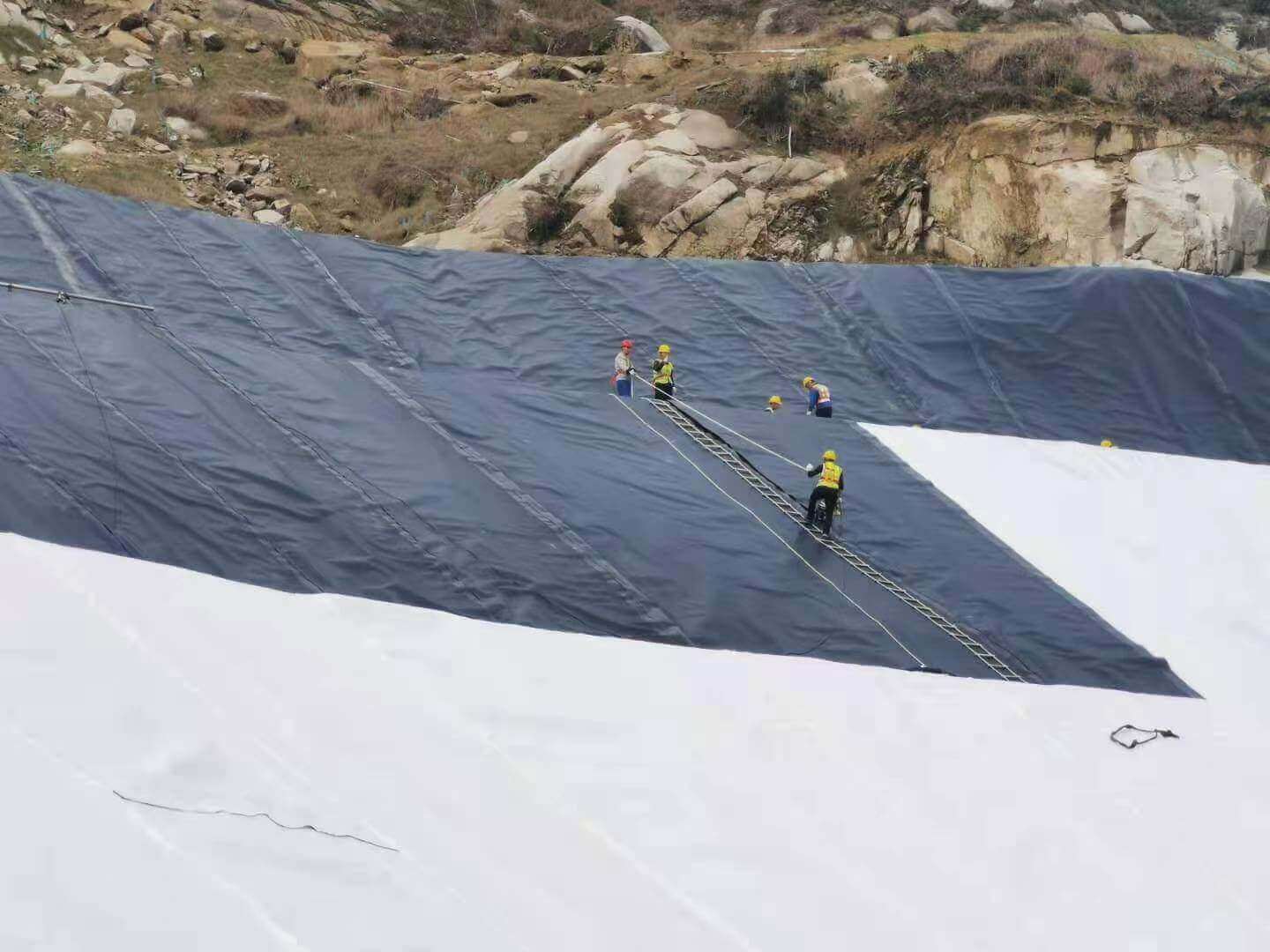
3.Geomembrane Protection Systems
In environmental containment systems, geotextiles often function as protective layers for geomembranes.
Examples include:
- landfill liner systems
- mining tailings storage facilities
- wastewater containment ponds
Geotextiles prevent puncture damage caused by stones or uneven subgrade surfaces.
4.Erosion Control Applications
Geotextiles are frequently used in erosion control projects such as:
- riverbank stabilization
- coastal protection
- slope reinforcement
In these environments, geotextiles stabilize soil while allowing water flow through the system.
Situations Where Geotextile May Not Be Necessary
While geotextiles are useful in many projects, they are not always required.
1.Well-graded granular soils
If the subgrade and aggregate layers have compatible particle size distributions, natural filtration may already be sufficient.
In such cases, separation may not provide significant benefits.
2.Short-term construction projects
Temporary access roads or short-duration structures may not justify the additional cost of geotextile installation.
3.Over-specification in design standards
In some engineering specifications, geotextiles are included automatically without detailed evaluation of site conditions.
Engineers should always assess whether the geotextile contributes meaningful performance improvement.
Common Design Mistakes When Using Geotextiles
Even when geotextiles are specified, design mistakes can reduce their effectiveness.
Selecting geotextile based only on strength
Filtration properties such as apparent opening size (AOS) and permeability are often more critical than tensile strength.
Ignoring soil characteristics
Soil particle size distribution must be matched with geotextile filtration properties.
Overlooking installation conditions
Improper installation can damage geotextiles or reduce their performance.
Using the wrong type of geotextile
Nonwoven and woven geotextiles serve different engineering functions.
Choosing the correct type is essential for proper performance.
Geotextile Selection Checklist for Engineers
Before specifying geotextile, engineers should evaluate the following factors.
Soil type and particle size distribution
Understanding soil properties is essential for filtration and separation design.
Load conditions
Traffic loads, structural loads, and dynamic forces determine reinforcement requirements.
Drainage requirements
Projects involving groundwater flow must consider filtration and drainage performance.
Long-term durability
Geotextiles must withstand environmental conditions such as UV exposure, chemical interaction, and biological activity.
Frequently Asked Questions About Geotextiles
1.Is geotextile always required under roads?
Not always. Geotextiles are typically used when the subgrade soil is weak or when separation between soil layers is required.
2.Do geotextiles improve drainage?
Yes. Nonwoven geotextiles can provide filtration and drainage functions that help maintain water flow while preventing soil migration.
3.What type of geotextile should be used?
The choice depends on the engineering function required.
woven geotextiles are commonly used for reinforcement
nonwoven geotextiles are widely used for filtration and drainage
4.Can geotextiles replace gravel layers?
In some cases, geotextiles reduce the required thickness of granular layers but they usually work together with aggregate rather than replacing it completely.
Geotextiles are powerful engineering materials, but their value lies in how they are used within a system.
For engineers, designers, and contractors, the key is understanding the specific problem that geotextile is intended to solve.
When properly selected and installed, geotextiles can improve soil stability, enhance drainage systems, and extend the service life of infrastructure projects.
But when used without clear engineering purpose, they may simply add unnecessary cost.
Good engineering design always begins with the function, not the material.
Recent Post
Aquaculture Pond Lining in Indonesia | From Design to Installation
From Project Drawing to Water Filling: An Aquaculture Pond Lining Project in Indonesia This aquaculture pond project in Indonesia started with a project drawing.The customer firstly contacted us
When Is Geotextile Really Necessary?
When Is Geotextile Really Necessary in Civil Engineering Projects? Geotextiles are widely used in modern infrastructure and environmental engineering. However, a common question among engineers, designers, and contractors is: Is geotextile always necessary? In
Woven Polypropylene Geotextile Manufacturer | Engineering Grade & Landscape Fabric
Woven Polypropylene Geotextile Manufacturer | Engineering Grade & Landscape Fabric By Planetliner — Manufacturer of High-Performance Woven PP Fabrics for Global Projects Woven polypropylene geotextile has become a fundamental material in civil engineering, environmental protection,