
What is Woven Geotextile Fabric and How to choose?
When you need to reinforce soil, control erosion, or ensure proper drainage in your construction project, there is one material that has been reliably doing the job for decades: woven geotextile fabric.Woven geotextile fabric is a synthetic engineering material created by weaving together individual polypropylene or polyester threads into a strong, durable planar structure. First developed in the 1950s, these technical textiles have become essential components in modern construction, civil engineering, and environmental projects worldwide.
The global woven geotextile market reached $54.5 billion in 2023 and is expected to grow to $85.8 billion by 2030, demonstrating its critical role in infrastructure development
What Is Woven Geotextile Fabric?
Woven geotextile fabric is a geosynthetic material manufactured by interlacing two sets of synthetic threads—warp (longitudinal) and weft (transverse)—at right angles to create a strong, uniform cloth-like structure. This manufacturing process creates fabrics with high tensile strength, low elongation, and consistent porosity properties that make them ideal for various geotechnical applications.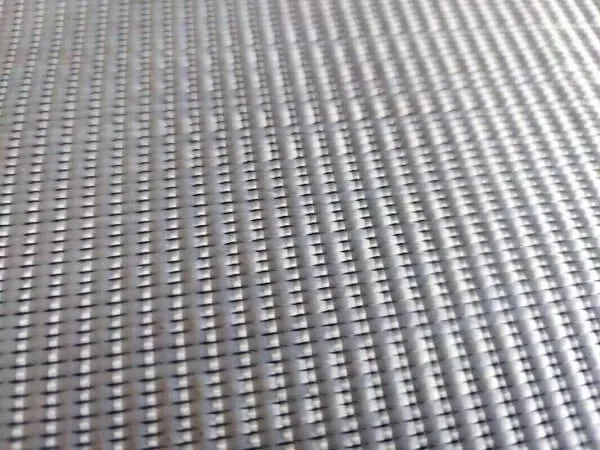
This weaving process creates a material that is:
- Incredibly Strong: It has high tensile strength, meaning it can resist a great deal of pulling force without tearing. Think of it like a grid of rebar for your soil.
- Low-Permeability: Because the threads are woven tightly together, water passes through it very slowly. This is a key difference compared to its non-woven counterpart.
- Resistant to Degradation: It’s engineered to resist rot, chemicals, and UV rays, ensuring it lasts for decades underground.
Most woven geotextiles are made from polypropylene or polyester polymers, which provide excellent resistance to biological degradation, chemicals, and moisture. The specific weaving pattern (plain, twill, or satin) and thread type (monofilament, multifilament, or slit-film) can be customized to achieve different performance characteristics for various applications
This makes woven geotextiles an essential material in road building, soil stabilization, erosion control, drainage systems, and landscaping projects.
How Are Woven Geotextiles Fabric Made?

The manufacturing process of woven geotextiles involves several precise steps:
Polymer Extrusion: Raw polypropylene or polyester pellets are melted and extruded through a die to create continuous filaments.
Film Creation: For slit-film geotextiles, the polymer is formed into a thin film instead of individual filaments.
Fiber Conversion: The continuous filaments are stretched, oriented, and processed into either monofilaments, multifilaments, or cut into shorter strips for slit-film production.
Weaving: Using specialized looms, the longitudinal warp yarns and transverse weft yarns are interlaced at right angles.
Finishing Treatments: The woven fabric may undergo additional processes including heat-setting, calendering, or coating to enhance specific properties.
Quality Control and Packaging: The finished geotextile is tested for compliance with specifications, then rolled and prepared for shipment.
This controlled manufacturing process allows engineers to design geotextiles with specific properties tailored to different applications, balancing factors like tensile strength, permeability, and puncture resistance.
Advantages of Woven Geotextiles Fabric
Woven geotextiles offer several distinct advantages that explain their widespread use:
High Tensile Strength: Woven geotextiles typically offer superior strength capabilities compared to nonwoven alternatives of equivalent weight, making them ideal for reinforcement applications10.
Low Elongation: With typically less than 15% elongation at break, woven geotextiles provide excellent dimensional stability under load.
Durability: The interlocking weave pattern creates a robust structure resistant to installation damage and long-term wear.
UV Resistance: Most woven geotextiles contain carbon black or other UV stabilizers that provide excellent resistance to solar degradation.
Chemical Resistance: Polypropylene and polyester woven geotextiles offer superior resistance to chemicals, alkalies, acids, and soil microorganisms.
Cost-Effectiveness: Woven geotextiles typically provide an economical solution for many geotechnical applications, especially where high strength is required
Comparison: Woven Fabric vs. Nonwoven Geotextiles fabric
| Property | Woven Geotextile Fabric | Nonwoven Geotextile Fabric |
|---|---|---|
| Manufacturing Process | Interlaced, like a basket weave | Mechanical, thermal, or chemical bonding |
| Tensile Strength | Very high tensile strength | Lower tensile strength |
| Elongation | Low (<15%) | High (30-100%) |
| Flow Rate | Low (slow drainage) | High (fast drainage) |
| Filtration Efficiency | Good | Excellent |
| Puncture Resistance | Good | Excellent |
| Soil Separation | Excellent | Good |
| Best for | Roads, driveways, retaining walls, ground stabilization | French drains, erosion control, garden beds, wrapping pipes |
Primary Functions of Woven Geotextile Fabric
Woven geotextiles serve four essential functions in geotechnical and environmental applications:
1. Separation
Woven geotextiles prevent the mixing of dissimilar soil materials. When placed between two different soil layers (such as gravel and clay), they maintain the integrity and performance of both materials while preventing upward migration of finer particles into coarser layers.
Common applications: Roadways, parking areas, railroad ballast, and between subsoil and drainage aggregates.
2. Reinforcement
The high tensile strength of woven geotextiles allows them to reinforce soil structures by distributing loads over a wider area. This increases the overall stability and bearing capacity of the soil while reducing differential settlement.
Common applications: Steep slope reinforcement, embankments over weak soils, retaining walls, and foundation support.
3. Filtration
Woven geotextiles act as efficient filters that allow water to pass through while retaining soil particles. Their controlled porosity creates a zone of enhanced permeability while preventing the loss of soil particles due to flowing water.
Common applications: Drainage systems, riverbank protection, coastal structures, and erosion control applications.
4. Stabilization
By providing tensile support to soil systems, woven geotextiles help stabilize weak subgrades and enable the construction of structures on sites that would otherwise be unsuitable for development.
Common applications: Working platforms over soft soils, unpaved roads, and temporary access areas.
Applications of Woven Geotextile Fabric
Woven geotextiles offer versatile performance across multiple industries:
Road and Railway Construction
In transportation infrastructure, woven geotextiles extend service life by separating subsoil from aggregate base courses, reinforcing roadbeds, and facilitating drainage. They significantly reduce maintenance requirements and improve load distribution.
Erosion control
Woven geotextiles are highly effective in controlling soil erosion on slopes, channels, and coastal areas. They stabilize the soil while allowing vegetation to become established, providing permanent protection against water and wind erosion.
Drainage Systems
Though less permeable than nonwoven alternatives, woven geotextiles still provide adequate filtration in many drainage applications while offering superior strength characteristics. They’re used in French drains, trench drains, and edge drains.
Coastal and Marine Protection

Specialized high-strength woven geotextiles are used in marine structures including groynes, revetments, and offshore breakwaters. They also form containers (geotubes) for dewatering dredged material and constructing containment structures.
Environmental Applications
Woven geotextiles play a crucial role in environmental protection projects including landfill lining systems, reservoir lining protection, and erosion control in sensitive areas.
How to Choose the Right Woven Geotextile Fabric
When selecting woven geotextiles, engineers evaluate several critical properties:
Tensile Strength: Measured in kN/m, indicates the fabric’s resistance to longitudinal and transverse forces10.
Elongation at Break: The percentage stretch at which the fabric fails under tension.
Tear Resistance: Resistance to propagating tears once initiated (measured in N or kN).
Puncture Resistance: Ability to resist penetration by sharp objects (measured in N).
Apparent Opening Size (AOS): Indicates the approximate largest particle that would effectively pass through the fabric2.
Permittivity: The ability to allow water flow normal to the plane of the fabric.
UV Resistance: The fabric’s ability to maintain properties after extended UV exposure.
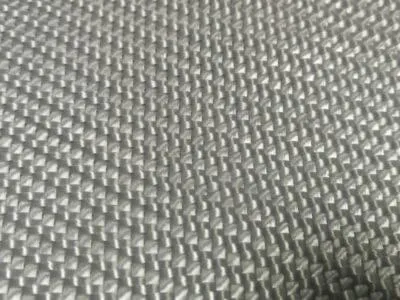

Selecting the appropriate woven geotextile requires careful consideration of:
Project Requirements: Specific functions needed (separation, reinforcement, filtration)
Soil Conditions: Particle size distribution, shear strength, and permeability
Loading Conditions: Static vs. dynamic loads, magnitude, and duration
Environmental Factors: UV exposure, chemical environment, and temperature extremes
Installation Conditions: Equipment access, construction methods, and time constraints
Expert Installation Tips to Avoid Common Mistakes
A great material can fail if installed incorrectly. Here are some key tips from the field:
- Prepare the Ground: Always start with a smooth, graded surface. Remove any large rocks, stumps, or sharp objects that could puncture the fabric.
- Overlap Correctly: Never just butt the edges of two rolls together. Always overlap the edges by at least 12-18 inches (30-45 cm) to ensure a continuous barrier.
- Keep it Taut: The fabric should be laid flat and pulled taut to remove wrinkles before placing aggregate on top. Use staples or pins to hold it in place temporarily.
- Don’t Drive Directly on the Fabric: Dump your aggregate (gravel, stone) onto already-placed aggregate and then spread it over the fabric. Driving directly on the geotextile can tear it.
FAQs
What is the typical lifespan of woven geotextile fabric?
When properly selected and installed, woven geotextiles can have a service life exceeding 50 years in many applications. The actual lifespan depends on environmental conditions, exposure to UV radiation, and the specific polymer used.
Can woven geotextiles be used for drainage applications?
While nonwoven geotextiles generally offer higher flow rates, woven geotextiles can be used in many drainage applications where both strength and filtration are required. Special woven designs with increased porosity are available for applications requiring higher flow capacity.
How do I determine the appropriate weight/thickness for my project?
The appropriate weight and thickness depend on specific project requirements including subgrade conditions, expected loads, and primary function. Consult with a geotechnical engineer or follow relevant design guidelines for your specific application.
Are woven geotextiles environmentally friendly?
Woven geotextiles contribute to environmental sustainability by reducing aggregate requirements in construction, extending the life of infrastructure, and preventing soil erosion. Most are made from recyclable polymers, and industry initiatives are developing increasingly sustainable production methods and materials.
Can we put woven geotextile under gravel?
Absolutely. This is one of its primary uses. It creates a stable separation layer that prevents the gravel from mixing with the soil below, which is crucial for driveways, paths, and foundations.
Final Thoughts
Woven geotextile fabric is more than just a construction material. It is a proven solution for soil reinforcement, stability, erosion control, and long-lasting infrastructure. Whether you are building a road, designing a drainage system, or working on landscaping, woven geotextiles offer strength, durability, and cost savings.
If you are planning your next project, consider consulting a trusted geotextile manufacturer or supplier to choose the best fabric for your needs.As material science and manufacturing technologies advance, woven geotextiles will continue to evolve, offering even more sophisticated solutions to geotechnical and environmental challenges. By understanding their properties, functions, and proper application methods, engineers and contractors can select the optimal woven geotextile for their specific project needs, ensuring long-term performance and sustainability.
When planning your next project that involves soil stabilization, erosion control, or infrastructure development, consider how woven geotextile fabric might provide the ideal solution for your engineering challenges. Follow our Facebook Linkedin Youtube Ins for more details!
Recent Post
Aquaculture Pond Lining in Indonesia | From Design to Installation
From Project Drawing to Water Filling: An Aquaculture Pond Lining Project in Indonesia This aquaculture pond project in Indonesia started with a project drawing.The customer firstly contacted us
When Is Geotextile Really Necessary?
When Is Geotextile Really Necessary in Civil Engineering Projects? Geotextiles are widely used in modern infrastructure and environmental engineering. However, a common question among engineers, designers, and contractors is: Is geotextile always necessary? In
Woven Polypropylene Geotextile Manufacturer | Engineering Grade & Landscape Fabric
Woven Polypropylene Geotextile Manufacturer | Engineering Grade & Landscape Fabric By Planetliner — Manufacturer of High-Performance Woven PP Fabrics for Global Projects Woven polypropylene geotextile has become a fundamental material in civil engineering, environmental protection,