
What is Woven Geotextile Fabric used for?
When stability, durability, and separation become important for roads, driveways, embankments, or structures, woven geotextile fabric stands as a fundamental engineering solution.We are a professional manufacturer and exporter of woven geotextile with 10+year experience. Our production equipment is advanced, and our laboratory testing facility is comprehensive. The quality can match those of well-known brands like Tencate. We offer cost-effective solutions and can customize products to meet different specifications needs. We produce both PET (polyethylene terephthalate) and PP (polypropylene) woven geotextile fabrics.
What is Woven Geotextile?
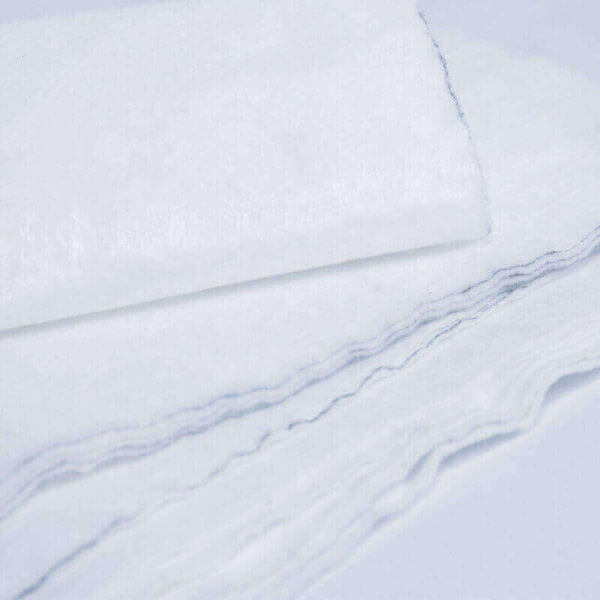
Woven geotextile is manufactured by interlacing continuous synthetic yarns (monofilament, multifilament, or slit-film) in perpendicular directions – typically warp (lengthwise) and weft (crosswise) – on advanced looms. This interlacing creates a dimensionally stable grid-like structure with exceptional mechanical properties.Woven geotextile often has the following key characteristics:
High tensile strength in both warp and weft directions
Low elongation, meaning the fabric does not stretch much under load
Good water flow capacity along the plane, but lower water flow through the thickness
Excellent resistance to ultraviolet light (if treated) and to long-term installation conditions
The fabric is available in PET (polyester) or PP (polypropylene). PET offers better creep resistance and temperature stability, while PP is more resistant to chemical attack.Meanwhile,Geotube bags are made of high-performance polypropylene mesh monofilament woven into geotube cloth, which is woven into a special sewing process. Trampoline cloth is made of high-strength, high-elasticity, anti-aging polypropylene round yarn woven into a fabric, which is processed by high-temperature calendering to produce a trampoline cloth with a certain gloss, elasticity, and high strength.
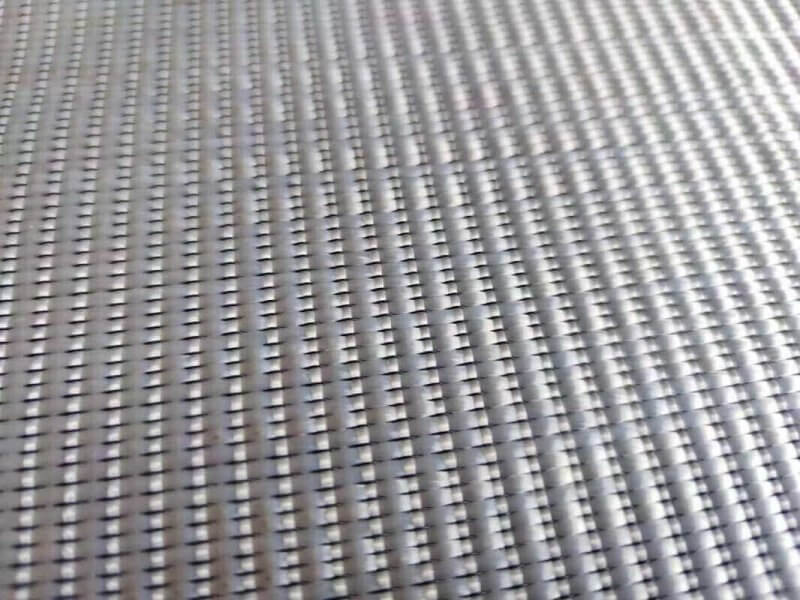
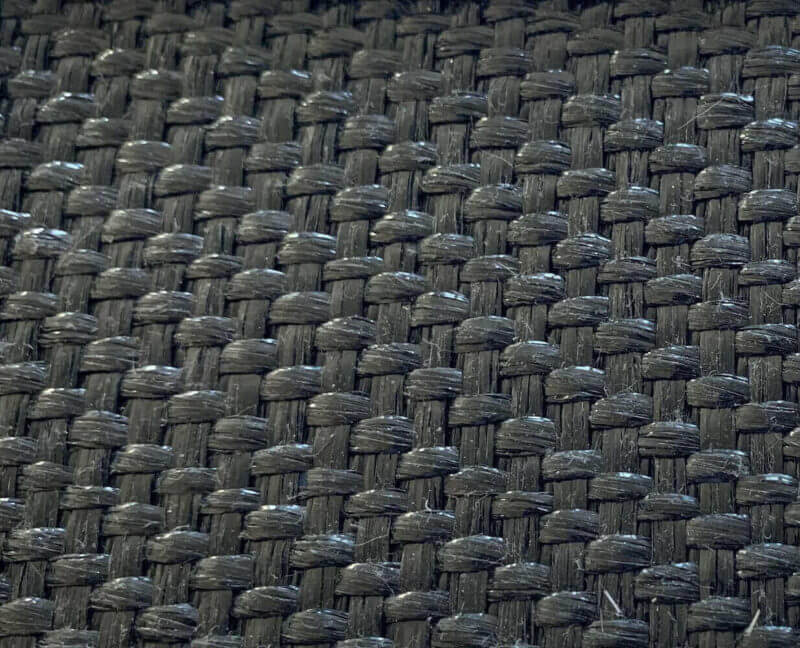
Our PET woven geotextile specifications:
Tensile strength:80/50,100/50,200/50,400/50,600/50,800/50,1000/50,1200/50,2000/50. 80/80,100/100,200/200,400/400,600/600kN/m.
Width:3.5m 4m 5.2m
Length:50m 100m 200m or 300m
Our PP woven geotextile specifications:
Tensile strength:40/40,50/50,60/60, 80/80,120/120,175/175,200/200,300/300kN/m.
Width:4.6m 5.2m
Length:100m 200m or 300m
Our Woven Geotextile Production
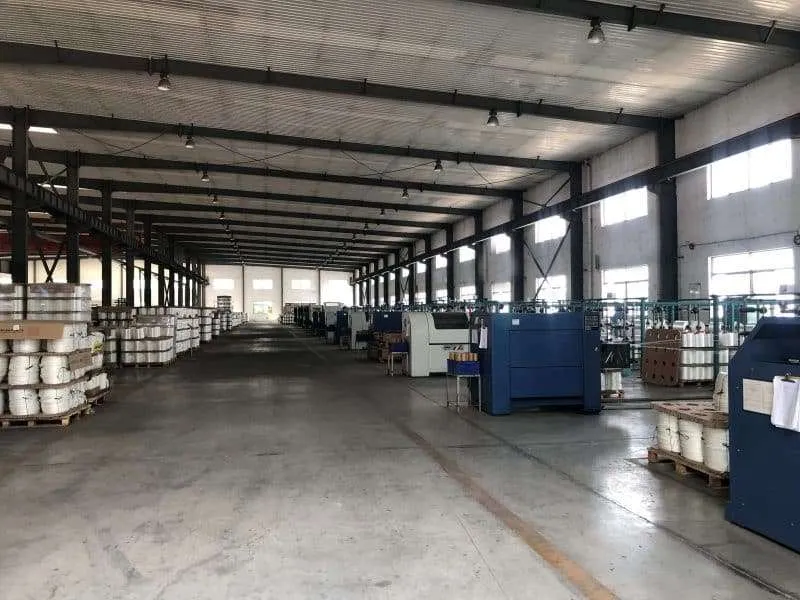
Our company has imported advanced yarn preparation equipment from Germany and developed various types of polypropylene monofilament and split yarn based on raw material properties and project requirements. The woven geotextiles produced from these yarns utilize highly specialized spinning and weaving techniques, resulting in mechanical and hydraulic properties significantly superior to those of conventional woven and non-woven geotextiles.
Our company has two batch warping machines and one sectional warping machine, each with a production speed of up to 600 m/min. These simple operations enable rapid warping and consistent product quality. We utilize different warping methods based on product performance characteristics and process requirements to improve beam quality and ensure efficient use in subsequent processes.
We have 56 imported geotextile weaving machines, each with a width of 3.5m, 4.6m, and 5.4m. These machines boast speeds up to 280 rpm, resulting in highly automated and efficient production, with an annual output of 20 million square meters. We tailor product specifications and widths to meet specific project needs to ensure quality. In response to the project’s need for high-strength geotextiles, our company collaborated with foreign professional equipment manufacturers to upgrade and renovate our equipment, now boasting the most advanced international equipment. Our company has an independent production and manufacturing workshop equipped with a full range of auxiliary equipment and tools, in addition to manufacturing equipment.
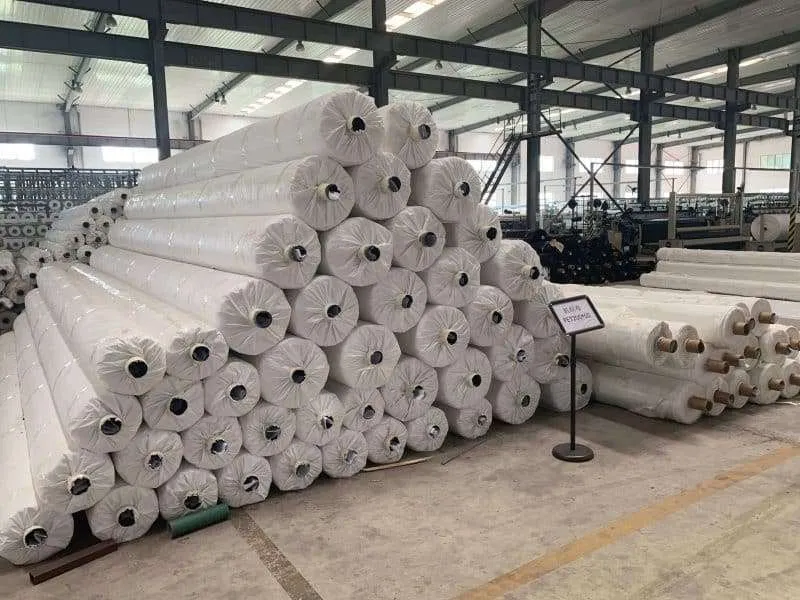
Our Woven Geotextile Quality Guarantee
1. Guaranteed Material Sources
All raw materials, fibers, and accessories required by our company undergo rigorous inspection and analysis, ensuring strict quality control of our procurement channels. Based on the characteristics of our products, we conduct thorough review and evaluation of key raw material suppliers and have established strategic alliances with them. Our laboratory strictly adheres to our company’s established raw material quality inspection and assessment standards, eliminating product quality issues at the source.
2. Guaranteed Inspection Technology
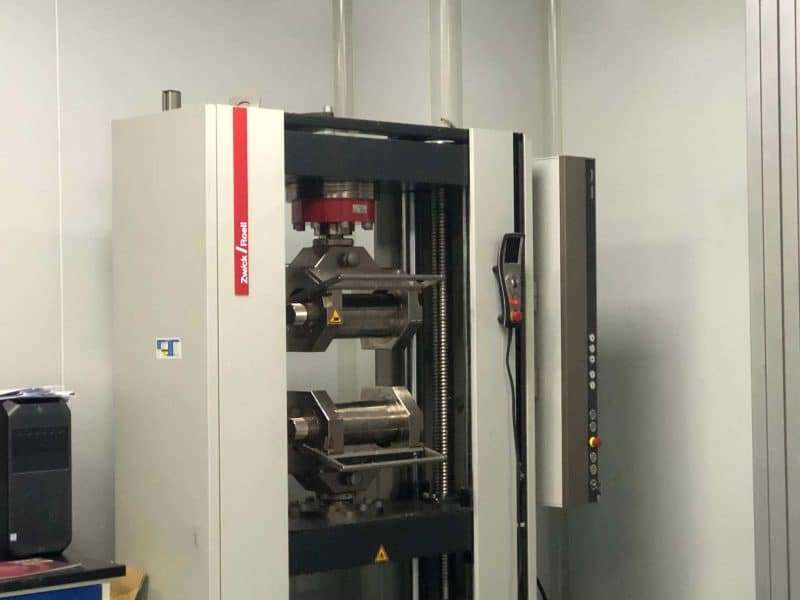
Our company has invested nearly 6 million yuan to establish a comprehensive testing and inspection center. We currently have over 60 analytical instruments, including tensile testing machines, water permeability testers, freeze-thaw testers, solar climate testers, UV aging testers, and creep testers. All testing equipment is calibrated and verified by national metrology authorities. We test over 16 items, including geotextile tensile strength, tearing, bursting, grip, water permeability, and geogrid tensile strength.
3. Guaranteed Inspection Quality
Our testing center employs dedicated personnel to ensure proficiency in product testing and minimize operational errors. Laboratory personnel rely on national standards and strictly implement the company’s designated semi-finished product and finished product inspection specifications, strictly control the inspection and testing of raw materials entering the factory, the production process and the product leaving the factory, implement effective control and strict management of each link that affects product quality, and ensure that each batch of the company’s products are qualified before leaving the factory.
What is the difference between woven and nonwoven geotextiles?
People often ask: “What is the difference between woven and nonwoven geotextiles?” Here is a simple comparison:
| Feature | Woven Geotextile | Nonwoven Geotextile |
|---|---|---|
| Fabric Structure | Made by weaving yarns or tapes | Made by needle-punching or bonding |
| Tensile Strength | High | Moderate to low |
| Elongation | Very low | Higher (more stretchy) |
| Water Flow Through Fabric | Minimal through-thickness permeability | High through-thickness permeability |
| Filtration Behavior | Acts as separator and reinforcement | Acts as filter and drainage layer |
| Typical Applications | Heavy load separation, reinforcement | Drainage, filtration, drainage blankets |

Nonwoven Geotextiles: Manufactured by bonding synthetic fibers randomly (needle-punched, heat-bonded, or chemically bonded), resembling felt. They prioritize filtration, drainage, and protection. They allow water to pass readily in-plane and perpendicularly, making them ideal for drainage layers, erosion control under riprap, or cushioning geomembranes.Nonwoven geotextile is better for drainage, filtration, and cushioning layers.
Key Properties & Advantages of Our Woven Geotextiles:
Exceptional Tensile Strength: Withstands high loads without tearing, crucial for reinforcement and separation under heavy traffic or structures.
High Modulus (Stiffness): Resists stretching under load, maintaining separation integrity and distributing loads effectively.
Superior Grab Tensile Strength: Resists localized stresses during installation and service.
Dimensional Stability: Minimal elongation under load ensures predictable performance.
Robust Separation: Prevents intermixing of dissimilar soil layers (e.g., gravel base and soft subsoil), maintaining structural integrity.
Reinforcement: Improves the load-bearing capacity of soft subgrades by distributing loads over a wider area.
Customization: We engineer fabrics to precise weight (gsm), strength (e.g., Grab Tensile, Wide Width Tensile), elongation, and opening size (AOS) requirements for PP and PET.
Durability: Excellent resistance to punctures, tears, abrasion during installation, and long-term degradation.
Quality Assurance: Every batch undergoes stringent testing in our laboratory to ensure conformance to project specs and international standards (ASTM, ISO, etc.).
Primary Applications for Woven Geotextile Fabric:
Roads, Driveways, and Parking Lots: “Woven Geotextile fabric for driveway” use is classic. Placed between the subgrade and the aggregate base course, it prevents the stone from sinking into soft soil, significantly extending pavement life, reducing rutting, and minimizing aggregate thickness needed. It is the workhorse for unpaved roads and critical reinforcement under paved surfaces.
Embankment Support: Provides separation and reinforcement over weak foundations, improving stability and reducing differential settlement.
Railway Ballast Separation: Prevents fine subgrade soils from fouling the ballast stone, maintaining drainage and track stability.
Retaining Wall Backfill: Separates retained soil from drainage aggregate behind the wall face, preventing clogging and ensuring drainage efficiency.
Landfill Caps and Base Liners: Used as a separation/protection layer over geomembranes.
Erosion Control Applications: Used under riprap or revetments for separation and initial stabilization.

What Is Woven Geotextile Used For?
Woven geotextile is primarily used for separation, reinforcement, and soil stabilization in areas where high strength and durability are required. From driveways and rural roads to large infrastructure projects like railways, ports, and embankments, it ensures long-term performance, reduces maintenance, and improves safety
1. Soil Separation
Woven geotextile prevents two different soil layers from mixing.
Example: When building a road or driveway, the gravel base can mix with the soft soil beneath if no separator is used. Over time, this leads to rutting and settlement.
Woven fabric solution: Placing woven geotextile between the subgrade and aggregate layer keeps materials separated, maintaining road stability.
2. Reinforcement and Soil Stabilization
Because of its high tensile strength and low elongation, woven geotextile strengthens weak soil.
How it works: When vehicles or heavy loads apply pressure, the geotextile spreads the load and resists soil deformation.
Applications:
Roads and highways built over soft clay
Embankments on weak subgrades
Temporary construction access roads
Container yards or port terminals
3. Driveway and Parking Lot Base Support
Homeowners and contractors often use woven geotextile for driveways to extend service life.
It prevents gravel from sinking into the soil
Reduces maintenance and rutting
Provides a stable and level surface for paving or gravel
4. Slope and Embankment Protection
In areas prone to erosion, woven geotextile acts as a stabilizing and protective layer.
It is often used under riprap, concrete blocks, or gabions to hold the slope in place
Reduces the risk of soil washout and landslides
5. Erosion Control in Water-Related Projects
Woven geotextile is placed in:
Riverbanks and shorelines to protect against scouring
Culverts and drainage ditches to prevent soil loss
Coastal works and revetments, often under heavy rock armor
6. Railway and Airport Construction
Heavy infrastructure needs strong foundations.
Rail beds and airport taxiways use woven geotextile to maintain load-bearing capacity and prevent soil pumping or migration
Reduces maintenance frequency and settlement issues
7. Landfill and Mining Projects
Although nonwoven geotextiles are common for filtration, woven geotextile is used in load support and separation layers:
Access roads to landfills or mines
Platform stabilization under heavy machinery
Working pads for tailings ponds or waste containment
8. Temporary Roads and Construction Platforms
In construction sites where the ground is soft or muddy, woven geotextile is laid under aggregate to create a stable working platform for heavy equipment.
This reduces rutting, prevents vehicles from getting stuck, and cuts down on gravel consumption.
Frequently Asked Questions/FAQ
Q: Does water go through woven geotextile fabric?
A: Woven geotextiles are primarily permeable, but their flow rates are generally lower than nonwovens. Water flows primarily through the openings (pores) between the yarns. The size and frequency of these pores determine the fabric’s permittivity (flow rate) and filtration capability. Slit-film woven fabrics can have lower permeability but excellent separation strength, while monofilament woven fabrics offer better flow characteristics while maintaining high strength. Our laboratory precisely measures these properties to ensure suitability for each project.
Q: How long does woven geotextile fabric last?
A: Woven geotextile is durable and long-lasting. Typical service life in buried applications may range from 20 to 50 years, depending on environmental conditions, installation quality, and polymer type. PET woven fabrics usually offer longer life under sustained load and high temperature. Ultraviolet exposure and chemical environment can reduce life, but with proper installation and UV stability treatment, woven fabric lasts many decades.
Q: Can woven geotextile be used for driveways?
A: Absolutely. Woven fabric provides a stable base, prevents mixing of subbase and soil, and extends pavement life.
Why Choose Our Company
As expert woven geotextile manufacturers and exporters, we bring real advantages:
Expertise and Authority: We operate a professional laboratory with testing capabilities that ensure each batch meets or exceeds industry standards.
Quality Equal to Leading Brands: Our products match the performance of top brands such as Tencate, including tensile strength, permeability, and durability.
Cost-Effective Pricing: Because we operate our own factory and export directly, we offer competitive prices without compromising quality.
Custom Parameters: We can tailor product options including PET or PP material, weight (grams per square meter), tensile strength, elongation, and roll size.
Strong Investment in Equipment: Our weaving lines are modern and optimized for precision, while our QA/QC lab ensures each roll is tested for performance.
Global Export Experience: We have exported to many countries, meeting diverse technical specifications and compliance requirements.

Clients who are not familiar with geotextile technology find us easy to work with. We explain function in simple terms: separation, reinforcement, filtration, drainage, or protection. We offer sample rolls, datasheets with performance numbers, and technical guidance during design and installation.
In summary, woven geotextile is a robust engineered fabric used in structural civil applications requiring high tensile strength and dimensional stability. Unlike nonwoven geotextile, woven fabric is strong, low-stretch, and does not allow water to pass vertically. It is ideal for road subbases, driveways, slope reinforcement, and soil stabilization. Our company offers PET or PP woven geotextile with performance matching top brands, at an affordable price, with customization and reliable quality assurance.
If you need woven geotextile fabric for your project or want to compare woven and nonwoven options, we would be happy to assist. Please contact us for detailed specifications, samples, and a quote tailored to your requirements.Please follow our Linkedin Facebook Youtube for more information!
Recent Post
Aquaculture Pond Lining in Indonesia | From Design to Installation
From Project Drawing to Water Filling: An Aquaculture Pond Lining Project in Indonesia This aquaculture pond project in Indonesia started with a project drawing.The customer firstly contacted us
When Is Geotextile Really Necessary?
When Is Geotextile Really Necessary in Civil Engineering Projects? Geotextiles are widely used in modern infrastructure and environmental engineering. However, a common question among engineers, designers, and contractors is: Is geotextile always necessary? In
Woven Polypropylene Geotextile Manufacturer | Engineering Grade & Landscape Fabric
Woven Polypropylene Geotextile Manufacturer | Engineering Grade & Landscape Fabric By Planetliner — Manufacturer of High-Performance Woven PP Fabrics for Global Projects Woven polypropylene geotextile has become a fundamental material in civil engineering, environmental protection,