
Woven Non Woven Geotextile: Which Fabric Fits Your Landscape Project?
If you’re building a driveway, landscape, fighting weeds, or controlling erosion, you probably heard about geotextiles,and choosing the right geotextile fabric can make a big difference for your projects. Whether you are making a new driveway, building a retaining wall, or simply trying to keep weeds out of your garden, understanding the differences between woven and non-woven geotextiles is very helpful.
What Is Geotextile Fabric?
Geotextile fabric is a synthetic material used in landscaping and civil engineering to improve soil stability, control erosion and drainage ability,it can:
- Stop weeds from growing through gravel.
- Stabilize soil under driveways or road.
- Drain water away from foundations.
- Prevent erosion on slopes.
There are two main types: woven (looks like burlap) and nonwoven (feels like felt). Here are some differences:

| Feature | Woven Geotextile | Non woven geotextile |
|---|---|---|
| Strength | High tensile strength | Moderate tensile strength |
| Permeability | Low | High |
| Flexibility | Less flexible | Highly flexbile |
| Durability | Excellent | Good |
| Best for | Load-bearing applications | Drainage and filtration applications |

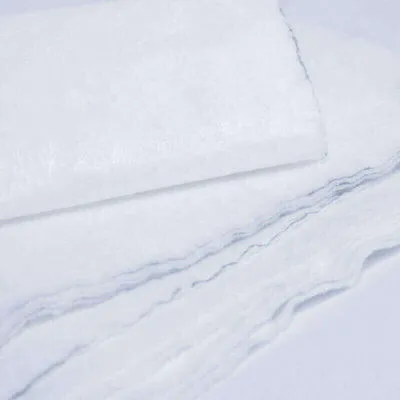
Woven Geotextile: Strength and Stability
Woven geotextiles are made by weaving synthetic fibers, like polypropylene or polyester, into a tight cross pattern. This process results in a strong, durable fabric with a grid-like appearance.
Key Features
- High Tensile Strength: we can do 1200/50kn/m strength and 200/200kN/m
- Low Permeability: Allows minimal water flow, making it suitable for areas where water seepage needs to be controlled.
- Durability: Resistant to UV lights and chemicals, ensuring a long lifetime even in harsh conditions
Common Uses
- Road Construction: Provides support and prevents soil displacement under heavy loads.
- Retaining Walls: Adds stability and prevents erosion.
- Driveways: Distributes loads and enhances structural integrity.


Specifications:
High strength PET Woven Geotextile
Tensile strength:80/50,100/50,200/50,400/50,600/50,800/50,1000/50,1200/50,2000/50. 80/80,100/100,200/200,400/400,600/600kN/m.
Width:3.5m 4m 5.2m
Length:50m 100m 200m or 300m
High strength PP Woven Geotextile
Tensile strength:40/40,50/50,60/60, 80/80,120/120,175/175,200/200,300/300kN/m.
Width:4.6m 5.2m
Length:100m 200m or 300m
Non Woven Geotextile: Flexibility and Filtration
Non-woven geotextiles are produced by bonding synthetic fibers together using heat, chemicals, or needle punching. This method make the fabric with a felt-like texture and random fiber orientation.
Key Features
High Permeability: Allows water to pass through easily, making it excellent for drainage and filtration.
Flexibility: Can suit well to uneven surfaces, installation is easy.
Moderate Strength: Suitable for applications where heavy load-bearing isn’t a primary concern.
Common Uses
Drainage Systems: To let water flow while preventing soil erosion.
Landscaping: Acts as a weed barrier and work on soil separation.
Erosion Control: Protects soil
Specifications:
Unit weight:100g 150g 200g 300g 400g 500g 600g 800g 1000g/sqm
Width:1m 2m 3m 4m 5.8m
Choosing the Right Fabric for Your Project
Selecting woven and non-woven geotextiles depends on your project specific requirement:
For Strength and Stability: If your project need supporting heavy loads or reinforcing structures, woven geotextile is the better choice.
For Drainage and Filtration: If you need to manage water flow or prevent soil erosion, non woven geotextile is more suitable.
Consider factors like soil type, expected load, and water flow when making your decision.
Installation: Do’s and Don’ts
Here are some tips for the geotextile installation
DO:Remove rocks/roots first.Overlap edges by 6–12 inches.Secure with landscape staples.
DON’T:Leave gaps (weeds grow through).Walk on fabric after stone is added .
Top 5 Mistakes to Avoid
Using Nonwoven Under Gravel Driveways:It tears under car weight → use woven instead.
Choosing Too Lightweight:3 oz fabric rips easily → upgrade to 6+ oz for heavy jobs.
Skipping Overlap:Weeds sneak through gaps → overlap 12 inches on slopes.
Ignoring Drainage Needs:Woven fabric floods driveways → add side drains.
Forgetting UV Protection:Sun destroys uncovered fabric → bury or cover it.
FAQs
Q: Can I use both together?
A: Yes! Example: Lay nonwoven for drainage, then woven for strength under a driveway.
Q: Which is better for weed control?
A: Woven – blocks sunlight better. Nonwoven lets some light through (weeds grow if thin).
Q: Can tree roots grow through geotextiles?
A: Nonwoven can be damagned by aggressive roots (like willows). Use woven or root barrier.
Q: How long do they last?
A: Woven: 10-20+ years. Nonwoven: 3–10 years (depends on sun exposure).
Our company is a manufacturer and exporter of the geotextile fabric, can provide different weight and TDS property type, please follow our Linkedin, and Facebook for more details, and welcome your inquiry!
Recent Post
Aquaculture Pond Lining in Indonesia | From Design to Installation
From Project Drawing to Water Filling: An Aquaculture Pond Lining Project in Indonesia This aquaculture pond project in Indonesia started with a project drawing.The customer firstly contacted us
When Is Geotextile Really Necessary?
When Is Geotextile Really Necessary in Civil Engineering Projects? Geotextiles are widely used in modern infrastructure and environmental engineering. However, a common question among engineers, designers, and contractors is: Is geotextile always necessary? In
Woven Polypropylene Geotextile Manufacturer | Engineering Grade & Landscape Fabric
Woven Polypropylene Geotextile Manufacturer | Engineering Grade & Landscape Fabric By Planetliner — Manufacturer of High-Performance Woven PP Fabrics for Global Projects Woven polypropylene geotextile has become a fundamental material in civil engineering, environmental protection,