
What is difference between Woven NonWoven Geotextiles?
Geotextiles have become an essential product in modern construction, landscaping, and civil engineering projects. Geotextiles (also referred to as geotextile cloth) are necessary in road construction, railways, drainage systems, erosion control, landfills, retaining walls, and even as geotextile landscape fabric for weed suppression with permeability.As a professional manufacturer and exporter of geotextile products, we can tell you the details of woven and non-woven geotextiles, their differences, advantages, and appropriate applications. 
What Is Woven and NonWoven Geotextiles?
Geotextile fabric is a synthetic permeable material made from polymers such as polypropylene or polyester. It is designed to enhance soil performance in construction and environmental applications. The primary functions of geotextile fabrics include separation, filtration, drainage, reinforcement, and protection.
Separation: Preventing intermixing of different soil layers (e.g., gravel base mixing into soft subsoil).
Filtration: Allowing water to pass while preventing soil erosion.
Drainage: Facilitating the flow of water within its plane.
Reinforcement: Adding tensile strength to soil structures (like steep slopes or retaining walls).
Protection: Shielding delicate geomembranes (used in lining landfills or ponds) from puncture.
Geotextiles are commonly used in road construction, retaining walls, embankments, erosion control, drainage systems, and landscaping. They are available in two main types: woven geotextiles and non-woven geotextiles.
Difference Between Woven and Nonwoven Geotextiles
Understanding the difference between woven and non-woven geotextiles is crucial for selecting the appropriate material for your project.
Woven Geotextile
Woven geotextiles are produced by weaving polypropylene or polyester yarns in a regular, criss-cross pattern. This weaving technique gives the fabric a strong tensile strength and makes it ideal for reinforcement and separation applications. Woven geotextiles have low elongation and high load-bearing capacity.
Key characteristics of woven geotextile fabric include:
High Tensile Strength: Excels in applications requiring significant load-bearing capacity and soil reinforcement (e.g., under roads, parking lots, embankments).
Low Elongation: Exhibits minimal stretching under load, providing excellent dimensional stability.
Moderate Permeability: Water flow occurs primarily through the openings between the yarns. Flow rates are generally lower than non-wovens.
Superior Puncture Resistance: Highly resistant to damage during installation and from sharp aggregates.
Excellent Separation: Effectively prevents intermixing of dissimilar soils due to its strength and stability.
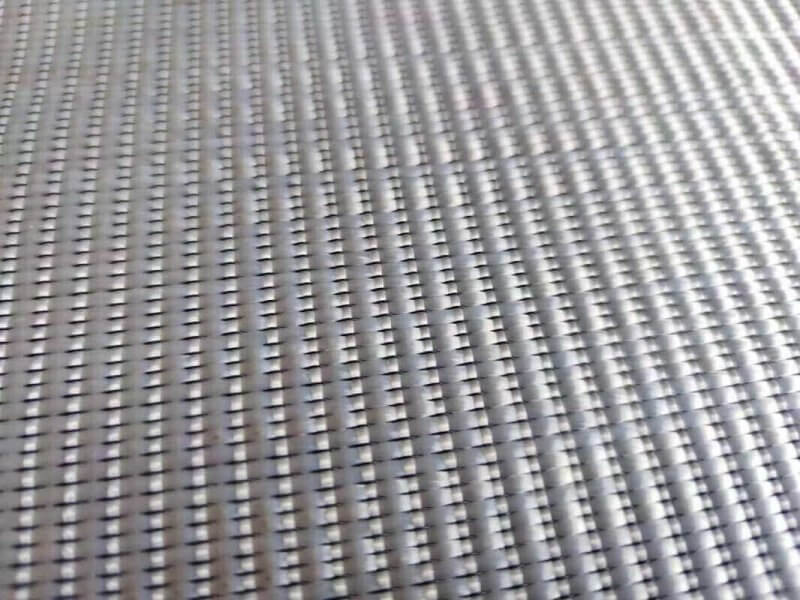
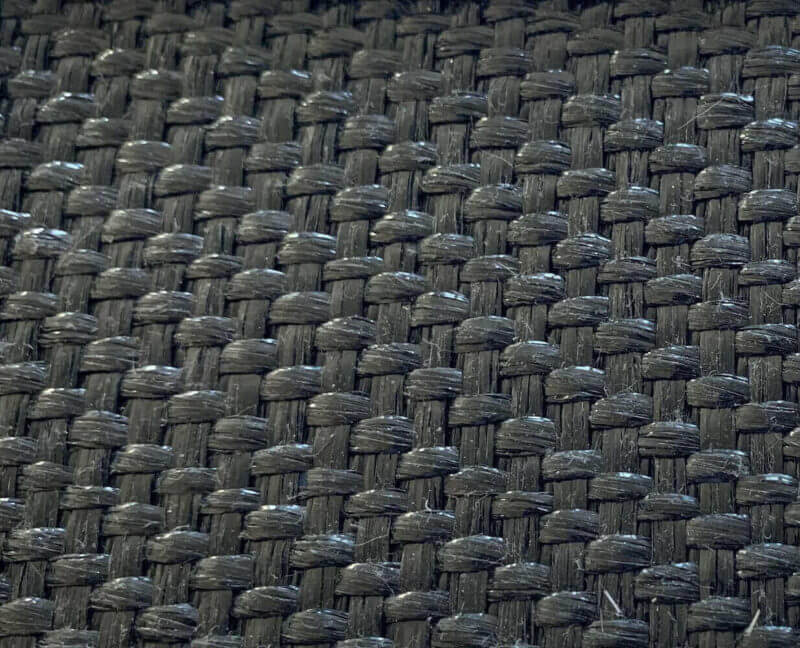
Non-Woven Geotextile
Non-woven geotextiles are manufactured using needle-punching or heat-bonding techniques. These fabrics are made from short or continuous filaments that are bonded together randomly, creating a felt-like texture. Non-woven geotextiles are typically used for filtration, drainage, and protection purposes.
Main features of non-woven geotextile fabric include:
High Permeability/Flow Rate: Water flows easily through the thickness of the fabric, making it ideal for drainage and filtration applications.
Filtration Efficiency: Effectively retains fine soil particles while allowing water passage, preventing soil piping and clogging.
Puncture Resistance (Moderate): Good resistance, though generally less than high-strength wovens.
Conformability: Easily conforms to uneven surfaces, making installation simpler.
Tensile Strength (Lower than Woven): Generally offers lower tensile strength compared to woven fabrics of similar weight.
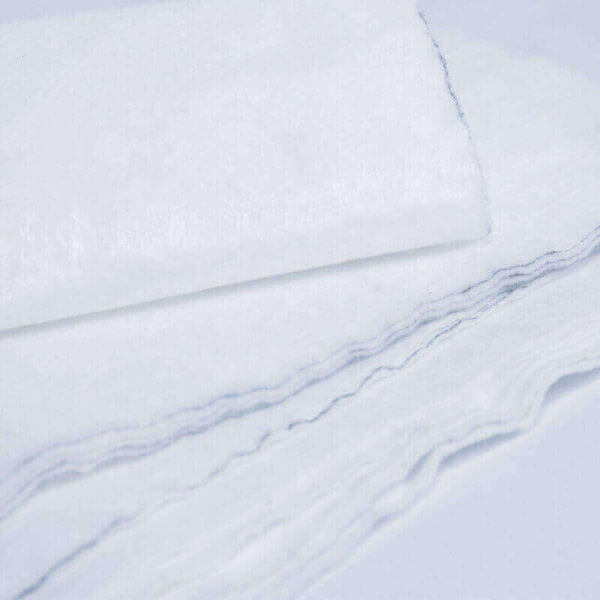
Woven vs Non-Woven Geotextile: Which One to Use?
The decision between woven and non-woven geotextiles depends on the specific needs of your construction or landscaping project. Below is a simple comparison:
The optimal choice (woven or non woven geotextile) depends entirely on the primary function required:
Choose Woven Geotextile When:
High tensile strength is the primary need (reinforcement, stabilization under heavy loads).
Separation of distinct aggregate layers is critical, especially under dynamic loads.
Minimal deformation/long-term creep under sustained load is essential.
High puncture resistance is required (e.g., under sharp rock riprap).
Choose Non-Woven Geotextile When:
Filtration is the key requirement (allowing water flow while retaining soil).
Drainage (water flow through the fabric’s plane) is needed.
Separation is required, but high tensile strength is not critical (e.g., under landscape gravel).
Protection of geomembranes from abrasion or puncture is needed (acting as a cushion).
Conformability to uneven surfaces is important.
| Feature | Woven Geotextile | Non-Woven Geotextile |
|---|---|---|
| Structure | Interlaced yarns (woven) | Random fibers (needle-punched) |
| Strength | High | Moderate |
| Permeability | Low to moderate | High |
| Primary Use | Reinforcement, separation | Filtration, drainage, protection |
| Cost | Generally lower | Slightly higher |
| Common Applications | Roads, highways, railways | Drainage, landscaping, landfills |
Geotextile materials are widely used in the construction industry due to their versatility and durability. Some common applications include:
Road and Highway Construction
Woven geotextiles are placed between subgrade and base layers to provide reinforcement and prevent soil mixing. This increases road lifespan and reduces maintenance costs.Erosion Control
Both woven and non-woven geotextiles are used to protect slopes, riverbanks, and shorelines from erosion by stabilizing the soil and supporting vegetation growth.Drainage Systems
Non-woven geotextiles are preferred in drainage projects as they allow water to pass while filtering out soil particles. They are commonly used in French drains, trench drains, and sub-surface drainage systems.Retaining Walls and Embankments
Woven geotextiles provide structural support and improve stability in retaining wall and embankment construction by distributing loads evenly.Landfills and Environmental Engineering
Non-woven geotextile fabrics are used in combination with geomembranes in landfill liners and covers. They help prevent leachate migration and protect the geomembrane from punctures.
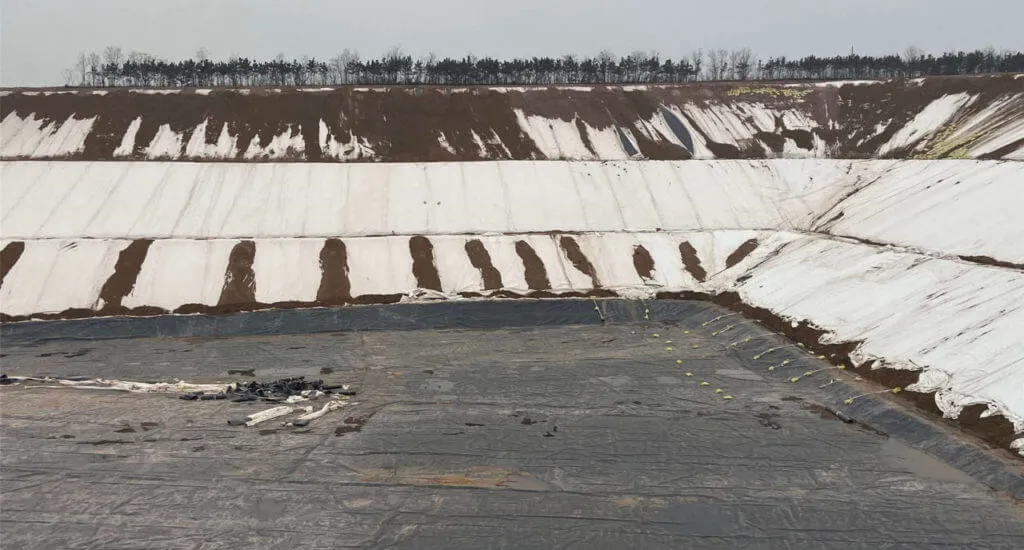


Geotextile Landscape Fabric: A Sustainable Solution
Geotextile landscape fabric is a popular choice among gardeners, contractors, and homeowners. This fabric helps suppress weed growth, retains soil moisture, and improves the overall health of the soil. Non-woven types are particularly useful for landscape applications due to their water permeability and ease of installation.
When selecting landscape fabric, consider factors such as soil type, drainage needs, and the specific plants involved. A high-quality geotextile ensures long-term performance and reduces the need for chemical herbicides.
Geotextile Cloth Prices and Market Trends
Geotextile fabric price depends on factors such as raw material cost, weight (gsm), thickness, type (woven or non-woven), and order volume. Generally, woven fabric geotextile is more cost-effective for large infrastructure projects due to its lower price per square meter.
As global demand increases, especially in Southeast Asia, the Middle East, and Africa, more distributors and contractors are looking for reliable geotextiles factories that offer consistent quality and competitive pricing.
Why Work with a Professional Geotextile Manufacturer?
Partnering with an experienced geotextile supplier ensures that you receive tested, certified products that meet international standards. A professional manufacturer provides:
Customization options (size, weight, packaging)
Technical support and installation guidance
Competitive pricing for distributors
Stable supply and fast delivery
Product certifications (ISO, CE, etc.)
As a geotextile manufacturer and exporter with over ten years of experience, we have supplied products to various infrastructure, municipal, and private sector projects. We offer both woven and non-woven geotextile solutions that meet ASTM, ISO, and other international standards.
Frequently Asked Questions (FAQ)
1. What is the main function of geotextile fabric?
Geotextile fabric is used to improve the performance and durability of construction projects. Its main functions include separation of different soil layers, reinforcement of weak subgrades, filtration of water while retaining soil particles, and drainage of excess water from soil structures.
2. Can geotextile fabric be used for landscaping?
Yes. Geotextile landscape fabric, especially non-woven types, is widely used in landscaping to suppress weeds, stabilize soil, and improve drainage. It is a cost-effective and eco-friendly solution for garden beds, pathways, and under gravel or mulch.
3. How long does geotextile fabric last?
The lifespan of geotextile fabric depends on the type, material quality, and environmental conditions. High-quality woven and non-woven geotextiles can last for 20 years or more in buried applications with proper installation.
4. Is geotextile waterproof?
Geotextile fabric is not waterproof but is designed to be permeable. It allows water to pass through while retaining soil or particles, which is essential for filtration and drainage applications.
5. What is the price of geotextile cloth?
The price of geotextile fabric varies based on material type (woven or non-woven), weight (gsm), thickness, and order quantity. Woven geotextiles are generally more economical for large infrastructure projects, while non-woven fabrics may cost slightly more due to their production method and filtration performance.
6. Can geotextile fabric be reused?
In some temporary or non-critical applications, geotextile fabric can be reused if it remains intact and clean. However, for structural or long-term projects, it is recommended to use new materials to ensure performance and safety.
Whether you are working on road construction, a drainage system, or a landscaping project, choosing the right geotextile is essential for long-term success. Understanding the difference between woven and non-woven geotextile fabric helps ensure durability, cost-effectiveness, and environmental sustainability.
Distributors, project owners, and contractors are encouraged to consult with experienced geotextile factories to select the best material for their applications. High-quality geotextiles not only improve construction performance but also help protect natural resources for future generations.
For more details, technical data, or pricing, please feel free to contact us. Our team is ready to support your project needs with reliable products and expert guidance.Follow our linkedin Facebook Youtube for more details!
Recent Post
Aquaculture Pond Lining in Indonesia | From Design to Installation
From Project Drawing to Water Filling: An Aquaculture Pond Lining Project in Indonesia This aquaculture pond project in Indonesia started with a project drawing.The customer firstly contacted us
When Is Geotextile Really Necessary?
When Is Geotextile Really Necessary in Civil Engineering Projects? Geotextiles are widely used in modern infrastructure and environmental engineering. However, a common question among engineers, designers, and contractors is: Is geotextile always necessary? In
Woven Polypropylene Geotextile Manufacturer | Engineering Grade & Landscape Fabric
Woven Polypropylene Geotextile Manufacturer | Engineering Grade & Landscape Fabric By Planetliner — Manufacturer of High-Performance Woven PP Fabrics for Global Projects Woven polypropylene geotextile has become a fundamental material in civil engineering, environmental protection,